Why I keep coming back to Bukchon Hanok Village
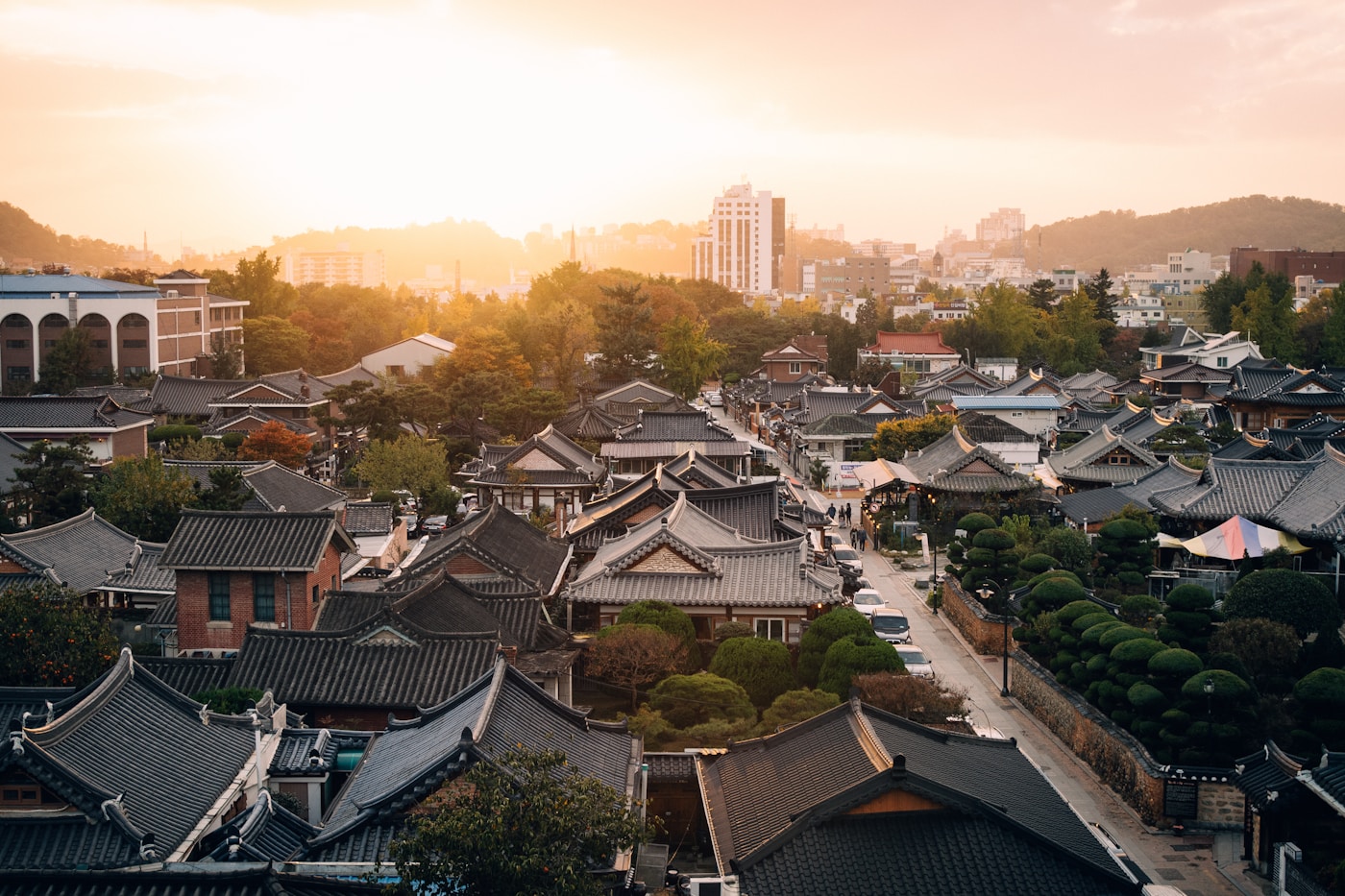
The first time I brought a foreign friend to Bukchon Hanok Village, she stopped walking mid-step on Gahoe-dong’s main alleyway, grabbed my arm, and said nothing for about thirty seconds. Just looked. Behind her was a perfectly framed row of curved grey tile rooftops descending in steps toward the modern city skyline — the N Seoul Tower blinking faintly in the background, a grandmother hanging laundry two doors down, and the smell of someone cooking something deeply savory drifting out of an open window. That’s Bukchon. And that’s precisely why, after fifteen years of living in this city and guiding friends through it every single month, I still put it on every itinerary I build.
I want to be completely upfront with you before we go any further: Bukchon Hanok Village is not a theme park. It is not a museum. It is a living, breathing residential neighbourhood where real people live their real lives inside centuries-old and early-20th-century traditional Korean houses — called hanok. The lanes are narrow and often steep. Some mornings, the place is serene and quietly magical. Other times — particularly on sunny autumn weekends — it is packed shoulder-to-shoulder with tourists speaking six different languages simultaneously. I’ve seen both versions, and I’ll tell you how to find the good one.
What keeps pulling me back isn’t any single viewpoint or photogenic staircase (though yes, those are wonderful). It’s the feeling of standing in a neighbourhood that, against all the odds of Seoul’s explosive modernisation, survived. The city that surrounded it transformed faster than almost any urban centre on earth. Skyscrapers replaced rice paddies. Eight-lane highways cut through old market districts. Yet up here, north of Cheonggyecheon stream and Jongno road, these curved rooftops held on. Understanding why that happened — really understanding it — makes every step through these alleys feel different. More weighted. More worth your time.
This guide is everything I’ve learned from walking these streets myself, from the mistakes I made early on, from questions my foreign friends asked me on tour, and from conversations with residents who are — I must be honest — increasingly tired of certain tourist behaviours. I’ll give you the history, the practical logistics, the honest local opinions, and the kind of neighbourhood-level detail that no hotel concierge is going to sit down and explain to you over breakfast.
A moment I won’t forget: It was a Tuesday morning in late November, about 9:45 a.m. I was meeting a couple from Amsterdam for a morning walk before the 10 a.m. opening. We waited at the entrance near Anguk Station. The light was doing something extraordinary — that low winter-morning light that makes the roof tiles look almost silver rather than grey. When the area opened and we walked in, there were maybe a dozen people total in the entire upper alleyway section. We had Gahoe-dong’s famous viewpoint almost entirely to ourselves for twenty minutes. I’ve been chasing that experience again ever since, and I’ll tell you exactly how to replicate it.
Let me take you through everything you need to know — not as a guidebook, but as your friend who lives here.
A quick history — so you actually know what you’re looking at
I’ve guided enough people through Bukchon to know that the visitors who enjoy it most are the ones who understand what they’re standing inside. When you know the layers of history compressed into these rooftops — the aristocracy, the colonial period, the developer who quietly became a nationalist hero — you look at every single alleyway differently. So let me give you the history, and I’ll keep it human rather than academic.
The aristocratic village: Before the 20th century
The name “Bukchon” simply means north village — it sits north of the Cheonggyecheon stream and Jongno, one of Seoul’s oldest and most important roads. Geographically, it nestles between two of the city’s great royal palaces: Gyeongbokgung to the west and Changdeokgung to the east. That location was not accidental. For centuries, this was where the elite lived — high-ranking government officials, Joseon-era nobility, the kind of people who needed to be close to the king’s court without being inside it.
A family register from 1906 recorded that 43.6% of the population in this area were classified as high-ranking officials and nobility. Think about what that means architecturally. The houses here were large. The madang — the central courtyard of a traditional hanok — were spacious. The walls were high, built for privacy and status. Walking these streets today, you’re walking through what was, for hundreds of years, one of the most prestigious addresses in the entire Korean peninsula. Prominent figures of the late Joseon and Korean Empire periods — including names like Pak Yŏnghyo and Kim Okkyun — lived in large houses right here in Bukchon.
The colonial period: A developer who became a quiet hero
This is the chapter of Bukchon’s history that I find genuinely remarkable, and almost no one I guide knows about it before I tell them. When Japan colonised Korea in 1910, Seoul’s population rapidly increased and a serious housing shortage emerged. By the 1920s, Japanese settlers were buying up land across the city — including, critically, in Bukchon — and displacing Korean residents.
Enter a Korean real estate developer named Chŏng Segwŏn. Around 1920, he established what became the first Korean-owned modern real estate company: Kŏnyangsa (건양사). And here is the part that gives me chills every time I tell it: according to his descendants, Chŏng deliberately focused on redeveloping Bukchon specifically to prevent Japanese buyers from taking it over. His daughter later testified that he intentionally built hanok — traditional Korean houses — rather than Japanese-style buildings, even when the colonial government pressured him to do otherwise.
But he didn’t just build old-style hanok. He modernised them. He added glass windows, electricity, and other contemporary amenities. He built them smaller than the original elite estates, which meant that Koreans of different economic backgrounds — not just the wealthy — could afford to move in. He essentially democratised the neighbourhood while simultaneously preserving its Korean cultural identity. The proceeds from his business? He funnelled them into Korean nationalist causes, including funding the Korean Language Society, which worked to preserve and document the Korean language during a period when Japan was actively suppressing Korean cultural identity.
Chŏng was eventually punished for these activities. After the 1942 Korean Language Society incident, he was tortured and had much of his property confiscated by the colonial government. The neighbourhood he built — these very alleys — survived him and survived the occupation. I think about him every single time I walk through that upper section of Gahoe-dong.
Liberation, rapid modernisation, and the fight to preserve
After Korea’s liberation in 1945, hanok construction in the area continued at high density through the early 1960s. But then the character of Seoul began to shift with enormous speed. The Gangnam area — south of the Han River — was being massively redeveloped, and institutions, schools, and commercial enterprises began migrating south. Even major schools that had been anchors of the Bukchon community, like Kyunggi High School (whose former site is now the Jeongdok Public Library), relocated during this period.
Through the 1970s and 1980s, the tension between preservation and development played out in policy. The area received its first designation as a folk landscape (민속경관지역) in 1976, followed by further historic designations in 1977. By 1983, there was a formal designation restricting new construction of modern buildings and capping building heights strictly — one storey for single-family homes, two for multi-family, three for commercial. Some residents found these restrictions suffocating, and after sustained pushback, some restrictions were eased in 1991. In 1994, management responsibility shifted from the Seoul Metropolitan Government to Jongno District government — and height restrictions eased further, which unfortunately triggered a new wave of hanok demolitions. Major projects in 1993 and 1996 resulted in dozens of hanok being torn down.
A comprehensive policy revision in 1999 marked the turning point toward serious preservation. The neighbourhood we walk through today is the product of those decades of contested, imperfect, sometimes politically messy efforts to hold on to something that Seoul could very easily have lost. You can read more about Korea’s broader heritage preservation work through the Cultural Heritage Administration of Korea’s official English site.
The tourism boom and the overtourism reality
Bukchon’s international profile exploded in the late 2000s, aided enormously by social media and the global spread of Korean popular culture. By 2024, the village was receiving 6.4 million visitors per year — compared to a resident population of only around 6,100 people. To put that in stark human terms: for every one person who lives there, roughly 1,000 tourists visit each year. The resident population has been declining consistently: from 8,719 in 2012 to 7,438 in 2017 to approximately 6,100 in 2024. The relationship between the neighbourhood’s appeal and the quality of life for the people who actually live there has become genuinely complicated, and the local government has had to step in with meaningful regulations.
For more on visiting responsibly, the Korea Tourism Organization’s official English portal has updated visitor guidelines worth checking before your trip.
What to actually see and do — and what to skip
Let me be your honest local guide here rather than a brochure. There are things at Bukchon that are genuinely spectacular and worth planning your entire morning around. There are also things that are overhyped, overcrowded, or — in my sincere opinion — disrespectful to the people who live there if you participate in them without awareness. I’ll give you both.

The famous viewpoints: Worth it, with caveats
There are a handful of spots in Bukchon — particularly in Gahoe-dong — where the lane curves just right, the rooflines stack behind each other in a perfect cascade, and the city skyline provides a dramatic backdrop. These are the shots you’ve seen all over Instagram and travel magazines. They are genuinely beautiful. I won’t pretend otherwise.
The most famous of these is the viewpoint on the main sloped alleyway in the Gahoe-dong section, often called the “8-view” or numbered viewpoint spots. What I will tell you is this: the locals who live in the houses directly adjacent to these spots have put up notices — hand-written and printed — asking tourists to stop shouting, stop blocking their doorways, and stop peering into their homes. I have seen tourists step directly into someone’s front courtyard to get a better angle for a photo. That is not acceptable, and it is not what any of us should be doing here.
My advice: visit the viewpoints. Take your photo. But do it quickly, quietly, and with full awareness that someone’s front door is two metres from where you’re standing. This isn’t a film set.
Walking the alleyways: This is the real experience
The viewpoints are the postcard version of Bukchon. The actual experience of the neighbourhood is wandering deeper into the alleyways that branch off the main tourist corridors. The neighbourhood encompasses the areas of Wonseo-dong, Jae-dong, Gye-dong, Gahoe-dong, and Insa-dong. Each has a slightly different character.
When I guide friends through here, I always take them off the main Gahoe-dong strip and into the quieter lanes. The walls are higher here, the sound drops away, and suddenly you’re in a Seoul that feels genuinely ancient and private. The cobblestones, the low wooden gates, the occasional glimpse into a well-kept garden — this is the version that stays with you. Don’t rush through trying to tick viewpoints. Let yourself get a little lost in the smaller streets.
Artisan businesses and cultural hanok: Worth seeking out
As of a recent count, there were around 920 hanok structures in the area being used for commercial purposes — guesthouses, small galleries, craft studios, and cultural experience centres. Some of these offer genuinely worthwhile hands-on experiences: traditional crafts, tea ceremonies, or short cultural workshops. The area has artisan businesses working in traditional crafts — gold leaf work on clothing is one example of the kind of specialist craft practice you might encounter.
I’d encourage you to look for these rather than treating the neighbourhood purely as a photography location. Spending an hour learning to make something, or sitting down for tea in a properly restored hanok interior, gives you a connection to the place that a hundred photos can’t replicate. Check the Seoul Metropolitan Government’s tourism portal for a regularly updated list of cultural programs and experiences available in the Bukchon area before your visit.
The surrounding institutions: Context that matters
Two significant institutions sit on land that was historically part of the Bukchon fabric: the Jeongdok Public Library (on the former site of Kyunggi High School) and the Constitutional Court of Korea (on the former site of Changduk Girls’ High School). These aren’t typically on tourist itineraries, but walking past them — knowing that they sit where schools once stood before everything migrated south — gives you a layer of understanding about how dramatically the neighbourhood changed in the 1970s and 80s.
What I’d skip: The main tourist strip on busy days
I’m going to be direct. If you arrive at Bukchon on a Saturday afternoon in October — peak season, peak day, peak time — the main strip can feel more like a crowded airport terminal than a historic village. The experience is genuinely diminished. Tourists are backed up on the viewpoint alley, people are pushing for photos, and the beautiful quiet that makes this place special has completely evaporated. On those days, I’d honestly suggest spending less time on the main strip and more time in the surrounding quieter lanes, or adjusting your visit time entirely.
Guesthouses: An immersive option
If you really want to experience Bukchon without the crowds — and I mean really without them — consider staying in one of the licensed guesthouses within the village itself. As of January 2025, tourists staying in guesthouses are exempt from the visiting hours restriction (currently 10 a.m. to 5 p.m. for everyone else). Waking up inside a traditional hanok, walking out into your courtyard before the tourists arrive, hearing the neighbourhood at 7 a.m. — it’s a completely different experience. As of my last visits, there were multiple options at various price points; I’d suggest verifying availability and current options through the Seoul tourism portal linked above.
| Detail | Information |
|---|---|
| Visiting Hours (non-guesthouse guests) | 10:00 a.m. – 5:00 p.m. (as of January 2025) |
| Admission | Free (public alleyways and streets) |
| Recommended group size | Fewer than 10 people per group |
| Noise policy | Keep noise to a minimum — residential area |
| Photography | Public alleyways only — do not photograph into private homes |
| Annual visitors (2024) | 6.4 million |
| Resident population (2024) | ~6,100 |
| Official visitor info | english.visitseoul.net |
How to get there — and when to go for the best experience
Getting to Bukchon is straightforward from anywhere in central Seoul. Timing your visit, however, is an art form — and I’ve seen the difference between a magical morning and a genuinely frustrating afternoon purely because of when someone chose to show up. Let me break this down properly.
Getting there by subway: The best option
The subway is how I always arrive, and it’s how I recommend everyone arrives. The primary access point is Anguk Station on Seoul Metro Line 3 (the orange line). Exit 2 puts you roughly five to ten minutes on foot from the main Gahoe-dong alleyways. The station is clean, well-signed in English, and extremely easy to navigate. You can reach Anguk from major tourist hubs like Gyeongbokgung Station, City Hall, or Dongdaemun in under 20 minutes.
You will need a T-money card or a contactless payment method. If you don’t already have one, grab a T-money card at any convenience store or subway station — you can top it up with cash and use it across Seoul’s entire metro and bus network. It genuinely makes everything easier. Seoul’s subway system is one of the best in the world; don’t be intimidated by it. Korail’s English portal has route planning tools if you’re arriving from further afield, such as from Incheon Airport on the AREX line into the city first.
Getting there by bus
Multiple bus routes service the Bukchon and Anguk area. If you’re already in Insadong or near Gyeongbokgung, a short bus or taxi ride will get you there. Taxis are inexpensive by international standards and all major taxi apps (including Kakao T, which has an English interface) work seamlessly in this area. I sometimes take a taxi from Gyeongbokgung on cold mornings rather than walking — no shame in it.
Getting there on foot: The scenic approach
If you’re starting your day at Gyeongbokgung Palace (which I strongly recommend — more on this in the next section), you can walk to Bukchon in about 15–20 minutes through some beautiful streets. Pass through the Samcheong-dong area on your way — it’s a lovely neighbourhood of small galleries, independent cafés, and quiet streets that forms a natural bridge between the palace district and Bukchon. This walk is one of my favourite things to do in Seoul, full stop.
When to go: Season
I’ll give you my honest seasonal breakdown based on years of guiding friends through here in every season.
Autumn (late September through November) is, without question, the most visually stunning time. The ginkgo trees turn a vivid yellow, the maples go deep red, and the contrast with the grey tile rooftops is genuinely extraordinary. However — and this is critical — autumn is also the most crowded time. If you’re visiting in autumn, please see my timing advice below. It’s still worth it, but you need to go early.
Spring (April through May) is my personal favourite for a more relaxed visit. Cherry blossoms appear in early April, and the light is soft and beautiful. Crowds are lower than autumn, the weather is mild, and the neighbourhood has a gentle, awakening quality to it. I brought a friend from the UK in early May last year and she said it was the best day of her entire trip to Korea.
Winter (December through February) is underrated. Cold, yes — genuinely cold, with temperatures dropping below zero — but the crowds thin dramatically, and on a clear winter morning, the light quality is spectacular. There’s sometimes snow, and a light dusting of snow on the curved rooftops of Bukchon is an image I genuinely struggle to describe. Bundle up and go early.
Summer (June through August) brings heat, humidity, and the possibility of rain from the monsoon season (roughly late June to late July). It’s the least ideal time for a long walking visit, but the neighbourhood is still beautiful. I’d suggest planning a morning visit and retreating indoors to nearby cafés by midday.
When to go: Time of day
This might be the single most important practical piece of advice in this entire article. Go as early as you can. The visiting hours currently begin at 10:00 a.m. (as of January 2025), so be at the entrance ready to walk in at 10:00 a.m. sharp. The difference between 10:00 a.m. and 11:30 a.m. is, on a popular day, the difference between a quiet, contemplative walk through a historic neighbourhood and an elbow-to-elbow procession of tour groups.
On weekdays, mornings are significantly calmer than weekends at any hour. If your schedule allows, a Tuesday or Wednesday morning visit is the dream scenario.
| Method | Details | My Rating |
|---|---|---|
| Subway (Line 3) | Anguk Station, Exit 2 — 5–10 min walk to village | ⭐⭐⭐⭐⭐ Best option |
| Bus | Multiple routes to Anguk/Bukchon area | ⭐⭐⭐⭐ Good alternative |
| Taxi / Kakao T | Inexpensive, English-friendly app available | ⭐⭐⭐⭐ Good for cold/rainy days |
| Walking from Gyeongbokgung | ~15–20 min through Samcheong-dong — very scenic | ⭐⭐⭐⭐⭐ Recommended if time allows |
| Private tour / guided walk | Several licensed operators offer guided neighbourhood walks | ⭐⭐⭐⭐ Great for deeper context |
What to combine it with — half-day, full-day, and two-day plans
Bukchon sits in one of the most historically and culturally dense neighbourhoods in all of Seoul. Within walking distance, you have two UNESCO-listed royal palaces, one of the city’s best traditional market streets, a cutting-edge contemporary art district, and more excellent food than you can eat in a week. The question isn’t whether to combine Bukchon with other things — it’s which combination makes the most sense for your trip length and interests. Here are my actual recommendations, shaped by years of building these itineraries for friends.

The perfect half-day (4–5 hours)
If you have a morning to spare, this is my go-to sequence for friends who are only in Seoul for two or three days:
- 9:00 a.m. — Arrive at Gyeongbokgung Palace. Enter when it opens, walk through the main palace grounds, see Gyeonghoeru Pavilion, and absorb a bit of Joseon-era grandeur. This palace is also where you might catch the royal guard changing ceremony — check times on the day as schedules vary seasonally.
- 10:30 a.m. — Walk northeast through Samcheong-dong toward Bukchon. Stop for a coffee at one of the small independent cafés in Samcheong-dong — this neighbourhood has genuinely excellent café culture and the walk is beautiful.
- 11:00 a.m. — Enter Bukchon Hanok Village. Walk the main Gahoe-dong alleyway, find your viewpoint photo, then peel off into the quieter side streets for the next hour.
- 12:30 p.m. — Head down toward Insadong for lunch. Insadong’s main street and the smaller lanes off it have excellent traditional Korean restaurants. Try a doenjang jjigae (fermented soybean paste stew) or a proper bibimbap if you haven’t had one yet — this area does them well.
The perfect full day (8–9 hours)
For friends who have a full free day and want to immerse themselves in the Joseon-era historical heart of Seoul, I build this itinerary:
- Morning: Gyeongbokgung Palace with a visit to the National Folk Museum of Korea inside the palace grounds — free entry with palace admission, and it gives you essential cultural context for everything you’re about to see in Bukchon.
- Late morning: Walk through Samcheong-dong’s gallery district. There are some genuinely excellent small contemporary art galleries tucked into this neighbourhood — a fascinating contrast with what you’re about to see.
- Late morning into noon: Bukchon Hanok Village — arrive early in the window, take your time.
- Early afternoon: Changdeokgung Palace (UNESCO World Heritage Site) is a short walk east. Its Secret Garden (Huwon) is one of the most beautiful landscapes in Korea — a royal garden of ponds, pavilions, and ancient trees. Note that the Secret Garden requires a separate timed ticket and entry is guided, so book ahead.
- Late afternoon: Walk south to Insadong or Nagwon-dong for street food, shopping for traditional crafts, and a proper sit-down dinner as the evening begins.
Two-day deeper dive: For the serious cultural traveller
If you have two days in this corner of Seoul and you want to really feel the historical depth of the area:
Day 1: Focus on the palaces — Gyeongbokgung and Changdeokgung. Seoul’s Royal Palaces and Tombs Center offers combined ticketing information and excellent English-language resources on all five major royal palaces. Take the full palace tours, don’t rush, and end the day in Insadong or Bukchon’s surrounding cafés.
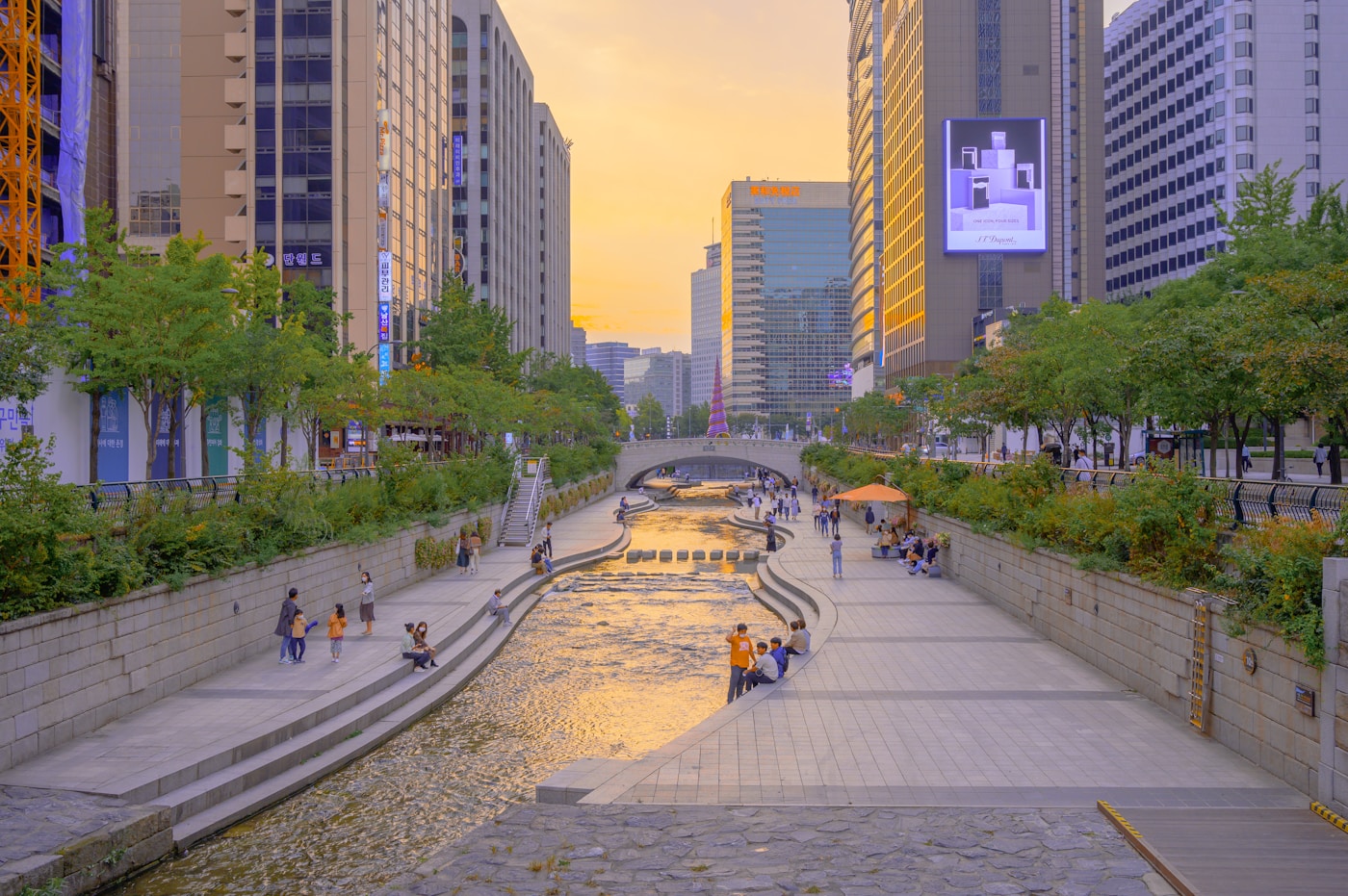
Day 2: Devote the morning entirely to Bukchon — arrive at 10:00 a.m., walk slowly, consider one of the cultural experience programs. In the afternoon, head to Dongdaemun or the Cheonggyecheon Stream for a very different but complementary view of the city — a beautifully restored urban stream that cuts through the middle of downtown Seoul and tells its own story about the city’s relationship with its past.
For a broader travel guide to Seoul neighbourhoods and how to structure your time, see our travel guide section for more itinerary ideas across the city.
Honest mistakes to avoid — I’ve seen them all
I have watched foreign visitors make these mistakes in Bukchon more times than I can count. Some are logistical, some are cultural, and a few are the kind that make the local residents genuinely upset. I’m not judging — many of these are things I saw my own early visiting friends do before they knew better. Here’s the honest list.
Arriving too late in the day
The visiting window is 10 a.m. to 5 p.m. If you show up at 3 p.m. on a weekend, you have two hours in one of the most crowded tourist spots in the city and you’ll leave feeling underwhelmed. You’ll probably also miss the morning light, which is genuinely different — softer, more golden, more photogenic — than the harsh midday overhead glare. Bukchon rewards early risers. I cannot say this enough times.
Coming on a weekend in peak season without a plan
A sunny Saturday in mid-October in Bukchon without a strategy is a recipe for a frustrating visit. I’ve been there when the main alleyway was so congested that movement had slowed to a shuffle. If a weekend in peak season is your only option, go at opening time, have a specific route in mind, and spend most of your time in the less-visited side streets rather than queueing at the famous viewpoints.
Treating it like a movie set
This is the one that genuinely bothers the residents, and I say this not to lecture you but because I’ve seen the posted notices and spoken to people who live here. Some visitors behave as though Bukchon is a constructed attraction designed for their photos. It is not. People live here. When someone presses their face against a wooden gate to peer into a private courtyard, or shouts to their friends across the alleyway in front of someone’s window, or sits on a stranger’s doorstep for a portrait — these are real violations of someone’s privacy in their actual home. The residents have every right to be there. You are the visitor.
Not reading the resident notices
The notices posted by residents throughout Bukchon — in Korean, Chinese, English, and sometimes other languages — are not decorative. They are genuine requests: please be quiet, please don’t photograph into our homes, please don’t block our entrances. Read them. Respect them.
Skipping the history entirely
This is more of a missed opportunity than a mistake, but it affects the quality of your experience. Visitors who walk through Bukchon knowing nothing about its history are essentially looking at pretty old buildings. Visitors who know about Chŏng Segwŏn, about the colonial period, about the preservation battles — they’re walking through a story. It takes ten minutes to read the history section of this article before your visit. Do it.
Wearing impractical shoes
The alleyways of Bukchon are steep, cobbled, and sometimes slippery — especially after rain or in icy winter conditions. I have literally watched someone in platform shoes nearly go over on the main slope in Gahoe-dong. Comfortable, flat walking shoes are not optional here. They are the difference between enjoying yourself and spending the visit nervously watching your feet.
Not having cash or a T-money card
While Korea is increasingly card-friendly, some smaller establishments in and around Bukchon still operate on a cash-only or T-money basis. More importantly, having a T-money card makes your entire Seoul transit experience effortlessly easy. If you don’t have one yet, get one at the airport or at any convenience store in the city. And if you want to understand more about Korean culture and etiquette before your visit — including payment customs — check out our learn Korean section for beginner cultural guidance.
Ignoring the visiting hours regulation
As of January 2025, the entry restriction is real: non-guesthouse visitors can only enter between 10 a.m. and 5 p.m. This regulation was implemented because of the severe impact of overtourism on residents’ quality of life. It is not a suggestion. Respecting it is part of respecting the people who live there.
The mistake I made personally: Early in my Seoul years, before I understood the neighbourhood properly, I brought a group of five friends through Bukchon on a busy Saturday afternoon with absolutely no plan. We got swept along in the tourist current, snapped a few photos at the main viewpoints, and left feeling vaguely confused about what we’d actually experienced. It wasn’t until I returned alone on a quiet Tuesday morning in spring, walked slowly, and read about the history beforehand that I understood what Bukchon actually was. That second visit changed everything. Now every person I bring here gets the history lesson before we walk in the gate.
FAQ — questions foreign visitors actually Google before visiting
Is Bukchon Hanok Village free to enter?
Yes, the public alleyways and streets of Bukchon Hanok Village are free to walk through. There is no admission gate or fee for simply walking the neighbourhood. Some specific cultural experience programs, craft workshops, or guesthouse accommodations within the village may charge fees — check individual offerings directly for current pricing, as these change seasonally.

What are the visiting hours for Bukchon Hanok Village?
As of January 2025, visitors who are not staying in licensed guesthouses within the village may only enter between 10:00 a.m. and 5:00 p.m. This regulation was introduced to manage overtourism and protect residents’ quality of life. Tourists staying in guesthouses within Bukchon are exempt from this restriction. Always verify current regulations through the Seoul Metropolitan Government’s tourism website before your visit, as policies can be updated.
How long should I spend at Bukchon Hanok Village?
For a comfortable, unhurried visit that includes walking the main alleyways, finding the key viewpoints, and exploring some of the quieter side streets, I’d allow two to three hours minimum. If you’re participating in a cultural experience or workshop, add additional time for that. I wouldn’t try to rush it into a 45-minute photo stop — you’ll miss everything that makes the place special.
What’s the nearest subway station?
Anguk Station on Seoul Metro Line 3 (the orange line) is the closest and most convenient. Use Exit 2 for the shortest walk to the village — approximately five to ten minutes on foot. The station is well-signed in English and straightforward to navigate.
Is Bukchon Hanok Village worth visiting if I’ve already seen other hanok areas?
This depends on which other hanok areas you’ve visited. If you’ve been to Jeonju Hanok Village, for example, the experience is quite different — Jeonju is larger and more commercially developed as a tourist destination, while Bukchon is a genuine urban residential neighbourhood with a specific and fascinating history tied to the colonial period. If you’ve only seen reconstructed or museum-style hanok, Bukchon — with its lived-in, residential character — offers something meaningfully different. Personally, I think it’s worth visiting for its historical layer alone.
Can I wear hanbok (traditional Korean clothing) in Bukchon?
Yes, and this is a popular activity. Hanbok rental shops are located near Anguk Station and in the broader Gyeongbokgung area, and many visitors enjoy wearing hanbok while walking through the village. It’s a legitimate and widely enjoyed way to engage with the cultural setting. Just be mindful of how you move through the narrow alleys and be respectful of residents as always — a hanbok doesn’t give you licence to peer into private homes or block doorways.
Is Bukchon Hanok Village good to visit in winter?
Absolutely, and it’s genuinely underrated in winter. The crowds thin significantly from December through February, the light quality on clear days is exceptional, and if there’s snow — which does happen — the visual experience of snow on traditional tile rooftops is unlike anything else in the city. Dress extremely warmly: temperatures in Seoul in January and February can drop to minus ten degrees Celsius or lower. Bring real winter gear, not just a light jacket.
Are there restaurants or cafés inside Bukchon Hanok Village?
There are some cafés and small establishments within the village area itself, some of them operating out of restored hanok spaces, which makes for a lovely setting for a coffee or light snack. For a fuller meal, I’d recommend heading to the nearby Samcheong-dong or Insadong areas, both of which have a wide range of restaurant options at various price points and a high density of good-quality food. As of my last visits, check online reviews or the Seoul tourism portal for current recommendations, as individual establishments open and close regularly.
Is it possible to stay overnight in Bukchon Hanok Village?
Yes. There are licensed guesthouses operating within the village, and staying in one is a genuinely special experience that I’d recommend to anyone who wants to experience the neighbourhood without crowds. Staying in a guesthouse also means you’re exempt from the daytime visiting hours restriction, allowing you to experience the village in the early morning or evening — which is an experience of a completely different quality. Check the Seoul tourism portal or reputable accommodation booking platforms for current availability and pricing, as the number of licensed guesthouses and their rates vary.
What should I know about the resident notices in Bukchon?
Residents throughout Bukchon have posted notices — in multiple languages — asking visitors to keep noise levels low, avoid photographing into private residences, keep groups small, and not block entrances or sit on private doorsteps. The Seoul tourism website formally advises keeping noise minimal, avoiding littering, keeping groups to fewer than ten people, and respecting resident privacy. These are not suggestions for overly sensitive tourists — they are genuine requests from people who are trying to live their normal lives in a neighbourhood that receives 6.4 million visitors a year. Please take them seriously.
What is the best time of year to visit Bukchon Hanok Village?
For scenery: autumn (late September to November) for the foliage and clear skies. For a relaxed visit with fewer crowds: spring (April to May) or winter (December to February). For the absolute best individual experience: a Tuesday or Wednesday morning in spring or winter, arriving at 10:00 a.m. on opening. I’m biased toward spring personally — the quality of light and the moderate temperatures make walking a pleasure, and the neighbourhood feels alive without being suffocatingly packed.
Can I visit Bukchon Hanok Village and Gyeongbokgung Palace in the same day?
Not only can you — I actively recommend it. These two sites are natural companions. The palace represents the formal, grand side of Joseon-era Seoul; Bukchon represents the residential, human-scale side of the same historical period. Together, they give you a much more complete picture of what life in pre-modern Seoul actually looked like across different social layers. Plan palace first, Bukchon second, with a gentle walk through Samcheong-dong connecting the two. It’s one of the best mornings you can have in this city.
One last thing I always tell my friends before we walk in: Look up. Not for the viewpoints, not for the Instagram angles — just look up at the curved roof edges against the sky. In Korean traditional architecture, those upturned corners of the roofline are called cheoma, and they’re designed not just for aesthetics but to allow maximum light into the courtyard in winter and create shade in summer. Every element of these buildings was thought through for the people who lived inside them. When you walk through Bukchon knowing that, you’re not just looking at old houses. You’re looking at someone’s considered, careful answer to the question of how to live well. I think that’s worth pausing for.
Final thoughts from a local
I’ve been walking through Bukchon Hanok Village for fifteen years. I’ve brought friends from America, from the Netherlands, from Vietnam, from Australia, from everywhere, and I have yet to bring someone who wasn’t moved by it in some way. But I’ve also watched the neighbourhood change under the weight of its own fame — the resident population declining year by year, the notices on the walls getting more insistent, the government having to step in with visiting hour restrictions just to keep daily life functional for the people who still live there.
Bukchon survived colonial pressure, rapid modernisation, policy battles, and decades of urban neglect to reach us in the form it’s in today. The people who live there now are the inheritors and custodians of something genuinely rare. We are guests in their home — all 6.4 million of us per year.
So my honest final advice, from someone who loves this neighbourhood deeply: visit Bukchon Hanok Village. Go early, go quietly, go with some understanding of what you’re walking through. Buy something from a local artisan if you can. Sit still for a moment in one of the quieter alleys and just listen. Then leave it in better shape than you found it — which means nothing more complicated than being the kind of person you’d want wandering past your own front door.
Seoul will give you a great deal if you let it. Bukchon is one of its finest gifts. Treat it accordingly.
For more in-depth travel guides to Seoul’s historic neighbourhoods and beyond, explore our full Korea travel guide section — and if you want to pick up some essential Korean phrases before your trip, our learn Korean section has you covered with practical, tourist-focused language basics.