Seoul’s Best Jokbal Restaurants — Braised Pig Trotters Worth the Trip
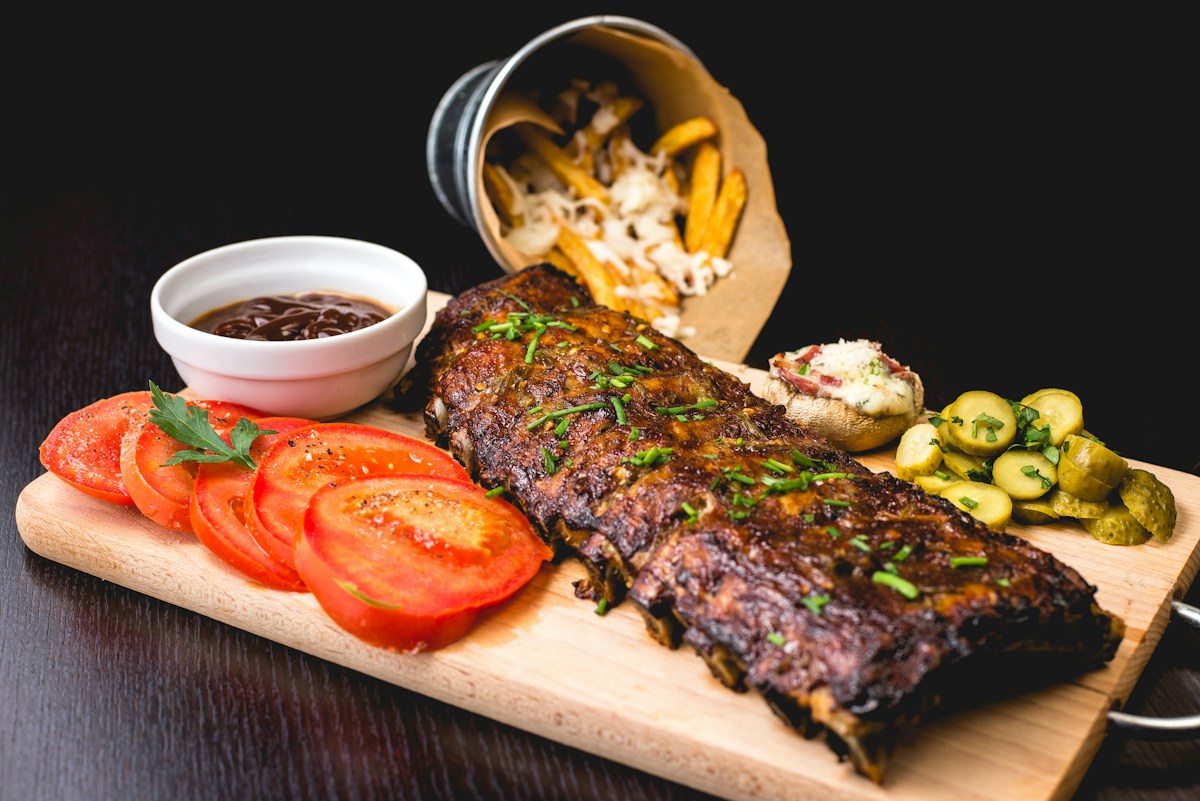
The first time a bowl of 족발 (jokbal) landed on the table in front of me — gleaming, mahogany-dark, trembling with collagen — I genuinely didn’t know what I was looking at. Then the smell hit me: soy, ginger, star anise, and something deep and porky that felt like it had been simmering since before I was born. I picked up a slice, wrapped it in a crisp perilla leaf with a smear of fermented shrimp paste, and that was it. I was completely, helplessly converted. Jokbal is one of those dishes that sounds strange on paper — braised pig trotters — but tastes like someone distilled the entire warmth of Korean cuisine into a single bite.
Seoul takes jokbal seriously. Seriously enough that entire neighbourhoods have built reputations around it, and seriously enough that Koreans will travel across the city on a rainy Tuesday night just to get the right plate from the right place. The four jokbal restaurants on this list were ranked by real Naver Map review counts — meaning thousands of actual diners voted with their feet and their phones. These are not tourist traps. These are the places locals go when they want the real thing, cold beer in hand, soju on the way. Let’s eat.
⭐ Naver Verified — 2,000+ reviews
★★★★★
만족오향족발 시청점 — Manjok Ohyang Jokbal (City Hall Branch)
📍 Jung-gu, City Hall area🍽️ Five-Spice Braised Pork Trotters💰 ₩₩⏰ Lunch & Dinner daily
Walking into Manjok Ohyang near City Hall feels like stepping into a jokbal institution — the kind of place where the ajummas behind the counter move with the practiced efficiency of people who have sliced ten thousand pigs’ worth of trotters and are quietly proud of every single one. The “ohyang” (오향, five-spice) sets this place apart: where most jokbal leans heavily on soy and garlic, here you catch warm whispers of star anise and cinnamon in every bite, giving the meat a complexity that lingers long after you’ve left. Order the medium-size platter, pile the glistening slices onto a fresh lettuce leaf, dab on some saeujeot (fermented shrimp paste), and try not to close your eyes in public.
오향족발 (중) (Ohyang Jokbal, Medium) — Five-spice braised trotters, sliced and served with lettuce, perilla leaf, and fermented shrimp paste
Price
Approx. ₩25,000–₩35,000 per platter (serves 2)
Foreigner Tip
Located a short walk from City Hall station (Line 1/2) — look for the Korean sign with 족발 in red. Point at the photo menu on the wall and hold up fingers for the size you want. Staff are used to confused-but-hungry foreigners.
“The five-spice marinade here ruins every other jokbal for you — in the best possible way.”
⭐ Naver Verified — 1,500+ reviews
★★★★★
화곡영양족발 — Hwagok Yeongyang Jokbal
📍 Hwagok-dong, Gangseo-gu🍽️ Traditional Braised Pork Trotters💰 ₩₩⏰ Dinner-focused, open late
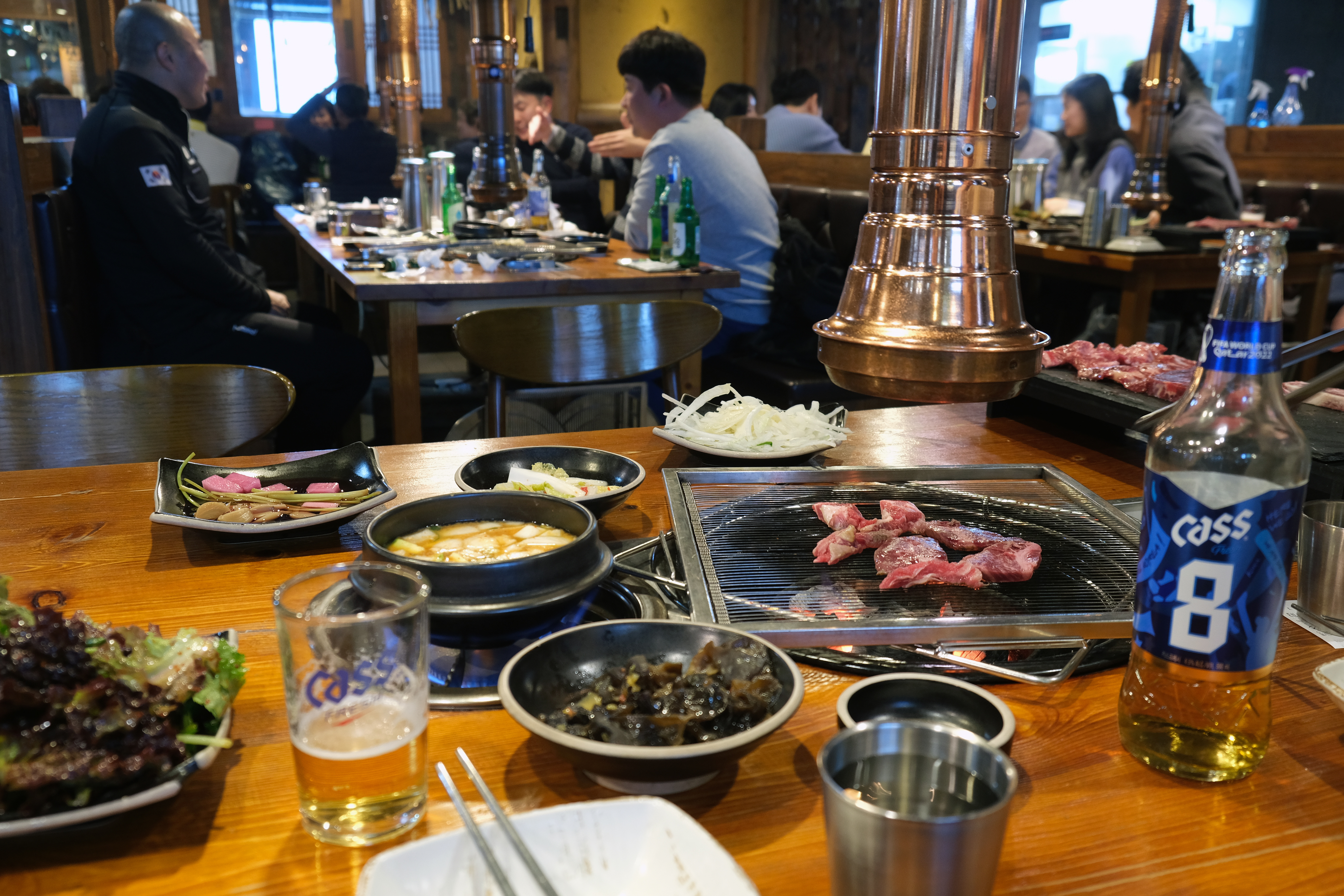
Hwagok is one of those residential neighbourhoods in western Seoul that most tourists never reach — which is exactly why the locals who live there are fiercely protective of their jokbal gem. The moment you push open the door of 화곡영양족발, the braising steam hits you like a warm embrace: soy, ginger, garlic, and that unmistakable low-and-slow porky richness that tells you nothing has been rushed here. The trotters arrive with skin that wobbles with collagen and meat that pulls apart with the gentlest nudge of chopsticks — this is “yeongyang” (영양, nutritious) jokbal at its most honest, with no gimmicks and no shortcuts. Pair it with a cold Hite beer and a side of bossam kimchi and you’ll understand why the neighbourhood regulars come here on a near-religious basis.
영양족발 (소/중) (Yeongyang Jokbal, Small/Medium) — Classic braised trotters with a deeply savoury, clean-flavoured braise; ask for 막국수 (buckwheat noodles) on the side
Price
Approx. ₩22,000–₩32,000 per platter
Foreigner Tip
Take subway Line 5 to Hwagok station and walk about 8 minutes. This is a local neighbourhood spot — bring a Korean-speaking friend if possible, or use Papago to translate the menu. Cash is welcomed but cards are generally accepted.
“Honest, unfussy, perfectly executed — the kind of jokbal that makes you sad when the plate is empty.”
참족 (Chamjok) — the name literally means “real” or “true” jokbal — sets its stall out with quiet confidence, and it earns every bit of it. Tucked into a ground-floor spot near Yangjae in Gangnam, this place draws a noticeably well-dressed after-work crowd: the kind of Gangnam professionals who know exactly what they want and don’t settle for mediocre. The trotters here are braised to a shade somewhere between deep amber and lacquer black, the skin impossibly tender but never slimy, the meat inside clean-tasting and fragrant. What struck me most was the balance — not too salty, not too sweet, with a ginger-forward warmth that feels almost refined for a dish that involves eating with your hands.
참족발 (중) (Chamjokbal, Medium) — Signature “true jokbal” platter; also order 냉채족발 (naengchae jokbal) if available — cold jellied trotters with mustard sauce, perfect in summer
Price
Approx. ₩25,000–₩38,000 per platter
Foreigner Tip
Near Yangjae station (Line 3/Shinbundang Line) — a great stop if you’re already exploring Gangnam. The neighbourhood is affluent and English signage is more common; staff here tend to be comfortable with pointing and picture menus.
“This is what happens when a Gangnam crowd demands their comfort food be excellent — jokbal with a backbone.”
⭐ Naver Verified — 1,000+ reviews
★★★★☆
팔당족발 — Paldang Jokbal
📍 Hakdong, Gangnam-gu🍽️ Paldang-Style Braised Pork Trotters💰 ₩₩⏰ Dinner-focused, open late
팔당 (Paldang) is a riverside town east of Seoul, famous for its clean water and, among Koreans in the know, its particular style of jokbal — and this Hakdong restaurant brings that tradition into the heart of Gangnam. Up on the second floor, away from the street noise, the atmosphere feels almost like a private dining room: low lighting, the smell of soy and spice hanging warmly in the air, and portions that arrive looking almost too beautiful to dismantle. The Paldang style leans toward a slightly sweeter, more aromatic braise than the Seoul norm, with a deeply gelatinous skin that practically melts on contact with your tongue. This is a late-night Gangnam staple — the kind of place that fills up around 9pm with people who’ve just finished work and need something deeply satisfying before the soju really gets going.
팔당족발 (중) (Paldang Jokbal, Medium) — Sweeter, river-town-style braised trotters; pair with 보쌈김치 (bossam kimchi) and a round of 소주 (soju)
Price
Approx. ₩25,000–₩35,000 per platter
Foreigner Tip
The restaurant is on the second floor (201호) — don’t miss the staircase entrance. Near Hakdong station (Line 7). This is a popular late-night spot; arriving after 8pm means you’ll experience it at its buzzing best. Cards accepted.
“The Paldang-style sweetness here is subtle but unmistakable — like the best version of something you didn’t know you were missing.”
🗺️ Practical Guide — Eating Jokbal as a Foreigner in Seoul
How to order: Point confidently at the photo menu and hold up fingers to indicate how many people are eating — staff will recommend the right size. The Korean phrase “이거 주세요” (i-geo ju-se-yo, “I’ll have this, please”) combined with a finger-point works universally.
Cash vs card: Most jokbal restaurants in Seoul accept both, but smaller neighbourhood spots may prefer cash. Carry ₩50,000 in small bills just in case — it’s never wasted in Seoul.
Best time to visit: Lunch (12–1:30pm) is quieter and sometimes cheaper with set menus. Dinner after 7pm is the authentic experience — noisier, livelier, and accompanied by soju. Avoid peak dinner rush (6–7:30pm) if you want to skip queues.
One phrase locals love: After your first bite, say “진짜 맛있어요!” (jin-jja ma-shi-sseo-yo!) — “This is genuinely delicious!” You will receive beaming smiles and possibly extra banchan.
Etiquette tip: Jokbal is always shared — don’t serve yourself first before older people at the table, and use the serving chopsticks (not your personal ones) to take food from communal plates. The leaf wraps (상추, sangchu) are not just garnish — they’re essential to how the dish is meant to be eaten.
🏆 Our Verdict
These four restaurants represent some of the most loved jokbal spots in Seoul — verified by thousands of real Naver reviews from Korean diners who take their braised trotters very seriously indeed. Whether you’re visiting the City Hall area and stumbling into Manjok Ohyang’s fragrant five-spice cloud, making the pilgrimage to Hwagok for honest neighbourhood cooking, or settling into a late-night Gangnam booth at Paldang Jokbal with soju in hand, you’re getting the real Seoul experience. Jokbal is not just food here — it’s a ritual, a social lubricant, and one of the most overlooked great dishes in all of Korean cuisine. Don’t leave Seoul without trying it at least once.
Seoul’s jokbal scene rewards curiosity — the more neighbourhoods you explore, the more you realise that every district has its own beloved spot, its own loyal regulars, and its own slightly different take on the perfect braise. Start with the restaurants on this list, and let them be your gateway. And when you’re ready to go deeper into Seoul’s incredible food culture — from 순대국밥 (sundae gukbap) to late-night 포차 (pojangmacha) street stalls — explore more of our Seoul food guides right here on KRGuide.com. Seoul is always hungry, and honestly, so are we.
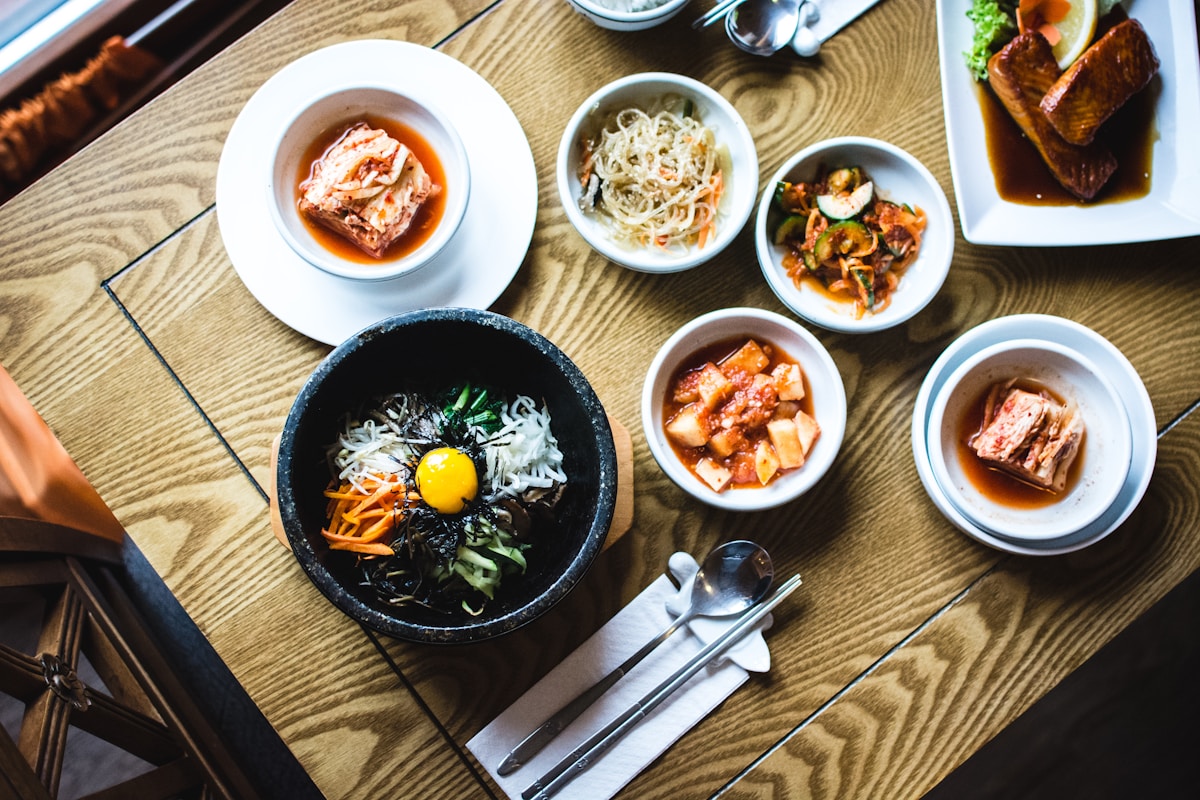
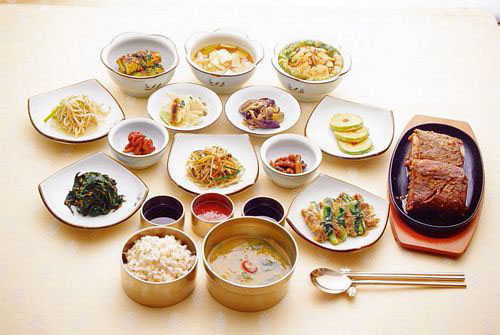
Banchan (Korean Side Dishes) · Photo via Wikimedia Commons
Why I Think Every Visitor to Korea Should Experience Banchan (Korean Side Dishes)
The first time I brought a foreign friend to my neighborhood restaurant in Mapo-gu — a worn-down little spot with plastic chairs and a handwritten menu taped to the wall — I watched his eyes go wide the moment the food arrived. We had ordered one bowl of doenjang jjigae each. Just that. But the table was suddenly covered in what looked like eight or nine small dishes: a pile of shredded radish, some seasoned spinach, a dark tangle of braised lotus root, a small plate of crispy anchovies, a mound of kimchi, and a few more things I didn’t even register anymore because they’d been part of my table landscape my entire life. He turned to me and said, quietly, almost reverently: “Did I order all of this?” I shook my head. “It just comes,” I told him. He didn’t know what to say. I’ve seen that same expression on a dozen foreign faces since. That pause — somewhere between delight and disbelief — is the moment I think most visitors genuinely fall in love with Korean food. Not because of what they ordered, but because of everything that came with it.
That is the magic of banchan (Korean side dishes). It’s not a concept you can fully explain before someone sits down at a Korean table. You have to live it. You have to reach across for a bit of this, then that, then go back to your rice, then return to the kimchi, then discover that the braised burdock root you ignored at first is actually your favorite thing on the table. It’s participatory. It’s communal. And once you understand it, you’ll never look at a plate of food the same way again.
I grew up in Seoul. My mother made banchan every Sunday in batches — storing them in a row of small containers in the fridge that we’d draw from throughout the week. My school cafeteria always had at least three rotating side dishes alongside the rice and soup. My grandmother’s table in Jeonju, when we visited during Chuseok, had so many small plates that there was barely room for the soup bowls. Banchan has been the background noise of my entire eating life. And writing this guide is my attempt to help you hear what that noise is actually saying.
I remember being eight years old and refusing to eat gaji namul — the seasoned braised eggplant that my mother made every other week. I thought the texture was wrong. I thought it smelled too strong. Twenty years later, it’s the first banchan I make when I want to feel at home. Most Koreans have a story like this. Banchan is not just food. It’s a timeline of your relationship with taste.
If you’re visiting Korea — whether for a week or a month — understanding banchan will transform your dining experience. Not just aesthetically, but practically. You’ll know why some restaurants give you more dishes than others. You’ll understand why it’s rude to move certain bowls. You’ll stop being surprised when the side dishes get refilled without you asking. This guide covers all of it: the history, the etiquette, the regional differences, what to order, and the honest mistakes most foreign visitors make. Let’s get into it.
What Banchan Actually Is — And the Centuries of History Behind It
Let me give you the clean version first, and then the interesting version. The clean version: banchan (반찬, hanja: 飯饌, pronounced roughly BAHN-chahn) refers to the small side dishes served alongside cooked rice in Korean cuisine. They sit in the center of the table, shared by everyone eating. They are served in small portions, meant to be finished at each meal, and — importantly — refilled for free if you run out. That’s the clean version. Now here’s why any of that exists at all.
The Buddhist Roots: A Meat Ban That Shaped Everything
According to historical records cited by Wikipedia’s entry on banchan, these dishes are thought to have emerged as a direct result of Buddhist influence during the mid-Three Kingdoms period, roughly the 4th to 7th centuries CE. The monarchies of these kingdoms followed Buddhist doctrine closely enough that they implemented actual prohibitions against eating meat. No beef. No pork. No poultry at royal tables or in court kitchens.
What this meant in practice was that Korean court cooks — who were among the most skilled food professionals of their era — had to get creative with vegetables, grains, and fermented products. They developed elaborate methods for cooking, seasoning, presenting, and preserving plant-based dishes. This wasn’t peasant food born from necessity. This was royal cuisine built around the artful transformation of humble ingredients. Braising, pickling, fermenting, blanching and seasoning — these techniques were refined over generations in kitchens that had the resources to experiment.
Common people, meanwhile, had smaller, simpler arrays of the same kinds of dishes. But the philosophy was the same: build the meal outward from rice, using many small, distinct flavors to create nutritional balance and variety. That structure has never left Korean food culture.
The Mongol Invasions and the Return of Meat
The Mongol invasions of Korea in the 13th century ended the formal prohibition against meat-eating. Meat returned to Korean tables, including in ritual contexts like jesa (ancestral rites). But here’s the remarkable thing: approximately six centuries of vegetable-based cuisine had already embedded itself so deeply into Korean culinary identity that banchan didn’t disappear. It evolved. Meat dishes became a centerpiece — the main course — but the surrounding landscape of small vegetable, fermented, and seasoned side dishes remained. Banchan had become structural, not supplementary.
The Joseon Dynasty: Confucian Aesthetics at the Table
The Joseon Dynasty (1392–1897) is where Korean court food culture reached its most formalized expression. Buddhism fell out of royal favor; Confucianism became the dominant guiding philosophy. The elaborate table-setting system you might read about — the cheop system — solidified during this period.
A basic Korean table setting is called a bansang, and it always includes rice (bap), soup (guk or tang), a condiment like gochujang or ganjang, a stew (jjigae), and kimchi. From there, the number of additional banchan dishes determines the formality of the table:
Table Setting Name
Number of Banchan
Who It Was For
3 cheop (삼첩) bansang
3 side dishes
Common people, everyday meals
5 cheop (오첩) bansang
5 side dishes
Middle class, minor officials
7 cheop (칠첩) bansang
7 side dishes
Upper class, senior officials
9 cheop (구첩) bansang
9 side dishes
High nobility, royal family members
12 cheop (십이첩) bansang
12 side dishes
The King exclusively
Note — and this is something that surprises a lot of people — kimchi is not counted in the cheop number. Kimchi is so fundamental to the Korean table that it exists outside the accounting system entirely, like rice itself. It’s assumed. It’s always there.
The Joseon royal table also operated under the philosophy of yaksikdongwon — the idea that food and medicine share the same origin. Every dish was meant to contribute to nutritional balance, working together across flavor profiles and ingredients. This is why a proper Korean table spread always contains a range of tastes: something salty, something spicy, something sour, something bitter, something plain. That balance was intentional, philosophically grounded, and centuries in the making. You can read more about the cultural significance of Korean royal cuisine through the Korean Food Promotion Institute (Hansik), which has excellent resources in English.
Fermentation: The Preservation Philosophy That Built Banchan
One more piece of history that’s essential to understanding banchan: fermentation. Unlike Chinese cuisine, which historically had access to plentiful cooking oil and favored frying and pickling in vinegar, Korean food culture developed around fermentation as the primary preservation method. The reasons were geographic and economic. The Korean peninsula’s mountainous terrain isolated communities; winters were harsh; farming-based communities needed to store vegetables and grains through long cold months without refrigeration.
Fermented soybean products — doenjang (fermented soybean paste), ganjang (soy sauce), and gochujang (fermented chili paste) — became the foundational seasoning agents of Korean cooking. Kimchi, of course, is the most famous fermented banchan. But the same principle applies across dozens of other dishes: fermentation to preserve, fermentation to build flavor, fermentation to add nutritional value. The World Institute of Kimchi has done serious scientific research on the probiotic and health benefits of these fermented foods, if you want to go deep on that rabbit hole.
The point is: banchan didn’t happen by accident. It was shaped by religion, by royal hierarchy, by geography, by philosophy, and by the practical demands of survival. Every time you sit down at a Korean table and reach for one of those small dishes, you’re reaching across about fifteen centuries of culinary history.
How Koreans Actually Eat Banchan — The Real Table Culture
Travel articles will tell you that Korean food is “communal” and “shared.” That’s true, but it doesn’t tell you enough. It doesn’t tell you the actual choreography of a Korean meal — how the table functions, what the unspoken rules are, and why eating “wrong” doesn’t just mean you look like a tourist. It means you’re accidentally being rude.
Banchan · Wikimedia Commons
Understanding the Layout of a Korean Table
A standard Korean table, even at a casual restaurant, has a clear structure. Individual bowls of rice and soup are placed in front of each person — these are yours alone and no one else should eat from them or even reach across them casually. The banchan dishes, however, sit in the center or along the middle of the table and are shared by everyone. The main course — a grilled meat, a braised fish, a large stew — also sits centrally, though typically at a slightly more prominent position.
You eat by taking small portions from the central banchan dishes with your chopsticks, bringing them back to your bowl area, and eating them with bites of rice. You don’t scoop a huge amount of one thing onto your plate at once. You pick a little, eat, pick a little more. This creates a continuous rhythm — rice, then a bite of this, then a bite of that, then back to rice — that makes a Korean meal feel very different from eating Western food, where everything is plated individually in front of you from the start.
The Refill Culture — And Why It’s Completely Normal to Ask
One of the most genuinely wonderful things about eating banchan at a Korean restaurant is that most banchan dishes are refilled for free. Finished the kongnamul muchim (seasoned soybean sprouts)? Just flag down the staff and ask for more. In Korean, you can say “이거 더 주세요” (Igeo deo juseyo) — “More of this, please.” Point at the empty dish. They will refill it, no charge, no attitude. This is normal. This is expected. Do not feel embarrassed about it.
This is something I always emphasize to visiting friends, because many of them hesitate to ask for refills thinking they’re being impolite or greedy. You are not. The restaurant has priced their meals with the assumption that banchan will be refilled. It’s baked in. Ask away.
Chopstick Rules and Bowl Etiquette You Must Know
Korean table manners around banchan and chopsticks are specific and worth knowing before you sit down:
Never stick chopsticks upright in rice. This mimics a funeral ritual offering and is considered deeply inauspicious. Lay them flat across your bowl or on a chopstick rest if provided.
Don’t stab food with chopsticks. Use them to pick up, not spear. If you’re struggling with slippery items, a spoon is fine for many things.
Don’t pour your own drink. In Korean dining culture, you pour for others and they pour for you. This applies especially with alcohol, but also with water or juice in a social setting.
Wait for the eldest person to begin eating before you start. This is a Confucian-influenced custom and still widely practiced, especially at family meals or formal restaurant dinners.
Your rice bowl stays on the table. Unlike in Japanese or Chinese table culture, you do not lift the rice bowl up to your mouth in Korean dining. It sits on the table, and you bring the food to your mouth with your chopsticks or spoon.
Do not pour sauce directly over your rice unbidden. Some dishes come with dipping sauces; those are for dipping, not drenching.
What to Drink with Banchan
Water and barley tea (boricha) are the most common non-alcoholic accompaniments — boricha in particular has a roasted, slightly earthy flavor that complements salty banchan beautifully. If you’re drinking alcohol, makgeolli (milky rice wine) is exceptional with fermented banchan and heavier meat dishes. Soju works across almost everything but is most classically paired with grilled meats and kimchi-based stews. Beer is increasingly popular, especially among younger Koreans. But if you want the most authentic pairing experience for a banchan-centered meal, go with boricha or makgeolli — both have the body to stand up to strong fermented flavors without overwhelming the subtler dishes.
The Main Types of Banchan and Their Regional Variations
This is where banchan gets genuinely complex and exciting. “Korean side dishes” is a category so broad that it can include anywhere from three to forty or more distinct dishes depending on the meal and the region. Let me break down the major categories and the most important regional differences you’re likely to encounter.
The Core Categories of Banchan
Most banchan fall into one of several preparation-based categories. Understanding these categories will help you navigate menus and know roughly what you’re eating before the food arrives.
Kimchi (김치): Fermented vegetables — most famously napa cabbage — seasoned with chili, garlic, ginger, and salted fish. As discussed, kimchi is so foundational it exists outside the cheop counting system. Every table gets it. There are over 200 documented varieties.
Namul (나물): Seasoned and cooked vegetables. These are blanched, sautéed, or raw greens and roots dressed with sesame oil, garlic, soy sauce, and other seasonings. Spinach namul, bean sprout namul, fernbrake namul (gosari) — these are the workhorses of the Korean table.
Jorim (조림): Braised and simmered dishes with a reduced sauce. Braised spicy tofu (dubu jorim), braised black beans (kongjaban), braised lotus root (yeongeun jorim) — these tend to be slightly sweet, savory, and intensely flavored.
Jeon (전): Savory pan-fried pancakes or fritters. Kimchi jeon, haemul pajeon (seafood and green onion), zucchini jeon — these straddle the line between banchan and main course, depending on the meal.
Bokkeum (볶음): Stir-fried dishes. Spicy stir-fried squid, stir-fried anchovies with nuts and chili — these are more intensely seasoned and work beautifully as contrast against plain rice.
Muchim (무침): Mixed or dressed dishes, often raw or briefly blanched, tossed with seasoning. Cucumber muchim, dried radish muchim — lighter and often brighter in flavor than jorim.
Jangajji (장아찌): Pickled vegetables in soy sauce, gochujang, or vinegar. Garlic jangajji, perilla leaf jangajji — these are punchy, concentrated condiment-like dishes that you eat in very small amounts.
Gui (구이): Grilled or pan-roasted dishes. Dried fish, salted fish, meat — when served as banchan, these are smaller portions alongside the main spread.
Regional Differences: Why Jeolla Province Is the Promised Land
If you want to understand the full scope of Korean banchan culture, you need to eat in Jeolla Province (전라도) — specifically Jeonju. As even the Wikipedia source on banchan notes, Jeolla Province is particularly famous for serving many different varieties of banchan in a single meal. This is not marketing hyperbole. It is a genuine regional characteristic rooted in agricultural richness, strong culinary tradition, and a culture of hospitality that measures generosity in the number of dishes on the table.
When I visited Jeonju with my family as a child, I remember counting the dishes at a restaurant before we’d even ordered: there were already twelve small plates on the table before the main food arrived. My grandmother told me this was normal. In Seoul, you might get four to six banchan at a casual meal. In Jeonju, eight to fifteen is completely unremarkable.
Gyeonggi Province (Seoul and surrounding areas) tends toward cleaner, less intensely seasoned banchan — a reflection of the historically more restrained royal court influence. Gyeongsang Province (southeastern Korea, including Busan) is known for bolder, saltier, and spicier flavors. Jeju Island has unique seafood-based banchan using local ingredients you won’t easily find on the mainland.
Region
Characteristic Flavor Profile
Notable Banchan
Jeolla Province (Jeonju)
Complex, rich, many varieties, generously spiced
Ganjang gejang, diverse namul spreads, kongnamul
Gyeonggi Province (Seoul)
Cleaner, moderately seasoned, influenced by court cuisine
Traditional banchan at a home or a hansik (Korean cuisine) restaurant will prioritize fermented, braised, and seasoned vegetable dishes with very little in the way of Western influence. Modern banchan — increasingly visible in Seoul’s trendier neighborhoods like Yeonnam-dong or Seongsu — might incorporate fusion elements: a kimchi prepared with non-traditional vegetables, a namul dressed with olive oil alongside sesame, or small fusion appetizers served in the banchan style.
My honest opinion? Go traditional when you’re visiting Korea for the first time. The modern interpretations can be interesting, but they don’t give you the foundation. Eat the real thing first. Develop your palate. Then explore the variations from an informed position.
Vegetarian and Vegan Options Among Banchan
Technically, many namul and jangajji dishes are vegetarian. In practice, it’s complicated — many banchan that look vegetarian are seasoned with myeolchi jeot (salted fermented anchovies) or other fish-based products. If you’re strictly vegetarian or vegan, you’ll want to communicate this clearly — in Korean if possible — and specifically ask about fish sauce usage. Temple food restaurants (사찰음식, sachal eumsik) are your best bet for genuinely vegan Korean banchan, as Buddhist temple cuisine excludes meat, fish, and even the “five pungent vegetables” (garlic, green onions, etc.). Seoul has several dedicated temple food restaurants, and the quality is extraordinary. Check Seoul Tourism’s official food guide for current listings.
Where to Find Great Banchan in Korea — A Local’s Guide to Spotting the Real Thing
The honest answer to “where do I find great banchan?” is: almost anywhere that serves traditional Korean food. But there’s a quality spectrum, and knowing how to read the signs of a genuinely good place will serve you well.
1005 eggjjim · Wikimedia Commons
Neighborhoods Worth Exploring in Seoul
In Seoul, neighborhoods like Insadong and Bukchon have traditional Korean restaurants that attract tourists but still maintain real quality — look for the ones that are clearly patronized by local office workers at lunch, which is always a positive sign. Nakwon-dong and the streets around Gyeongbokgung Palace have a cluster of traditional hansik restaurants where banchan spreads can be impressive. Noryangjin around the fish market has exceptional seafood banchan.
For a more local experience, any of Seoul’s older residential neighborhoods — Mangwon, Seongbuk-dong, Dobong — will have unpretentious restaurants where the banchan is made daily, in-house, and changes with the season. These are often the best finds. They won’t have English menus. They might not have photos. But the food will be real.
Signs of a Good Banchan Restaurant
Here’s what I actually look for when I walk into a Korean restaurant for the first time:
The banchan arrives quickly and without fanfare. In a good restaurant, the side dishes hit the table within minutes of you sitting down because they’re made fresh that day and kept ready. If the banchan is slow to arrive, that’s a mild warning sign.
The kimchi tastes fermented, not just spicy. Fresh kimchi is fine, but a well-fermented kimchi (called mukeunji when aged) has a complex sour depth that tells you the kitchen understands fermentation. If the kimchi tastes like raw cabbage with chili paste, it’s been made too recently or not with care.
The variety reflects the season. Good Korean restaurants rotate their banchan based on what’s available. If you visit in autumn and there’s no kabocha or chrysanthemum greens anywhere on the table, something is off. Seasonality matters.
The dishes are distinct from each other. At a lazy restaurant, several banchan will taste similar — all dressed with the same sauce, all the same level of saltiness. At a good restaurant, each dish has its own clear identity: one is nutty and light, another is deeply savory, another is bright and acidic.
They refill without being asked. The best restaurants notice when a dish is empty and refill it proactively. This is a mark of genuine hospitality culture.
Jeonju: Make the Trip If You Can
I will say this clearly: if banchan culture interests you seriously, the two-hour KTX train ride from Seoul to Jeonju is one of the best food investments you can make in Korea. Jeonju’s traditional restaurants — especially those serving hanjeongsik (Korean full-course set meals) — will give you banchan spreads that are genuinely breathtaking in their variety and quality. As of my last visit, some of the set meal restaurants in the Hanok Village area were still operating with remarkable authenticity. Check the Korea Tourism Organization’s official food guide for updated Jeonju food recommendations.
For more restaurant recommendations across Seoul and beyond, browse our Korean restaurant guide.
Honest Mistakes Foreigners Make with Banchan — Without Judgment
I’ve eaten with enough foreign friends and visitors over the years to compile a pretty comprehensive list of the misunderstandings, missteps, and misconceptions that come up around Korean banchan. None of these are catastrophic errors — Koreans are generally gracious hosts and will not make you feel terrible for them — but knowing this stuff in advance will make your experience smoother and more respectful.
Treating Banchan Like Appetizers
This is the most common conceptual error. Many visitors assume the small dishes that arrive first are appetizers — a prelude to the “real” food — and proceed to eat through them quickly before the main dish arrives. This misses the entire point. Banchan are meant to be eaten with your rice and main course, not before. They are not starters; they are co-equals in the meal structure. Pace yourself. Take small amounts. Keep returning to them throughout the meal.
Eating Jangajji Like a Regular Side Dish
Jangajji — the intensely pickled or fermented condiment-style banchan — should be eaten in tiny quantities. A single garlic clove pickled in soy sauce, or a bite of perilla leaf, is meant to punctuate the meal, not be consumed in handfuls. I’ve watched visitors eat through an entire plate of garlic jangajji the way you’d eat edamame, and then wonder why the rest of the meal tasted flat. These are seasoning elements. Treat them accordingly.
Assuming Refills Will Happen Automatically
As I mentioned earlier, refills are the norm — but you usually need to ask for them. Don’t wait expectantly for the server to notice. Just ask. Point and say “더 주세요” (deo juseyo — “more please”). It takes two seconds and you’ll get more immediately.
Mixing Everything Together
A friend of mine once visited and, on his first meal, proceeded to scoop portions of every single banchan into his rice bowl at once, then mixed it all together into what he described as “a rice salad.” He was thrilled with it. He is also the kind of person who pours all his wine into a single glass regardless of variety. I love him dearly, but he was doing it wrong. Each banchan dish has its own identity. Taste them individually first. Then begin mixing bites as you go, naturally, the way the meal is designed to evolve.
There’s actually a dish called bibimbap where mixing everything together is entirely correct and intended — but that’s a different dish with a specific mixing ritual. At a regular banchan spread, preserve the individuality of each dish.
Ignoring the “Plainer” Dishes
Visitors often gravitate immediately to the spiciest and most dramatically flavored banchan — the bright red kimchi, the spicy braised tofu — and ignore the quieter dishes. A pale heap of seasoned beansprouts. A plain-looking pile of blanched greens. These understated dishes are often technically the most impressive, requiring careful seasoning judgment to get right. They also do the essential work of balancing the table. Don’t skip them.
Sharing From Personal Bowls
Your rice bowl and soup bowl are individual and personal. Don’t offer food directly from them to someone else’s bowl, and don’t take from someone else’s. Everything you want to share comes from the central banchan dishes. This is a firm line in Korean dining etiquette.
Expecting the Same Banchan Everywhere
This might sound obvious, but many visitors are surprised when a restaurant in Busan serves completely different banchan than a restaurant in Seoul. They expect a standardized set. Korean banchan varies by region, by season, by the specific restaurant, and by what the kitchen has on hand that day. Embrace the variation. It’s part of what makes eating in Korea endlessly interesting.
Frequently Asked Questions About Banchan
Is banchan always free at Korean restaurants?
At traditional Korean restaurants serving set meals or hansik, yes — banchan is included with your meal and refills are free. Some modern or fusion restaurants may charge for certain premium side dishes. When in doubt, you can ask before ordering, but at the vast majority of traditional restaurants, free banchan is simply the norm.
0606 hanjeongsik damyang · Wikimedia Commons
How many banchan dishes should I expect?
At a casual restaurant, expect three to six dishes. At a dedicated hansik or hanjeongsik restaurant, you might get eight to fifteen. In Jeonju or other parts of Jeolla Province, upwards of fifteen to twenty is possible at a traditional full-course restaurant. The more formal and specialized the meal, the more banchan you’ll receive.
Is kimchi always included as banchan?
Almost universally, yes. Kimchi is so foundational that it appears at essentially every Korean meal, from the most casual to the most formal. It is also, historically, not counted in the official cheop banchan numbering system — it’s considered a given, like rice and soup.
Can vegetarians eat Korean banchan?
Many banchan dishes are vegetable-based and appear vegetarian. However, Korean cuisine frequently uses fermented fish products (fish sauce, salted shrimp, dried anchovies) as seasoning even in vegetable dishes. If you’re vegetarian or vegan, communicate this clearly and look for temple food (sachal eumsik) restaurants, which are genuinely plant-based. You can learn more about Korean food accessibility for dietary restrictions at the Korean Food Promotion Institute.
Why does banchan taste so different from restaurant to restaurant?
Because it’s made in-house, daily or weekly, by individual cooks with their own recipes and regional influences. There’s no standardized banchan formula. My mother’s kongnamul (seasoned beansprouts) tastes different from my aunt’s, which tastes different from any restaurant version. This is a feature, not a bug. Korean food has retained enormous individual and regional variation precisely because banchan is house-made rather than mass-produced.
What’s the most impressive banchan spread in Korea?
For sheer variety and cultural authenticity, Jeonju in Jeolla Province is widely considered the gold standard. The hanjeongsik (Korean full-course set meal) restaurants there regularly serve fifteen or more banchan dishes alongside your main course. For Korean royal cuisine recreation, some Seoul restaurants specializing in gung-joong (palace cuisine) offer 12-cheop settings that are genuinely spectacular.
Is it rude to not eat all the banchan?
No. Banchan dishes are small and shared; it’s perfectly normal not to finish every one of them. The key is to try each dish — taking a small amount and tasting it — rather than ignoring certain dishes entirely. It’s rude to refuse food, but it’s not rude to not clean every plate.
What Korean phrases should I know for ordering banchan?
How do I know if a place serves traditional vs. modern banchan?
Traditional places will typically have handwritten menus or simple printed menus, older décor, a predominantly Korean clientele, and banchan that leans heavily on fermented, braised, and seasoned vegetable dishes. Modern or fusion places often have English menus, sleeker interiors, and may serve banchan-style dishes that incorporate non-traditional ingredients. Neither is wrong — but for an authentic first experience, traditional is the better starting point.
Why do some restaurants have more banchan than others?
The number of banchan reflects the formality and price point of the meal, the regional tradition of the restaurant, and the kitchen’s philosophy. A quick rice-and-soup lunch spot might give you three dishes. A dedicated hansik restaurant serving dinner might give you ten. This is entirely normal and maps onto the historical cheop system — more dishes equal more formal, more celebratory, more generous.
Are there any banchan dishes I should definitely try as a first-time visitor?
Absolutely. Start with these five to build your foundation: kimchi (for the fermentation baseline), kongnamul muchim (seasoned beansprouts, for a subtle and clean palate reference), dubu jorim (braised spicy tofu, for something rich and satisfying), myeolchi bokkeum (stir-fried anchovies, for something distinctly Korean and savory), and one jangajji — either pickled garlic or pickled perilla. These five dishes will give you a comprehensive sense of the range of textures, flavors, and techniques that banchan encompasses.
Final Thoughts from a Seoul Local
I’ve been writing about food for years now, and banchan remains the hardest thing to adequately describe to someone who hasn’t experienced it. Not because it’s complicated — in principle, it’s just small dishes — but because its power is cumulative and relational. It’s about how the sour kimchi interacts with the nutty sesame-dressed spinach. It’s about how a bite of intensely salty braised anchovy makes the plain rice taste revelatory. It’s about the physical experience of a table that looks abundant before you’ve even ordered anything, that communicates generosity as a default.
My mother used to say that you could judge a household by its banchan — not its wealth, but its care. How many dishes, how carefully seasoned, how well they balanced each other. I think the same is true of restaurants. A kitchen that takes banchan seriously is a kitchen that understands what Korean food is actually doing at the philosophical level: creating harmony through contrast, nourishment through variety, community through sharing.
The last time I had a truly memorable banchan experience was at a small restaurant near Gyeongbokgung Palace on a rainy Tuesday afternoon, mid-autumn. I was alone, eating a bowl of sundubu jjigae. The banchan that arrived with it — seven small dishes — was so precisely balanced that I stopped eating after the third bite just to look at the table. There was something deeply right about it. Every dish earned its place. That, to me, is what banchan at its best feels like: not excess, but rightness.
When you sit down at your first Korean table and the small dishes start appearing, I hope you’ll take a moment before reaching for anything. Look at what’s there. Notice the colors — the deep red kimchi, the pale green of seasoned zucchini, the dark amber of braised burdock. Notice the variety of textures before you’ve even taken a bite. Then start exploring, slowly, with curiosity. Move between dishes freely. Go back to rice when you need a reset. Ask for more of anything you love.
And if you find yourself pausing mid-meal to wonder how you got to be eating twelve small dishes of food that you didn’t technically order — welcome. You’re having the authentic Korean dining experience. Enjoy every bite of it.
Korean Noodle Dishes · Photo via Wikimedia Commons
Why I Think Every Visitor Should Try Korean Noodle Dishes
The first time I truly understood what Korean noodle dishes meant to people here, I was seven years old, sitting at my grandmother’s low wooden table in her apartment in Mapo-gu, watching her cut noodles directly into a simmering pot of anchovy broth. She wasn’t using a recipe. She wasn’t measuring anything. She was just making guksu — the way she had been making it for fifty years — and the smell alone was enough to make my whole body relax. That bowl of kalguksu she placed in front of me, with its thick hand-cut noodles and a few slices of zucchini floating in a golden broth, tasted like the specific warmth of being somewhere you completely belong. I’ve eaten Korean noodle dishes in fancy Seoul restaurants with international Michelin recognition, in underground pojangmacha stalls at 1am, in school cafeterias, and in regional diners that only old-timers know about. Nothing has ever fully displaced that feeling.
And here’s what I want foreign visitors to understand before they start their Korean noodle journey: this is not a category of food. It is a cultural landscape. When Koreans say guksu or myeon, they’re not just describing a carbohydrate in a bowl. They are describing an entire tradition of comfort, celebration, seasonality, and regional identity. The long noodle has historically symbolized long life and lasting happiness in Korean culture — which is why you’ll find noodles served at birthday feasts and wedding banquets to this day. The shape, the texture, the temperature of the broth, the specific condiments placed on the side — all of it carries meaning that most travel articles never bother to explain.
I’ve had foreign friends visit me in Seoul who spent a week eating bibimbap and Korean BBQ every single day because they didn’t quite know where to start with noodles. One of them, a food writer from London named Claire, told me she felt “intimidated by the cold soup concept” when she saw naengmyeon on a menu. By the time she left Korea, cold buckwheat noodles in tangy dongchimi broth had become the dish she was most desperate to find back home. That transformation — from confusion to obsession — is exactly what I want to help you navigate.
This guide covers the full picture: what these dishes actually are, where they come from, how Koreans actually eat them (which is often quite different from how they’re presented in tourist-facing media), the regional variations that most visitors never discover, and the honest mistakes that even well-traveled food lovers make when they sit down in a Korean noodle house for the first time. Whether you’re planning your first trip or you’ve been to Seoul before and feel like you’ve only scratched the surface — this is the guide I wish someone had handed me to give my foreign friends years ago.
My neighbor Mrs. Jang used to say, “You can tell a lot about a restaurant by how they treat their noodle water.” I didn’t fully understand what she meant until I watched a good kalguksu cook refuse to rush the anchovy stock — standing over the pot, adjusting the flame, tasting with a small spoon every few minutes. The noodle water, the broth, the foundation — that’s where the whole story begins.
What Korean Noodle Dishes Actually Are (And Where They Came From)
The Roots: China, the Korean Peninsula, and 4,000 Years of Noodle History
According to historical records, the earliest noodles in Asia trace back to China approximately 4,000 years ago, and noodle culture gradually spread across East Asia, reaching the Korean peninsula through cultural exchange during the ancient and medieval periods. In Korea, these noodles are collectively referred to as guksu (국수) in native Korean, or myeon (면) when written using hanja (Chinese characters). Both words refer to the same broad category, though over time they’ve developed slightly different connotations — guksu often feels more domestic and traditional, while myeon tends to appear in more formal or written contexts, and in the names of specific dishes like naengmyeon or jjamppong.
What’s fascinating about Korean noodle history is how deeply it reflects the agricultural and geographical realities of the peninsula. For most of Korea’s history, wheat was not a dominant crop — rice, barley, buckwheat, and various starches were far more common. This is why traditional Korean noodles are so remarkably diverse in their base ingredients: buckwheat, sweet potato starch, potato starch, acorn flour, kudzu, even corn flour in mountainous regions. Wheat flour noodles, called milguksu (밀국수), only became a true daily staple after 1945, largely due to the availability of American wheat flour in the post-liberation and post-war periods. Before that, wheat noodles were considered somewhat of a luxury, which explains why wheat-based noodle dishes were historically associated with celebrations and feasts.
The Royal Court Tradition
In the Joseon dynasty royal court, noodles were elevated to an art form. The most prestigious noodle dish was baekmyeon (백면, literally “white noodles”) — buckwheat noodles served in an elegant broth made from pheasant. The whiteness and delicacy of the noodles, combined with the rare and refined pheasant broth, marked this as a dish fit for royalty. Meanwhile, naengmyeon — now beloved by everyone from schoolchildren to office workers — was also enjoyed at court, specifically during the summer months, where it was served in a cold soup mixed with dongchimi (watery radish kimchi brine) and beef brisket broth. The juxtaposition is remarkable: a dish now found in affordable chain restaurants across Seoul was once a privileged pleasure of the aristocracy.
This historical tension between humble and refined is something I find endlessly interesting about Korean food. The noodle has always managed to live in both worlds simultaneously.
Regional Origins and the Birth of Signature Dishes
Korea’s geography — with its distinct provinces, mountain ranges, coastal areas, and climate zones — produced radically different noodle traditions that persist to this day. Naengmyeon is originally a winter dish and a local specialty of the Ibuk region (이북지방), which is the area now comprising modern-day North Korea. The cold climate there made buckwheat cultivation practical, and the icy broth was designed to preserve and highlight those earthy, slightly nutty flavors. When North Korean refugees and migrants moved southward following the Korean War, they brought naengmyeon with them, and it eventually spread across the entire country.
Makguksu, a buckwheat noodle dish in a savory sauce or light broth, became the signature comfort food of Gangwon Province — the mountainous northeastern region where buckwheat grows abundantly. Chuncheon, the provincial capital, is particularly famous for it. Gogi-guksu (고기국수), a pork-based noodle soup, represents Jeju Island’s distinct culinary tradition, reflecting the island’s historical reliance on pork as a primary protein. Milmyeon (밀면), a noodle dish unique to Busan, was born from naengmyeon but adapted to use wheat flour noodles — partly because wheat flour was more readily available in the port city during the post-war period when North Korean refugees settled there. And jjolmyeon (쫄면), with its famously chewy noodles in a spicy sauce, is proudly claimed by Incheon as its own creation.
As referenced by the Korea Tourism Organization, these regional noodle identities remain a significant part of local cultural pride and are actively promoted as culinary tourism destinations across the country.
The Modern Era: Adaptation Without Losing the Thread
Today’s Korean noodle landscape includes jjamppong — a fiercely spicy wheat noodle soup with seafood and vegetables that came into Korea through Chinese-Korean culinary exchange and has since become completely naturalized — and instant noodles (ramyeon), which deserve their own entire cultural essay. The point is that Korean noodle culture has never been static. It has absorbed influences, adapted to available ingredients, responded to historical upheaval, and still managed to retain an unmistakable Korean character. When you slurp a bowl of kongguksu on a humid Seoul afternoon and taste that cool, silky soybean broth, you are tasting something that is entirely Korean — even though soybeans and noodles themselves arrived from elsewhere.
For a deeper dive into the cultural and culinary significance of these dishes, the Korean Food Promotion Institute (Hansik) maintains excellent resources in English that trace the historical development of Korean noodle traditions with scholarly detail.
How Koreans Actually Eat Korean Noodle Dishes
The Ritual of Sitting Down: What the Table Tells You
One of the first things I tell foreign friends when they sit down at a Korean noodle restaurant is: pay attention to what’s already on the table before you’ve even ordered. In most dedicated noodle restaurants, particularly those specializing in naengmyeon or kalguksu, you’ll find small dishes of banchan (side dishes) already waiting for you. These aren’t optional extras — they are part of the meal’s architecture. A plate of kimchi, a small dish of kkakdugi (cubed radish kimchi), maybe some sliced scallions or pickled vegetables. These are meant to be eaten alongside and between bites of your noodles, providing contrast in temperature, texture, and flavor.
Korean noodles-Kongguksu-01 · Wikimedia Commons
In Korean dining culture, the bowl of noodles is the centerpiece, but the meal is understood as a totality. You eat a bit of noodle, some broth, a piece of kimchi, back to the noodle. It’s a rhythm, not a race.
Chopsticks, Scissors, and the Spoon Question
This surprises many visitors: Koreans use both chopsticks and a spoon at a noodle meal. The spoon is for drinking broth. The chopsticks are for lifting noodles and solid ingredients. You’ll notice that Korean chopsticks are typically metal and slightly flatter than Chinese or Japanese versions — they’re designed to grip slippery noodles with more precision. If you find your noodles too long (and some bowls come with dramatically long noodles that seem nearly impossible to manage), it is completely acceptable to ask for scissors. Many noodle restaurants in Korea actually have scissors on the table or will bring them without being asked. Do not feel embarrassed about this. Koreans use scissors to cut noodles, meat, seaweed — it’s a completely normal part of the table toolkit.
What you should not do is stab your chopsticks vertically into the noodles and leave them standing upright in the bowl. This resembles the incense offerings made at ancestral memorial ceremonies and is considered deeply disrespectful. It’s one of those etiquette points that no one will loudly correct you for, but locals will notice.
Condiments and Customization: The Korean Way
Here’s something most travel articles miss entirely: Koreans aggressively customize their noodle bowls at the table. When naengmyeon arrives, for example, it is standard practice to taste the broth first, then add vinegar (식초) and/or mustard (겨자) from the small containers provided, adjusting the flavor to your personal preference. The server may even add these for you and ask if it’s enough. This isn’t the restaurant telling you the dish is incomplete — it’s an invitation to make it yours.
For spicy mixed noodles like bibim guksu or bibim naengmyeon, some restaurants bring extra gochujang-based sauce on the side so you can increase the heat. For warm soups like kalguksu or janchi guksu, you might find small dishes of seasoning sauce — typically a blend of sesame oil, soy sauce, scallions, and a touch of chili powder — meant to be stirred into the bowl as you eat. These sauces are not poured all at once. You add a little, taste, add more. The entire philosophy is one of gradual, personal calibration.
What to Drink with Noodles
At most noodle-focused restaurants in Korea, the default drink is boricha (roasted barley tea) or plain water — served cold or hot depending on the season, usually for free. Alcohol is less common at dedicated noodle restaurants during lunch, though makgeolli (Korean rice wine) pairs beautifully with kalguksu and is frequently ordered when the meal becomes a more leisurely affair. At naengmyeon restaurants, I’ve often seen people order soju alongside their meal — the bracing cold broth and the clear spirit create a combination that Koreans find deeply satisfying, particularly in summer.
Common Side Dishes (Banchan) Served with Korean Noodle Dishes
Noodle Dish
Typical Banchan
Why It Works
Naengmyeon
Kkakdugi (radish kimchi), sliced brisket
Cuts through the icy broth; adds protein and chew
Kalguksu
Baechu kimchi, seasoned spinach
Fermented acidity balances the mild anchovy broth
Kongguksu
Kkakdugi, cucumber kimchi
Crunchy contrast to the creamy soybean broth
Bibim Guksu
Steamed egg, simple doenjang soup
Cooling egg and mild soup temper the spice
Janchi Guksu
Seasonal namul, simple radish soup
Light sides preserve the celebratory delicacy of the dish
The Main Types and Variations of Korean Noodle Dishes
Warm Noodle Soups: Comfort in a Bowl
Kalguksu (칼국수) is the dish I’d recommend to almost any first-time visitor who is nervous about trying Korean noodles. The name literally means “knife-cut noodles” — kal means knife — and the thick, slightly chewy wheat flour noodles are served in a large bowl of seafood-based or anchovy-based broth with vegetables and sometimes clams or zucchini. It’s a deeply comforting dish, not aggressively spiced, and the texture of the handmade noodles is unlike anything you get from a dried pasta. Most good kalguksu restaurants make the dough fresh daily. When the noodles are properly made, they have a slight resistance, a density that machine-cut noodles never quite achieve. Myeongdong and Insadong both have strong kalguksu traditions, and the Namdaemun Market area is famously associated with some of Seoul’s most beloved kalguksu spots.
Janchi guksu (잔치국수) is the noodle dish you encounter at weddings, birthday parties, and any occasion worth celebrating. The name comes from janchi, meaning feast or banquet. Thin wheat flour noodles arrive in a clear, delicate broth made from anchovies and sometimes kelp or beef stock, topped with strips of fried egg (jidan), slivers of seaweed (gim), and sliced zucchini. A small dish of seasoning sauce — sesame oil, soy sauce, scallions, a whisper of chili — sits on the side. The dish is intentionally modest in appearance, but the philosophy behind it is profound: the long, continuous noodle symbolizes longevity and lasting happiness. When an elderly Korean relative asks if you’ve eaten guksu yet at a birthday party, they are asking both a literal and a symbolic question.
Jjamppong (짬뽕) deserves its own monument. This spicy seafood noodle soup — wheat noodles in a fiercely red, umami-packed broth loaded with shellfish, squid, vegetables, and sometimes pork — arrived in Korea through the Chinese-Korean community and has been so thoroughly adopted that most Koreans would be baffled if you suggested it wasn’t fundamentally Korean. The heat level in a good bowl of jjamppong is serious. This is not decorative redness. When I first brought a British friend to a jjamppong specialist in Seoul, he finished the bowl, looked slightly dazed, and said, “That’s the best thing I’ve ever had that also genuinely hurt me.” High praise, in my opinion.
Cold Noodle Dishes: The Summer Soul of Korean Food
Naengmyeon (냉면) is arguably the most culturally significant noodle dish in Korea, and also the one most likely to confuse or initially disappoint a foreign visitor who arrives without context. Thin, slightly elastic buckwheat noodles — with a characteristic chewiness that takes some getting used to — are served either in a tangy, ice-cold broth (mul naengmyeon) or tossed in a spicy, vinegary gochujang-based sauce without broth (bibim naengmyeon). The broth version, mul naengmyeon, is typically made from a combination of beef broth and dongchimi (watery radish kimchi brine), creating a flavor that is simultaneously savory, sour, and deeply refreshing. Standard toppings include thin slices of pickled radish, cucumber julienne, a slice of Korean pear, and a piece of cold braised beef brisket. Half a hard-boiled egg sits on top. It is beautiful to look at and quietly startling to eat for the first time.
Kongguksu (콩국수) is summer in a bowl. Cold, freshly ground soybean milk — thick, nutty, slightly earthy — is poured over thin wheat noodles and served with a pinch of salt on the side. That’s it. The restraint is the point. I watch foreign visitors approach kongguksu with visible uncertainty — the pale, almost beige broth doesn’t look like much — and then watch their faces change after the first slurp. The soybean broth is surprisingly rich and satisfying, like a cold, savory version of something you can’t quite name. It’s typically available only during summer months, which makes it a seasonal ritual rather than a year-round option.
Bibim guksu (비빔국수) is the dish I ate most frequently in my school cafeteria growing up. Thin wheat flour noodles tossed in a bright, punchy sauce of gochujang and vinegar, topped with half a hard-boiled egg, cucumber slices, and sometimes kimchi. It’s tangy, spicy, sweet, and deeply moreish. The word bibim means “mixed,” and the eating of this dish requires active participation — you mix everything together vigorously before eating, distributing the sauce through every strand of noodle. It’s chaotic, colorful, and completely satisfying.
The Chewy Outliers: Jjolmyeon and Milmyeon
Jjolmyeon (쫄면) is Incheon’s gift to Korean noodle culture. Thick, extraordinarily chewy noodles — the texture is almost springy, like a satisfying resistance to every bite — served cold with a spicy, tangy sauce similar to bibim naengmyeon’s dressing. The chewiness is not a flaw; it is the entire point. Jjolmyeon noodles are made to be bouncy and resilient, and once you adjust to that texture, you find it oddly addictive. It’s a favorite street food and casual restaurant dish, particularly popular among younger Koreans.
Milmyeon (밀면) is Busan’s proudly local noodle dish. Born from the post-war adaptation of naengmyeon using more readily available wheat flour, milmyeon uses flat wheat-starch noodles served cold, either in a cold broth or mixed with sauce. If you visit Busan and you don’t eat milmyeon at least once, longtime Busan residents will consider your trip incomplete.
Regional and Specialty Varieties Worth Seeking Out
Regional Korean Noodle Dishes: Where to Find Them
Dish
Region
Base Ingredient
Key Characteristic
Makguksu
Gangwon Province (Chuncheon)
Buckwheat
Served in broth or sauce; earthy, hearty
Gogi-guksu
Jeju Island
Wheat, pork broth
Rich pork-based broth with sliced pork
Milmyeon
Busan
Wheat/starch blend
Cold, flat noodles; naengmyeon’s southern cousin
Olchaengi guksu
Gangwon Province (mountains)
Dried corn flour
Unusual corn-based noodle; rustic and distinctive
Jjolmyeon
Incheon
Wheat/starch blend
Extremely chewy; spicy mixed noodle
Jatguksu
Gapyeong, Gyeonggi Province
Wheat or buckwheat
Cold pine nut broth; clean, savory, delicate
Kongguksu
Nationwide (summer only)
Wheat (soybean broth)
Cold soy milk broth; creamy and nutty
Japchae: The Noodle Dish That Doubles as a Side
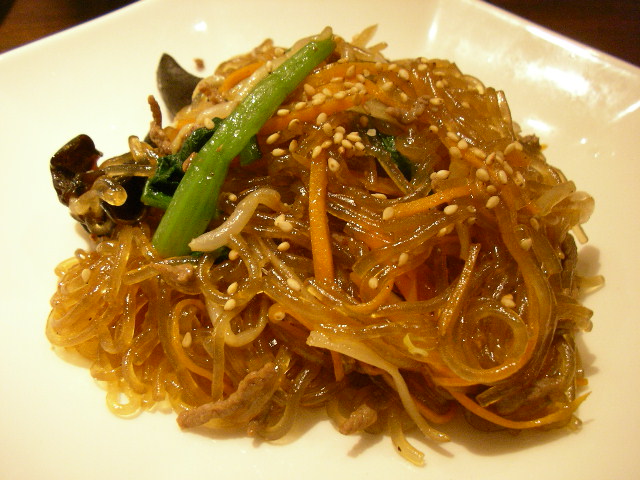
No discussion of Korean noodle dishes is complete without japchae (잡채). Made from dangmyeon — glass noodles produced from sweet potato starch — japchae is stir-fried with thinly sliced beef, mushrooms, spinach, carrots, and other vegetables, seasoned with soy sauce and sesame oil. It can be served warm or at room temperature, and while it technically functions as a banchan (side dish), it’s substantial enough to anchor a meal. Japchae is a staple of Korean celebrations — birthdays, Chuseok, Lunar New Year — and the dangmyeon noodles have a beautifully slippery, slightly translucent quality when properly cooked. If you see japchae on a menu as a main dish, often served over rice, order it. You will not regret this decision.
Where to Find Good Korean Noodle Dishes (And How to Spot a Good Place)
Seoul Neighborhoods with Strong Noodle Cultures
Seoul is enormous and noodle options exist in every neighborhood, but some areas have developed particularly strong reputations. The area around Euljiro and the old city center has clusters of workingman’s noodle restaurants that have been operating for decades, serving kalguksu and janchi guksu to the kind of lunch crowds that include everyone from construction workers to corporate lawyers. These places tend to be small, slightly dingy in the best possible way, and completely uninterested in being photographed. They’re also frequently extraordinary.
Korean noodle-Memil guksu-01 · Wikimedia Commons
Namdaemun Market and the surrounding streets have a famous kalguksu alley (칼국수골목) that has been feeding Seoul residents for generations. The atmosphere at lunch is controlled chaos — ajummas (older women) moving between tables with steaming pots, customers shouting orders over the noise of the market. This is how most Koreans actually experience kalguksu, not in quiet restaurant booths.
For naengmyeon, Mapo-gu and the area near Seoul Station have long been associated with North Korean-style naengmyeon restaurants — places established by families who came south after the Korean War and have been making the same broth recipe for seventy years. The concentration of these restaurants in certain neighborhoods reflects the settlement patterns of North Korean migrants, which is a piece of living history you’re eating when you sit down in one of these places.
In Busan, the area around Seomyeon and the older neighborhoods near Bupyeong Market are good hunting grounds for milmyeon and gogi-guksu-influenced dishes. In Chuncheon, Gangwon Province, the streets near Chuncheon Station have long rows of makguksu restaurants that are well worth a day trip from Seoul.
How to Spot a Genuinely Good Noodle Restaurant
After fifteen years of eating noodles all over this city and country, I’ve developed a set of reliable signals. First: look at the kitchen setup. In a good kalguksu place, you should be able to see or hear evidence that the broth is being made on-site — the smell of simmering anchovies or beef bones, the sight of stock pots on active burners. Second: look at the clientele at lunchtime. If the restaurant is full of older Korean regulars who appear to be eating as a habit rather than an event, that’s a very good sign. Third: check how the noodles look when they arrive. Properly made fresh kalguksu noodles are slightly uneven — hand-cut, not machine-uniform. For naengmyeon, the noodles should have a slight grayish-brown hue from the buckwheat, not a uniform beige.
Fourth, and perhaps most practically: if the restaurant does one or two things on the menu and nothing else, it is almost certainly doing those things very well. Specialization is a marker of quality in Korean noodle culture. A restaurant that only makes mul naengmyeon and bibim naengmyeon has been doing exactly those two things, possibly for decades. Trust the specialist.
For visitors who want structured guidance before arriving in Korea, both the Korea Tourism Organization and Seoul Tourism’s official food guide maintain updated restaurant directories organized by food type and neighborhood, which can help you identify well-regarded establishments in the areas you’re planning to visit. Always verify hours and seasonal availability before making a special trip.
Reading the Menu: What to Look For
Korean noodle restaurant menus are often short and specific, which makes them less intimidating than they look. For a naengmyeon restaurant, you’ll almost always see just two main options: mul naengmyeon (물냉면, the broth version) and bibim naengmyeon (비빔냉면, the spicy mixed version). You might also see 온면 (onmyeon) — a warm noodle option for those who want something hot. For kalguksu restaurants, the main variation is usually the type of broth: seafood-based, anchovy-based, or occasionally chicken or beef. Don’t stress about making a wrong choice. At the price point of most Korean noodle restaurants, ordering a second bowl if you want to try something different is a very reasonable option.
If you want to explore more of Seoul’s restaurant culture beyond noodles, check out our Korean restaurant guide for neighborhood-by-neighborhood recommendations across all major food categories.
Honest Mistakes Foreigners Make with Korean Noodle Dishes
Expecting All Korean Noodles to Be Spicy (Or Expecting None to Be)
This is probably the most common miscalibration I see. Foreign visitors tend to arrive with either the assumption that all Korean food is blisteringly spicy, or — after reading a few articles about delicate doenjang jjigae and clean broths — with the opposite assumption that the spice reputation is exaggerated. Both are wrong when applied to noodles. Korean noodle dishes cover the full spectrum from completely mild (kongguksu, janchi guksu, gomguksu) to genuinely ferocious (jjamppong, some versions of bibim guksu with extra gochujang). The key is understanding which category you’re ordering from. Look for the word 매운 (maewoon, meaning spicy) on menus, or simply ask. Most restaurant staff in Seoul’s central tourist areas have enough English to answer this question, and pointing at a menu item and making a questioning gesture about spice level will be universally understood.
Pouring the Broth Away Instead of Drinking It
I’ve watched this happen multiple times with foreign visitors at naengmyeon restaurants. The cold broth arrives and looks so pale and watery — almost like slightly flavored ice water — that some diners assume it’s a cooking liquid or a cleaning rinse and push it aside. Please do not pour away your naengmyeon broth. That broth is the dish. It is carefully made from a combination of beef stock and dongchimi brine, chilled to just above freezing, and seasoned with precision. Sipping it between bites of noodle is not optional — it’s the entire eating experience. Add vinegar and mustard to taste, as described earlier. Drink it. Appreciate it.
Mixing Everything Immediately (Before Tasting the Broth)
For mul naengmyeon in particular, I recommend tasting the broth on its own first, before you add condiments or mix anything. This gives you a baseline understanding of what the kitchen has built — you can taste the beef broth, the dongchimi sourness, the specific seasoning choices of that particular restaurant. Then you add your vinegar and mustard in small increments. Then you eat a strand of noodle by itself to appreciate the buckwheat flavor. Then you start mixing in the toppings. This sounds overly ceremonious, but it’s genuinely the way to get the most out of the dish. Dumping everything in and mixing immediately means you’re not actually tasting naengmyeon — you’re tasting a generic combination of flavors that could have come from anywhere.
Assuming the Long Noodles Are a Problem to Solve
Some visitors approach their bowl of kalguksu or janchi guksu and immediately start cutting the noodles into short pieces with their chopsticks, apparently under the impression that this makes them easier to eat. While scissors are genuinely provided at many restaurants and using them is fine, there’s something worth knowing: the long, uncut noodle is traditionally meaningful. In the context of janchi guksu especially — the celebratory birthday or wedding noodle — cutting the noodles prematurely is symbolically associated with cutting a life short. Nobody will scold you or make a scene, but it’s a piece of cultural context worth being aware of. Learn to twirl your noodles around your chopsticks instead. It takes about three minutes of practice and is infinitely more satisfying.
Ordering Naengmyeon in Winter Without Knowing What You’re Getting Into
Naengmyeon is available year-round in most restaurants, but it’s worth knowing that it was historically a winter dish in its region of origin, and some traditionalist establishments make the broth slightly less intensely cold in cooler months. However, most modern naengmyeon restaurants in Seoul serve it at the same icy temperature regardless of season. Ordering a bowl of mul naengmyeon when there’s snow on the ground is considered something of a Korean personality statement — a sign of robustness, a refusal to be dictated to by weather. Many Koreans do this deliberately. If you order naengmyeon in January, your server might smile at you with a kind of amused respect. Lean into it.
A Canadian friend of mine named David visited in February and ordered mul naengmyeon at a restaurant near Gyeongbokgung Palace. He was wearing two coats. The bowl arrived so cold there was visible vapor rising from it. He ate the entire thing, added extra vinegar halfway through, and afterward said — somewhat breathlessly — “I completely understand this country now.” I think he was onto something.
Skipping the Regional Dishes in Favor of Only Seoul Staples
This is less of an etiquette mistake and more of a strategic one. If your Korea trip includes only Seoul, you will still eat excellent noodles — but you’ll miss the full picture. Makguksu in Chuncheon, milmyeon in Busan, gogi-guksu in Jeju: these dishes don’t travel well, and the experience of eating them in their home regions, surrounded by locals for whom these foods are a point of identity, is categorically different from eating a Seoul-restaurant interpretation. If you’re in Seoul and genuinely can’t make it to the regions, that’s understandable. But if your itinerary has any flexibility, plan at least one noodle-focused food journey outside the capital. You will not regret it.
If you’re interested in understanding the language of Korean food menus before your trip, our Korean language basics for food travelers guide covers essential dining vocabulary, including noodle-specific terms, that will make ordering dramatically less stressful.
FAQ: Korean Noodle Dishes — Questions Foreign Visitors Actually Ask
Are Korean noodle dishes generally gluten-free?
Not reliably. Many Korean noodles — including kalguksu, janchi guksu, jjamppong, and bibim guksu — are made from wheat flour. However, buckwheat-based noodles (used in naengmyeon and memil guksu) and starch-based noodles (dangmyeon from sweet potato starch, gamja guksu from potato starch) are wheat-free. The complication is that wheat is also often present in soy sauce and other seasonings used in the broth or sauce, so cross-contamination is a real concern. If you have celiac disease or serious gluten sensitivity, you need to communicate this clearly to restaurant staff. “밀가루 알레르기가 있어요” (mil-ga-ru al-le-rŭ-gi-ga i-ssŏ-yo) means “I have a wheat flour allergy” and is worth memorizing or keeping on your phone.
KOCIS Korean meal table (4553953910) · Wikimedia Commons
Is naengmyeon eaten cold in winter too?
Yes, absolutely. While it originated as a winter dish in the northern region of Korea (now North Korea), it is eaten year-round by Koreans who enjoy it regardless of weather. Eating naengmyeon in the middle of winter is considered a mark of toughness by some Koreans. The broth is served at a temperature close to freezing in most restaurants regardless of season.
What’s the difference between naengmyeon and bibim guksu?
Both are cold noodle dishes with spicy-tangy elements, but they’re quite different. Naengmyeon uses buckwheat noodles, which are darker, chewier, and more elastic. Bibim guksu uses thin wheat flour noodles, which are softer and lighter. Naengmyeon’s bibim version (bibim naengmyeon) has a richer, more complex sauce made with chogochujang. Bibim guksu’s sauce is simpler and often brighter in flavor. They’re in the same flavor family but different eating experiences.
Can vegetarians eat Korean noodle dishes?
This requires some navigation. Many Korean noodle broths are made with anchovy, beef bone, or pork — animal products that vegetarians or vegans need to avoid. Kongguksu (cold soybean broth noodles) is naturally vegan-friendly. Some restaurants will make vegetable-based broths on request, though this is not universal. Bibim guksu and bibim naengmyeon, which use sauce rather than broth, can sometimes be made without animal products, but the sauce may contain fish sauce. It’s worth asking specifically: “채식주의자예요, 고기 없이 될까요?” (chae-sik-ju-ŭi-ja-ye-yo, go-gi ŏp-si dwel-kka-yo?) — “I’m vegetarian, is it possible without meat?” Temple food restaurants (사찰음식 restaurants) often offer genuinely vegan noodle options.
How do I know if a naengmyeon restaurant makes good broth?
The honest answer is: you often don’t know until you taste it. But there are signals. A restaurant that makes its own dongchimi on-site (you may be able to see large earthenware pots or refrigerated kimchi storage) is likely making its broth with genuine ingredients. If the restaurant has been operating for many years and has a consistent local clientele, that’s a strong indicator. The broth itself should have a subtle, layered flavor — you should be able to taste beef stock, fermented radish brine, and a clean tanginess. If it tastes primarily of salt or MSG with no complexity, that’s a warning sign.
Is it rude to slurp noodles in Korea?
Slurping is not considered rude in Korea, and for noodles specifically it’s completely normal and practical. The real etiquette points to watch are: don’t stick chopsticks vertically in your bowl, don’t pour broth into other people’s bowls without asking, and don’t rush if you’re eating with older Koreans — the pace of the meal follows the eldest person’s rhythm. Otherwise, eat comfortably and don’t stress about making noise with your noodles.
What does japchae taste like, and is it always served as a side dish?
Japchae has a savory-sweet flavor profile — the soy sauce and sesame oil create a rich, nutty base, and the vegetables add freshness and color. The dangmyeon (sweet potato glass noodles) are silky and slightly chewy. It’s most commonly served as a side dish at Korean celebrations, but you’ll also find it served over rice as a main dish (japchae-bap) in many restaurants. Either version is worth ordering. It’s one of the more immediately approachable Korean noodle dishes for visitors who are nervous about strong fermented flavors or extreme spice.
What is gomguksu and where do I find it?
Gomguksu (곰국수) is wheat flour noodles served in a broth made from gomguk or gomtang — a long-simmered beef bone or cartilage broth that turns milky white and deeply rich during cooking. It’s one of those dishes that looks humble but tastes extraordinary if properly made. You’re most likely to find it at restaurants that specialize in gomtang (the broth served on its own or with rice), where gomguksu is an alternative option. The broth is mild, almost creamy, with a depth that comes from hours of simmering. It’s an excellent choice on cold days and for anyone who finds spicier Korean noodle dishes too intense.
How much does a bowl of Korean noodles typically cost?
While I won’t cite specific prices that might become outdated, Korean noodle restaurants are generally quite affordable compared to Western restaurant dining. Dedicated noodle restaurants at the everyday level — the kind locals use for regular meals — are typically budget-friendly, with prices scaling upward at more premium or specialized establishments. Market-area noodle stalls tend to be the most economical. Naengmyeon at a well-regarded traditional restaurant will cost more than kalguksu at a market stall, but by international dining standards, you’re rarely looking at prices that would cause sticker shock. Check current pricing through the Korea Tourism Organization’s food guides for the most up-to-date reference ranges.
What are the most important Korean noodle terms I should know before ordering?
Essential Korean Noodle Vocabulary for Visitors
Korean
Romanization
What It Means
국수 / 면
Guksu / Myeon
Noodles (general term)
물냉면
Mul naengmyeon
Cold noodles in broth
비빔냉면
Bibim naengmyeon
Cold mixed noodles with sauce (no broth)
칼국수
Kalguksu
Knife-cut noodle soup
콩국수
Kongguksu
Cold noodles in soybean broth
매운
Maewoon
Spicy
안 매운
An maewoon
Not spicy
육수
Yuksu
Broth / stock
고명
Gomyeong
Garnish / toppings
식초
Sikcho
Vinegar (for adding to naengmyeon)
겨자
Gyeoja
Mustard (for adding to naengmyeon)
For a more complete vocabulary list covering all aspects of Korean dining, visit our Korean language guide for food travelers, where we break down essential phrases for everything from ordering and asking about ingredients to expressing your spice tolerance.
Final Thoughts from a Local
I’ve been eating Korean noodle dishes my entire life, and I still discover new things. Last year, visiting a relative in Gangwon Province, I ate olchaengi guksu for the first time — those unusual corn flour noodles from the mountain villages — and was genuinely surprised by how distinct the texture and flavor were from everything else I’d eaten before. The noodle slid from the colander into a cold, lightly seasoned broth with a kind of gentle thud, and the corn flavor was unmistakable and somehow both rustic and sophisticated simultaneously. I’m forty-two years old. I’ve been eating Korean noodles since before I could hold chopsticks properly. And I’m still having first experiences.
That’s the thing about Korean noodle culture that I most want foreign visitors to understand and carry with them. This is not a category to be completed. It’s not a checklist. The idea that you can “do” Korean noodles on a trip to Seoul is like saying you can “do” Italian pasta on a trip to Rome — technically possible in a surface sense, but missing the depth entirely. The best approach is to come curious, order things you don’t fully understand, add your vinegar in small increments, drink your broth slowly, and let the people around you show you what they love about what they’re eating.
My grandmother passed away eight years ago. At the meal after her funeral, someone brought a large pot of kalguksu — hand-cut noodles in anchovy broth, the way she always made it. We ate it quietly, sitting together, and it tasted exactly like her apartment in Mapo-gu on a cold afternoon when I was seven. This is what food does when it carries history. This is what Korean noodle dishes are, at their core: not recipes, not menu items, but living memory in a bowl.
Whether your first Korean noodle experience is a bowl of jjamppong that makes your eyes water in a Myeongdong restaurant, a cool summer afternoon with kongguksu in a traditional hanok-style eatery, or a steaming bowl of kalguksu eaten standing up in Namdaemun Market — eat it fully. Be present in the bowl. And then come back for another one, because there are always more kinds of Korean noodle dishes than you think, and every single one of them has a story worth tasting.
For those planning their Korean food journey in more detail, the Korean Food Promotion Institute (Hansik) offers excellent English-language resources on the cultural context, nutritional profile, and regional distribution of traditional Korean dishes. The Korea Tourism Organization also maintains food-focused travel itineraries organized by region, including noodle-trail routes that connect several regional specialties across a single journey.
The first time I truly understood what Tteokbokki meant to Korean people, I was eight years old, sitting on a plastic stool outside a bunsikjip in my neighborhood, watching my mother argue cheerfully with the auntie running the cart about whether she’d put enough fish cake in the pot. It was a Tuesday. It was raining. And that bowl of glistening, red, chewy rice cakes was, without a single doubt, the best thing I had ever eaten in my short life. I’m thirty-eight now, and I still think about that cart sometimes.
Seoul has changed almost beyond recognition since those days. The street I grew up on has a convenience store where that cart used to be. My mother orders grocery-store tteokbokki kits now and makes it at home on weeknights like it’s the most casual thing in the world — because for Koreans, it is. Tteokbokki is not “special occasion food.” It is Tuesday food, it is after-school food, it is the thing you eat at midnight when everything else is closed and your heart needs something warm and honest.
But here is the thing I notice every time I walk around with foreign friends in Seoul: they walk right past the red pots bubbling on the street, not because they’re not curious, but because they don’t know what they’re looking at or what to do with it. They’ve maybe seen it on a YouTube channel, filed it under “spicy things to try maybe,” and then defaulted to bibimbap because it felt safer. I completely understand that instinct. And I completely, respectfully, disagree with it.
The Dish That Cuts Through the Tourist Noise
Tteokbokki doesn’t care about your restaurant budget or your Instagram aesthetic. You will find it at street stalls for the price of a coffee, at dedicated sit-down restaurants where a tableful of people share a simmering hot pot for an hour, and at upscale fusion places in Gangnam where a chef charges three times as much for a “rose sauce” version that somehow still tastes like the same emotional comfort. That range — from street snack to restaurant centerpiece — tells you everything about how embedded this dish is in daily Korean life.
What I want to do in this guide is bridge the gap between “I’ve heard of tteokbokki” and “I know exactly where to go, what to order, and how to eat it like a local.” This is not a recipe article. You are going to a restaurant, or a street stall, or a pojangmacha lit up like a lantern on a cold Seoul evening. Let me be your guide through all of it.
“The first time I brought my Canadian friend Jamie to a jeukseok tteokbokki restaurant in Mapo, he spent ten minutes taking photos before he even picked up his chopsticks. By the end of the meal, he was scraping the last bits of sauce off the bottom of the pot. He now orders tteokbokki kits online and ships them to Toronto.”
Why This Dish Is More Than Street Food
I want to push back gently against the way tteokbokki is often categorized in travel writing: purely as street food, a quick snack, something you eat standing up before moving on to the “real” dining. That framing misses a lot. Yes, tteokbokki is street food — proudly so. But it is also sit-down meal food. It is comfort food in the deepest psychological sense. South Korean author Baek Se-hee named her widely read memoir I Want to Die but I Want to Eat Tteokbokki, and when the English translation came out in 2022, readers around the world understood instinctively that the dish wasn’t just an eating choice — it was a lifeline, a reason to stay present in a difficult moment. That title hit Koreans so hard because we all knew exactly what she meant. Tteokbokki is the food you choose when the world feels like too much. That’s not a small thing.
What It Actually Is (And Where It Came From)
Let me give you the proper foundation, because the history of tteokbokki is genuinely fascinating and understanding it will change the way you taste the dish. Tteokbokki — romanized from the Korean 떡볶이 and pronounced roughly tuk-BOK-ee — is made from garae-tteok, which are long, white, cylindrical rice cakes that get sliced into shorter pieces for the dish. These pieces are called tteokmyeon or more commonly tteokbokki-tteok. They are chewy, dense, and almost entirely flavorless on their own — which is precisely the point. The rice cake is a vehicle, a textural anchor for whatever sauce or broth surrounds it. And Korean cooks, over several centuries, have put a lot of thought into what that sauce should be.
The Royal Court Origins: A Dish for the Aristocracy
Here is something that surprises a lot of people: the original tteokbokki was not spicy at all. According to records in the Siŭijŏnsŏ, a 19th-century Korean cookbook that contains the earliest known written reference to the dish, tteokbokki was a sophisticated royal court preparation. The royal version — what we now call gungjung-tteokbokki (궁중떡볶이, literally “royal court tteokbokki”) — was made with white rice cakes, sirloin beef, sesame oil, soy sauce, scallions, rock tripe, pine nuts, and toasted sesame seeds. No gochujang. No red sauce. Just a rich, savory, soy-based preparation that would have been served at the Joseon Dynasty court.
A version was also made in the head house of the Papyeong Yun clan, one of the influential noble families of the era, where high-quality soy sauce was brewed on the premises. Their version featured short ribs. Think about that the next time you see galbi-tteokbokki on a menu — the short rib variation has roots that go back to aristocratic cuisine. The dish also appeared in the revised edition of Chosŏn mussang sinsik yorijepŏp, again described as a savory, soy-based dish.
The key point is that for most of its recorded history, tteokbokki was an elite dish — refined, soy-seasoned, and associated with court culture and wealthy households. The red, spicy version that most people think of today is, in historical terms, a very recent invention.
The 1953 Revolution: How Gochujang Changed Everything
The story of how tteokbokki became the red, fiery dish we know today is one of the most beloved food origin stories in Korean culinary history. In 1953, a woman named Ma Bok-rim was present at the opening of a Korean-Chinese restaurant. According to the widely repeated account, she accidentally dropped a piece of tteok — rice cake — into a bowl of jajangmyeon (black bean sauce noodles) and discovered that the combination tasted surprisingly good. This small accident sparked an idea: what if she seasoned rice cakes with gochujang, the fermented Korean red chili paste that had long been a pantry staple in Korean homes?
She began selling her spicy tteokbokki in the Sindang neighborhood of Seoul. The timing was significant. Korea was emerging from the Korean War, poverty was widespread, and people needed food that was filling, cheap, and satisfying. Gochujang-seasoned rice cakes checked every box. The dish spread rapidly, first through street stalls and snack bars, then across the country. Sindang became — and remains — synonymous with tteokbokki, and you can still visit the famous Sindang Tteokbokki Town today.
As South Korea’s economy developed through the second half of the 20th century, tteokbokki evolved alongside it. Rice became more affordable and widely available, so wheat tteok — which had been a cheaper substitute during harder times — gave way to the rice cake version we know today. Variations multiplied. Restaurants dedicated entirely to tteokbokki opened. The dish began appearing in school cafeterias, which is where many Koreans my age have their most visceral memories of it.
The global chapter is still being written. Tteokbokki has been sold at an NFL stadium at the home of the Houston Texans. It was reportedly brought to North Korea by restaurateurs in 2017 — and then banned by North Korea in 2024 along with budae-jjigae (army stew) because both dishes were deemed to be of South Korean cultural origin. The idea that a rice cake dish could be considered a threat significant enough to prohibit officially tells you something about the cultural weight this food carries on the peninsula.
Tteokbokki Through the Ages
Era
Style
Key Ingredients
Social Context
19th Century Joseon
Gungjung (Royal Court)
White rice cake, sirloin, soy sauce, sesame oil, pine nuts
Aristocratic / court cuisine
Post-1953
Spicy Gochujang
Rice cake, gochujang, fish cake, scallions
Working-class street food
1970s–1990s
School/Bunsikjip Standard
Rice cake, gochujang broth, boiled eggs, eomuk
Mass popular food
2000s–Present
Modern fusion variations
Cream sauce, curry, jajang, rose sauce, galbi
Restaurant dining, global export
How Koreans Actually Eat It
This is the section I wish every travel article included, because so much gets lost in translation when foreigners sit down in front of their first bowl of tteokbokki. Watching how Korean people actually eat this dish — in what order, with what accompaniments, with what rhythm — is a kind of education in Korean food culture more broadly. There are unspoken rules, long-established habits, and a particular social energy around tteokbokki that no amount of YouTube watching quite prepares you for.
Noodle spicy ricecake · Wikimedia Commons
The Street Stall Experience: Standing, Sharing, Moving
At a street stall or bunsikjip, tteokbokki is social and immediate. You order, you get a small portion in a disposable container or on a paper plate, and you eat it there — standing at the counter or perched on a plastic stool if there are any available. You do not take it to a bench five minutes away. The sauce thickens and the texture changes as it cools, and neither change is desirable. Street tteokbokki is at its best when it’s almost uncomfortably hot, when the sauce is still glossy and the rice cakes are yielding but still have that distinctive chew.
At a street stall, it is completely normal — expected, even — to point at what you want rather than name it if your Korean isn’t there yet. The auntie or uncle running the pot will understand. What you should know is that fish cake (eomuk/어묵) skewers are almost always available alongside the tteokbokki, often sitting in a light broth right next to the main pot. Many Koreans eat them together, alternating bites. The fish cake broth is often free for the asking — a small cup to sip on between bites, cutting the spice and cleansing the palate. Ask for it. It’s called eomuk guk (어묵국) and it is one of the small free pleasures of Korean street food life.
The Sit-Down Restaurant Experience: A Different Animal
Jeukseok-tteokbokki restaurants — the dedicated sit-down places where you cook the dish at your table over a portable gas stove — operate on a completely different social frequency. This is a meal, not a snack. You sit down, you choose your additions from a menu (dumplings, different noodles, seafood, vegetables), and you wait while the restaurant sets up a pot of sauce base on your table burner. Then you add things, you stir, you talk, you wait. The pacing is deliberately slow.
The classic way to end a jeukseok tteokbokki meal is with bokkeum-bap — fried rice made in the leftover sauce from the pot. You scrape the remaining sauce, add rice and often a fried egg, mix it all together and fry it lightly. This is not optional. This is the point of the meal, the grand finale, the thing everyone at the table is secretly looking forward to from the moment the pot arrives. If you leave a jeukseok tteokbokki restaurant without doing bokkeum-bap, I say this with full sincerity: you have left at intermission.
What to Drink With Tteokbokki
Koreans do not pair tteokbokki with beer the way Westerners might expect. The most common drink pairing is actually quite humble: sikhye (a sweet rice punch), banana milk (the little yellow carton — don’t laugh, it works), or simply cold water. At bunsikjip and pojangmacha, sweet drinks cut the gochujang heat better than alcohol does. That said, there is absolutely a culture of eating tteokbokki with soju at pojangmacha late at night, and I am not going to tell you that’s wrong because I’ve done it many times and it is excellent. But during the day, at a street stall, reach for something sweet and cold.
“I once watched a French food journalist at a pojangmacha in Hongdae order tteokbokki and then spend five minutes looking for a wine pairing suggestion on her phone. The Korean man at the stall next to her wordlessly handed her a carton of banana milk. She tried it. She nodded. She ordered another.”
The Unspoken Table Rules
A few things Koreans do automatically that foreign visitors might not know: when eating communal jeukseok tteokbokki, you use the communal ladle to move things to your small personal bowl — you don’t eat directly from the main pot. At street stalls, you typically use the toothpick or small wooden skewer provided rather than chopsticks for street-style eating. And if you’re at a bunsikjip with a friend, it is perfectly acceptable — genuinely common — to share one order between two people and then add on if you’re still hungry. No one will look at you strangely. The culture around tteokbokki is generous and unpretentious.
The Main Types and Variations
One of the things I love most about tteokbokki is that it has managed to maintain a clear identity — everybody knows what you mean when you say the word — while simultaneously fracturing into dozens of variations that can taste radically different from one another. Understanding the main categories will help you navigate menus with much more confidence.
The Classic: Gochujang Tteokbokki
This is the default when Koreans say “tteokbokki” without any qualifier. Red sauce, spicy, chewy rice cakes, fish cake, often a boiled egg, always scallions. Within this category there are actually two important sub-types: gungmul-tteokbokki (국물떡볶이, “soup tteokbokki”), which has more broth and is slightly less intensely sauced, and gireum-tteokbokki (기름떡볶이, “oil tteokbokki”), which is drier and richer, pan-fried in oil rather than simmered in broth. Gireum-tteokbokki tends to be popular in the Incheon area and has a more concentrated, caramelized flavor that is genuinely addictive.
Gungjung Tteokbokki: The Royal Court Version
The non-spicy, soy sauce-based version that traces its lineage all the way back to Joseon court cuisine. It uses the same rice cake but seasons it with soy sauce, sesame oil, and various savory ingredients rather than gochujang. The flavor profile is nutty, umami-rich, slightly sweet, and much gentler than the spicy version. If you have a low spice tolerance or are dining with children, this is your tteokbokki. Many bunsikjip don’t offer it — you’ll have more luck finding it at dedicated tteokbokki restaurants or at traditional Korean food restaurants.
Modern Variations: The New Wave
The past fifteen years have seen an explosion of creative tteokbokki variations, most of them driven by younger Korean chefs and the casual restaurant scene:
Rose Tteokbokki (로제떡볶이): A combination of gochujang and cream sauce that produces a pink, mildly spicy, luxuriously creamy result. This is currently the most trendy variation and extremely popular with younger diners. It is significantly less spicy than the classic version and a great entry point for spice-sensitive visitors.
Rabokki (라볶이): Tteokbokki with ramyeon (instant ramen) noodles added, which absorb the sauce and add a different textural element. This is a beloved after-school snack combination and an absolute staple of Korean convenience stores.
Jjolbokki (쫄볶이): Similar to rabokki but with chewy jjolmyeon wheat noodles instead of ramen. The jjolmyeon noodles are even chewier than the rice cakes, so this variation is a texture-lover’s dream.
Haemul Tteokbokki (해물떡볶이): Seafood tteokbokki, featuring mussels, squid, shrimp, and other additions. The seafood broth enriches the sauce in a deeply savory direction. Coastal cities like Busan have particularly strong versions of this.
Galbi Tteokbokki (갈비떡볶이): Short rib tteokbokki, which as I mentioned earlier actually echoes the aristocratic versions from centuries ago. Rich, meaty, and substantial.
Curry Tteokbokki and Jajang Tteokbokki: Fusion variations using curry sauce or black bean (jajang) sauce instead of gochujang. The jajang version is interesting given that the very origin story of modern gochujang tteokbokki involves a rice cake dropped into jajangmyeon.
Vegetarian and Dietary Considerations
This is a genuinely tricky area for visiting vegetarians, and I want to be honest about it. The classic gochujang sauce base at many stalls is made with a broth that contains either anchovy stock or fish cake liquid — neither of which is vegetarian. Fish cake (eomuk) is a standard inclusion. That said, the situation has improved significantly in recent years. Many dedicated tteokbokki restaurants now offer vegetable broth bases, and the rise of plant-based dining in Seoul means that clearly marked vegetarian tteokbokki is increasingly available, particularly in neighborhoods like Mapo, Hongdae, and Insadong. Gungjung tteokbokki is more often vegetarian-friendly, though you should always ask about the broth. The Seoul Tourism food guide has updated resources for dietary-specific restaurant recommendations that are worth checking before your trip.
Tteokbokki Variation Guide for Visitors
Type
Korean Name
Spice Level
Best For
Where to Find
Classic Gochujang
떡볶이
Medium–Hot
First-time visitors wanting the real thing
Everywhere — street stalls, bunsikjip
Royal Court (Soy Sauce)
궁중떡볶이
None
Spice-averse visitors, history lovers
Traditional restaurants, some bunsikjip
Rose Sauce
로제떡볶이
Mild
Spice beginners, Instagram moment
Trendy casual restaurants, Hongdae area
Hot Pot Style (Jeukseok)
즉석떡볶이
Adjustable
Groups, long meal experience
Dedicated jeukseok restaurants
With Ramen (Rabokki)
라볶이
Medium
Carb lovers, casual late-night eating
Bunsikjip, convenience stores
Seafood
해물떡볶이
Medium–Hot
Seafood fans, more substantial meal
Coastal cities, seafood-focused restaurants
Oil-Fried (Gireum)
기름떡볶이
Medium
Texture explorers, Incheon region visitors
Incheon specialty, some Seoul bunsikjip
Where to Find Good Tteokbokki (And How to Spot a Good Place)
Seoul has approximately one tteokbokki vendor for every four humans, I’m only slightly exaggerating. The challenge is not finding tteokbokki — it will find you. The challenge is finding the kind that will make you feel what I felt on that plastic stool in the rain at age eight. That requires some navigation. Let me give you the local framework.
Korean.snacks-Tteokbokki-03 · Wikimedia Commons
Sindang: The Spiritual Heartland
If you eat tteokbokki only once in Seoul and you want it to have historical weight, go to the Sindang neighborhood and find the Tteokbokki Town (신당 떡볶이 타운). This is where Ma Bok-rim’s original stall stood, and the cluster of tteokbokki restaurants that has grown up around it is a kind of living monument to the dish’s origin. The stalls here tend toward the classic, no-frills gochujang style. The environment is slightly touristy but genuinely atmospheric — the pots are big, the sauce is red, and the vendors have been doing this for decades. Don’t expect innovation here. Expect authenticity.
How to Read a Good Bunsikjip
A good bunsikjip (snack bar) will have a tteokbokki pot that is clearly active — you can see the sauce bubbling and smell the gochujang from a meter away. Look for pots that are being stirred regularly; a neglected pot means the rice cakes are sitting and getting too soft. The sauce should be thick and glossy, not watery or pale. Pale red means underflavored or diluted. Deep, almost orange-red with a sauce that clings to the rice cake — that’s what you want.
A key visual cue: look at the rice cakes themselves. They should be plump, cylindrical, and uniform. If they look broken, mushy, or irregular, the tteok has been in the pot too long or wasn’t fresh to begin with. Good bunsikjip operators refresh their tteok regularly throughout the day.
Also look at the eomuk (fish cake) skewers that usually accompany the tteokbokki pot. Fresh, well-made eomuk has a slight bounce when you press it; old eomuk is limp and pale. If the fish cakes look tired, the tteokbokki probably will too — they’re usually prepared with the same care level.
Neighborhoods Worth Exploring
Beyond Sindang, here are neighborhoods where I have consistently found excellent tteokbokki across the spectrum from classic to modern:
Hongdae (Hongik University area): A younger, more experimental crowd means more rose sauce, fusion, and jeukseok-style restaurants. Good for groups and first-timers who want a social meal experience. The streets around the university have bunsikjip alongside newer tteokbokki cafés.
Gwangjang Market: One of Seoul’s most famous traditional markets, and a genuinely excellent place to eat bindaetteok (mung bean pancakes) alongside tteokbokki. The tteokbokki here tends to be the classic style made by vendors who have been doing the same recipe for years. Eat it standing at the stall.
Incheon’s Bupyeong Market area: If you’re making a day trip to Incheon, look for gireum-tteokbokki (oil-fried tteokbokki). This is a regional specialty that most Seoul restaurants don’t do justice to. The dry, pan-fried technique gives the rice cakes a slightly crispy exterior that is completely different from the broth-simmered standard. It’s worth the trip specifically for this.
Insadong and Naksan area: Good for finding gungjung (royal court, non-spicy) tteokbokki in an atmospheric traditional setting. Also more likely to have vegetarian-friendly options.
What to Look for on the Menu
If you’re at a dedicated tteokbokki restaurant with a full menu, there are a few items worth knowing. Sundae (순대) — Korean blood sausage — is a classic pairing that appears on almost every bunsikjip menu alongside tteokbokki. It sounds more confrontational than it tastes; the flavor is mild and slightly chewy, and it dips well into the tteokbokki sauce. Twigim (튀김) — assorted fried items like sweet potato, squid, and vegetables — is another standard companion. A combo order of tteokbokki, sundae, and twigim is what Koreans call the bunsikjip holy trinity, and it represents one of the best value meals in any city.
For more curated dining suggestions and up-to-date restaurant information, check the Korea Tourism Organization’s official food pages — they maintain reasonably current regional food guides that are genuinely useful for planning.
Honest Mistakes Foreigners Make With Tteokbokki
I want to be direct here because I’ve seen these mistakes happen repeatedly with otherwise adventurous food travelers, and every single one of them is easily avoidable with a little advance knowledge. None of these are embarrassing if they happen to you — Korean vendors and restaurant staff are among the most patient and good-humored people I know when it comes to foreign visitors — but knowing in advance will make your experience smoother and more delicious.
Mistake #1: Underestimating the Spice Level
Classic gochujang tteokbokki is genuinely, meaningfully spicy. Not “mild Korean spicy” in the way some Korean dishes are described — actually hot. The gochujang builds over the course of eating in a way that sneaks up on you. I have watched many confident foreign visitors take their first bite, nod pleasantly, take their third bite, and then reach for water with a slightly panicked expression. The solution is not to avoid it — the solution is to start with a smaller portion, have your eomuk broth ready, and pace yourself. Ordering rose sauce or gungjung-tteokbokki as your first encounter is also a completely legitimate strategy if you know you have a low spice threshold. Don’t let anyone, including me, shame you into suffering.
Mistake #2: Eating It Too Slowly
This follows from the photography instinct that I completely understand but must gently caution against. Tteokbokki — particularly from a street stall — deteriorates quickly. The rice cakes continue to absorb the sauce and expand. The sauce thickens and becomes almost sticky-gummy. The fish cake loses its texture. All of this starts happening within five minutes of the dish leaving the heat source. Get your photograph in fifteen seconds and then eat. I promise the memory will be better if your experience is better, and your experience will be better if you eat it hot.
Mistake #3: Confusing the Different Types When Ordering
If you sit down at what you think is a simple bunsikjip and the menu seems complicated, it is probably a jeukseok restaurant — they look similar from the outside sometimes. The key difference is whether there’s a stove burner on the table. If there is, you’re ordering a full hot pot meal, not a quick snack. This changes your budget and your time commitment significantly. There is nothing wrong with either experience, but knowing which one you’re walking into helps you make an informed choice. When in doubt, look for a Korean restaurant guide for Seoul before heading out to identify the format in advance.
Mistake #4: Not Using the Fish Cake Broth
I mentioned this earlier but it bears repeating because it is such a simple, free pleasure that most foreign visitors don’t know to ask for. At street stalls and bunsikjip, the fish cake skewers are usually sitting in a light soup. This soup — eomuk guk — is almost always available to drink for free, ladled into a small paper cup. It cuts through the gochujang heat, cleanses your palate, and has a gentle, savory quality that is deeply restorative. If you don’t see it offered, simply ask: “Eomuk guk dwo yo?” (어묵국 줘요?) — “Can I have some fish cake broth?” Nine times out of ten, a cup will appear immediately.
Mistake #5: Expecting It to Taste Like the Packaged Version
Many foreign visitors have tried tteokbokki before arriving in Korea — through a supermarket kit, a Korean friend’s cooking, or a K-food restaurant overseas. That exposure is wonderful, but it creates a flavor expectation that fresh Korean tteokbokki from a good stall will dramatically exceed. The rice cakes are fresher and chewier. The sauce is more complex. The fish cake is better. Be ready for the upgrade and don’t be confused when the taste is richer and more dimensional than what you remembered. This is the real thing.
Mistake #6: Forgetting to Do Bokkeum-Bap at Jeukseok Restaurants
I have covered this already but I am listing it here as a mistake because I feel that strongly about it. When you finish your jeukseok tteokbokki meal and there is sauce left in the pot, you ask the server to do fried rice. You do not leave without doing this. It is non-negotiable. The sauce at the end of the meal has been cooking and reducing and absorbing all of the flavors for the duration of your meal, and fried rice made in it is one of the great quiet pleasures of Korean dining. Consider this a firm instruction from someone who has been eating this dish for thirty years.
“I brought a group of six food writers from various countries to a jeukseok place in Hongdae once. I told them about bokkeum-bap in advance. Still, when the server came to clear the table, two of them started getting up. I stopped them. We did the fried rice. A German food writer who had been taking measured, professional notes all evening just put her pen down and said, ‘This is actually ridiculous.’ She meant it as the highest compliment. I took it that way.”
Frequently Asked Questions About Tteokbokki
These are the questions I get asked most often by foreign visitors, travelers, and food-curious readers. I’ve tried to give you the honest, local answer rather than the polished tourist-brochure version. You can also explore more Korean food and culture questions at our Learn Korean food and language guide.
Gungmul-tteok-bokki · Wikimedia Commons
Is tteokbokki gluten-free?
This is complicated and the answer is usually no. While rice cakes (tteok) are made from rice flour and are themselves gluten-free, the gochujang sauce often contains wheat, and the fish cake (eomuk) typically contains wheat starch. Additionally, at jeukseok restaurants, noodle additions like ramyeon contain gluten. If you have a serious gluten sensitivity or celiac disease, you need to ask specifically about each component of the dish rather than assume the rice cake base makes it safe.
How spicy is it really?
Standard gochujang tteokbokki sits at a medium-to-hot spice level — comparable to a moderately spicy Thai dish, perhaps stronger. The heat builds rather than hitting immediately, and the sweetness in the sauce somewhat balances it. If you can handle standard kimchi without distress, you can probably handle a small portion of classic tteokbokki. If kimchi makes you reach for water, consider the rose sauce or royal court (gungjung) version.
Can I eat tteokbokki as a full meal?
Absolutely. At jeukseok restaurants, it is explicitly a full meal. At bunsikjip, a combination of tteokbokki, sundae, and twigim is a filling and complete meal for most people. Street stall portions are snack-sized by default, but you can order multiple portions or ask for a larger serving.
What does tteokbokki actually taste like?
The rice cakes themselves are almost neutral in flavor — soft, dense, slightly starchy, with a firm chew. The dominant flavor is from the sauce: sweet, spicy, fermented, slightly smoky from the gochujang, with a savory depth from the fish cake and anchovy broth base. It is deeply umami-forward with a sweetness that’s more nuanced than sugar — it comes from the natural sweetness of gochujang and added sugar or corn syrup in the sauce. The texture is the other half of the experience: the chew of the rice cake against the silky sauce is genuinely unlike anything in most Western food traditions.
What is the difference between tteokbokki and ddeokbokki?
These are the same dish — different romanization systems for the same Korean word (떡볶이). You’ll see both spellings in menus and travel writing. “Tteokbokki” is the more current standard romanization. Neither is wrong.
Is tteokbokki eaten for breakfast, lunch, or dinner?
All three, and also late at night. Koreans don’t assign tteokbokki to a specific meal. It’s the most democratic food in that sense — appropriate at any hour. Street stall versions are popular as an after-school or after-work snack in the late afternoon. Pojangmacha tteokbokki peaks late at night. Jeukseok restaurant tteokbokki is typically a lunch or dinner meal.
How do I order tteokbokki if I don’t speak Korean?
For street stalls: point and hold up fingers for how many portions. The word “tteokbokki” (you can say it as “tuk-boh-ki”) is universally understood. For less spicy, say “deol maepge” (덜 맵게, “less spicy”). For restaurants, the dish name is usually on the menu with a photo. Many restaurants near tourist areas have English menus or picture menus. See our basic Korean food phrases guide for a quick vocabulary reference.
Useful Korean Phrases for Ordering Tteokbokki
Situation
Korean Phrase
Pronunciation
Meaning
Ordering
떡볶이 주세요
Tteokbokki juseyo
“Tteokbokki, please”
Less spicy
덜 맵게 해주세요
Deol maepge haejuseyo
“Please make it less spicy”
Fish cake broth
어묵국 주세요
Eomuk guk juseyo
“Fish cake broth, please”
Fried rice finish
볶음밥 해주세요
Bokkeum-bap haejuseyo
“Please do the fried rice”
How much
얼마예요?
Eolma yeyo?
“How much is it?”
Very delicious
정말 맛있어요
Jeongmal massisseoyo
“This is really delicious”
Is the tteokbokki I see in Korean dramas accurate?
Mostly yes. Korean dramas and variety shows depict tteokbokki extremely accurately as an emotional comfort food, an after-school ritual, a late-night repair meal, and a shared social experience. Where they perhaps oversell it is in the visual department — drama food stylists make everything look slightly more perfect than real life. Real bunsikjip tteokbokki is often a slightly messy, deeply satisfying proposition rather than a photogenic one. The emotional truth of how the food is used in those scenes, though — that is very real.
What should I do if I find it too spicy to finish?
Don’t worry about it. Ask for water or order a sweet drink. Sip the eomuk broth if it’s available. No one will judge you — Korean people of all ages have different spice tolerances, and vendors and restaurant staff are generally very understanding. The important thing is that you tried it. And my genuine prediction is that by your second or third attempt, your tolerance will have adjusted and the spice that overwhelmed you at first will become part of why you love it.
Where can I learn more about Korean food culture before my trip?
The Korean Food Promotion Institute (Hansik) has excellent English-language resources on Korean culinary history and food culture. For planning your Seoul food itinerary specifically, the Seoul Tourism official website maintains neighborhood food guides and seasonal eating recommendations. Both are worth bookmarking before your trip.
Final Thoughts From a Local
I’ve been writing about Korean food for years now, and I’ve had the privilege of watching people from dozens of countries taste Korean dishes for the first time. Bibimbap surprises them with its balance. Samgyeopsal overwhelms them with its generosity. Kimchi divides them immediately and permanently into two camps. But tteokbokki — tteokbokki does something particular. It disarms people.
Something about the combination of the chew and the sauce and the heat creates a very immediate, very physical response that bypasses whatever food-critical apparatus people usually bring to a new experience. I’ve watched sophisticated food writers go quiet for a full minute after their first bite. I’ve watched people who were already full keep eating because putting down the chopsticks felt wrong. I’ve watched a grown man at a pojangmacha in Euljiro — an American engineer who had been in Seoul for a work trip and had wandered into the street stall area more or less by accident — take a bite, look at the vendor, and say, in the most sincere tone I’ve ever heard: “What is happening right now?”
What was happening was tteokbokki. And it has been happening in this city, in one form or another, for well over a century. From the aristocratic rice cake dishes of the Joseon court to Ma Bok-rim’s accidental invention in Sindang in 1953, from school cafeteria trays to the NFL’s Houston Texans stadium, from Baek Se-hee’s memoir title to the North Korean government’s ban — this dish has accumulated more history, more meaning, and more cultural weight than almost any other food I can think of, and it does all of that while still being something you can buy for the price of a cup of coffee from a cart on the side of the road.
That is the thing about tteokbokki. It never forgets what it is. It has been through a thousand variations and reinventions and it remains, at its core, an honest, unpretentious, generous dish. It asks nothing of you except that you show up hungry and open-minded. Korea will do the rest.
Go find a pot. Get a cup of eomuk broth. Eat it while it’s hot. You can thank me later.
— Written by a Seoul local who has been eating tteokbokki since before she could read the menu. For more guides on Korean food, dining culture, and navigating Seoul like a local, explore our Korean restaurant guide collection.
Why I Think Every Visitor to Korea Should Try Bulgogi
The first time I truly understood what Bulgogi meant to me personally wasn’t at some fancy restaurant in Gangnam or a food market stall in Myeongdong. It was at my grandmother’s kitchen table in a small apartment in Mapo-gu, sometime in the mid-1990s, when I was maybe eight years old and she was pressing thin slices of marinated beef into a cast-iron pan that had been seasoned by what I can only estimate was twenty years of continued use. The smell that rose from that pan — sweet soy sauce caramelizing at the edges, sesame oil mingling with garlic, thin wisps of smoke curling toward the ceiling — is something my body still remembers even before my brain consciously registers what it’s smelling. That’s bulgogi. Not a restaurant experience. A memory encoded in the senses.
I’ve lived in Seoul for fifteen years as an adult, and I grew up eating this dish at school cafeterias, at neighborhood sikdang (local eateries), at holiday family gatherings, at late-night work dinners, and on ordinary Tuesday evenings when nobody wanted to think hard about what to cook. Bulgogi is everywhere in Korean life, and precisely because it is everywhere, a lot of foreign visitors think they understand it before they actually do. They see it on a menu with a photo, they recognize the word from a cooking video online, and they order it expecting something they’ve already imagined. Sometimes what arrives surprises them — in a good way. Sometimes they’re confused. Occasionally, they feel like they’re doing something wrong without knowing exactly what.
That’s why I wanted to write this guide. Not to give you a recipe — you don’t need one for dining out — but to give you the full picture: the history, the culture, the etiquette, the regional variations, and the honest local knowledge that most travel articles either skip over or get subtly wrong. By the time you finish reading this, you should feel confident sitting down at a Korean barbecue table or a neighborhood bulgogi restaurant and genuinely enjoying the experience the way people here actually do.
My foreign colleague James visited Seoul for the first time about four years ago. He’d been watching Korean cooking videos for months beforehand and was convinced he was “prepared.” When he sat down at a proper bulgogi restaurant with a charcoal grill in the table, he immediately reached for the tongs and started turning the meat himself before our host — a Korean colleague — had even settled into his seat. The table went briefly and politely silent. Nobody said anything directly, but later I explained to him that at a shared meal, especially when someone is treating you, there’s a rhythm to who tends the grill and when. He laughed it off, but he told me later it was the moment he realized how much he still had to learn. This guide is for people like James — curious, enthusiastic, and genuinely wanting to get it right.
Bulgogi deserves more than a bullet point on a “top ten Korean foods” listicle. It deserves context. So let’s start from the very beginning.
What Bulgogi Actually Is (And Where It Came From)
The word itself is beautifully direct. Bulgogi (불고기) is a compound of two Korean words: bul (불), meaning “fire,” and gogi (고기), meaning “meat.” Fire meat. That’s it. There’s no elaborate poetry in the name — it simply describes what happens: meat meets fire. But as with most things in Korean culinary culture, what sounds simple on the surface has centuries of layered history beneath it.
According to Wikipedia’s entry on Bulgogi, the dish is believed to have originated during the Goguryeo era, which spanned from 37 BCE to 668 CE. In those ancient days, it wasn’t called bulgogi at all. It was called maekjeok (맥적), and the preparation method was quite different from what we know today — the beef was skewered and grilled directly over an open fire. Think of it less as the tender, soy-marinated slices you’ll encounter at a modern restaurant and more as an ancient form of meat-on-a-stick, substantial and smoky.
The Joseon Era: When Bulgogi Became Aristocratic
The dish’s identity shifted dramatically during the Joseon period (1392–1897), when it was renamed neobiani (너비아니), a term that translates roughly as “thinly spread” meat. This renaming wasn’t just semantic — it reflected a genuine evolution in technique and social status. The meat was now being sliced more thinly, marinated more carefully, and prepared with a level of attention that placed it firmly in the realm of noble and royal cuisine. If you were eating neobiani during the Joseon dynasty, you were almost certainly wealthy or well-connected. Commoners simply didn’t have regular access to prime beef cuts prepared this way.
The medieval Korean history book Dongguksesi (동국세시) recorded the dish under yet another name: yeomjeok (염적), again meaning something close to “fire meat.” At this stage, it was still being grilled on skewers over a hwaro grill in pieces approximately 0.5 centimeters thick — thin enough to cook quickly and absorb marinade deeply, but still on a skewer rather than loose on a grill grate. This skewered ancestor of bulgogi is technically still preserved today under the name bulgogi sanjeok (불고기 산적), though you’ll rarely encounter it in everyday restaurants.
The Pyongan Connection: How Bulgogi Came to Seoul
Here’s a piece of history that most food articles miss entirely, and I think it’s one of the most fascinating parts of bulgogi’s story. The word “bulgogi” itself — as opposed to its various historical names — comes from the Pyongan dialect, the regional language of Pyongan Province, which is located in what is now North Korea. The dish, in its modern form, is considered a traditional specialty of that region.
Following the Korean War (1950–1953), a massive wave of refugees from Pyongan Province and other northern regions relocated to Seoul and other parts of South Korea. They brought their food traditions with them, including this particular way of preparing and naming grilled, marinated beef. Bulgogi, as Seoulites know it today, is in no small part the culinary legacy of that painful displacement. Every time I eat bulgogi, I’m aware — even if only faintly — that the dish carries within it the history of an entire population uprooted from their homeland. Korean food rarely exists outside of its history. The two are always in conversation.
The word was officially documented in the 1947 edition of the Dictionary of the Korean Language, defined as meat grilled directly over a charcoal fire. By 1961, the word had entered the American English lexicon, according to Merriam-Webster — a testament to how quickly Korean immigrant communities in the United States brought their food culture with them. Today, “bulgogi” appears in both Merriam-Webster and the Oxford Dictionary of English. For a dish whose name comes from a North Korean regional dialect, that’s quite a journey.
The Modern Dish: What You’ll Actually Find on a Plate Today
Today’s bulgogi is a gui (구이) — the broad Korean category for grilled or roasted dishes. It’s made from thin slices of beef, most commonly sirloin or ribeye, marinated in a mixture built around soy sauce, sugar, sesame oil, garlic, and ground black pepper, with any number of additional ingredients depending on the cook: scallions, ginger, onion, mushrooms (white button or the prized matsutake), and often a puréed fruit — pear, kiwi, or pineapple — that acts as a natural meat tenderizer. The fruit component, in particular, is something I grew up watching my mother add almost instinctively, squeezing a grated Korean pear (배, bae) into the marinade bowl the way another cook might reach for salt. It’s not universal, but it’s common, and it makes a real difference in the final texture of the meat.
For more on the official classification and promotion of traditional Korean food like bulgogi, the Korean Food Promotion Institute (Hansik) maintains excellent resources on both the history and cultural significance of the dish, and the Korea Tourism Organization provides accessible introductions for visitors who want background before their trip.
How Koreans Actually Eat Bulgogi
This is the section I wish existed when I first started bringing foreign friends to Korean barbecue restaurants. The mechanics of eating bulgogi in a restaurant setting are specific enough that getting them wrong can make you feel awkward, and knowing them can transform a confusing experience into an genuinely joyful one. Let me walk you through it the way a local would — not as rules to memorize but as culture to understand.
Lunch at Eatery Lund in April 2025 · Wikimedia Commons
The Table Setup: Understanding What You’re Looking At
When you sit down at a traditional bulgogi restaurant — particularly one focused on the grilled preparation rather than a pan-based jeongol style — you’ll often find a grill grate or griddle set into the center of the table. Gas or charcoal (charcoal is considered more prestigious and flavorful; gas is more common at mid-range places). The server will bring the raw marinated meat on a plate alongside a spread of banchan — small side dishes — that might include kimchi of various types, seasoned spinach (sigeumchi namul), bean sprouts, fish cake, pickled radish, and a bowl of rice per person. The banchan are communal. The rice bowl is yours.
Before the meat arrives at the grill, take a moment to look at the table. The chopsticks and spoon set at your place are for eating. The tongs or scissors near the grill are for cooking. In many traditional settings — especially at a group dinner with a clear host or senior person at the table — it’s that person who tends the grill initially, or the server will handle it. You don’t just pick up tongs and start flipping unless you’ve been explicitly invited to or you’re at a casual spot where it’s clearly DIY from the start.
The Wrapping Ritual: Ssam and How to Do It Properly
One of the most beloved ways to eat bulgogi is as ssam (쌈) — wrapping a piece of cooked meat in a leaf vegetable and eating it in one bite. The leaf is usually green leaf lettuce (cheonggyeoja), perilla leaf (kkaennip), or sometimes a piece of napa cabbage. You take the leaf in your palm, add a small mound of rice, place a slice of cooked bulgogi on top, and add a small dab of ssamjang — a thick, savory paste made from fermented soybean paste (doenjang) and chili paste (gochujang) — along with perhaps a slice of raw garlic or a sliver of green chili if you’re brave. Then you fold it up and eat the whole thing in one bite.
The one-bite rule is not just etiquette — it’s practical. The wrap falls apart if you try to bite into it halfway and put it back down. Koreans of all ages will giggle (kindly) if they see a foreigner trying to negotiate a half-eaten ssam. Just commit to the bite. Your cheeks will thank you. It’s one of the most satisfying single mouthfuls in Korean cuisine — the savory-sweet meat, the nutty sesame, the bitter freshness of the leaf, the pungent ssamjang all at once.
Side Dishes, Soup, and the Architecture of a Bulgogi Meal
A bulgogi meal is never just bulgogi. The banchan system is central to how Koreans dine, and understanding it changes the whole experience. The small side dishes aren’t appetizers in the Western sense — they’re meant to be eaten alongside the main dish throughout the meal, as palate cleansers, textural contrasts, and nutritional complements.
Common Side Dishes Served With Bulgogi
Korean Name
English Description
Why It Works With Bulgogi
김치 (Kimchi)
Fermented spicy cabbage
Cuts through the sweetness of the marinade; provides acidity and crunch
깍두기 (Kkakdugi)
Cubed radish kimchi
Refreshing and crunchy; cleanses the palate between bites
시금치나물 (Sigeumchi namul)
Seasoned blanched spinach
Mild and earthy; balances the richness of the beef
콩나물 (Kongnamul)
Seasoned bean sprouts
Light, slightly crunchy; adds freshness to the meal
계란국 (Gyeran-guk)
Egg soup / broth
Gentle, warming; often served as a paired soup alongside bulgogi
쌈장 (Ssamjang)
Thick seasoned paste
The essential condiment for wrapping; adds umami depth
Soup is almost always part of a full bulgogi meal. Doenjang-guk (fermented soybean paste soup) or a lighter egg soup is typical. Rice is eaten from your personal bowl using the spoon — not chopsticks, which surprises some visitors. Chopsticks in Korean table culture are primarily for side dishes and solid foods; the spoon handles rice and soup. Mixing them up won’t cause offense, but using chopsticks to scoop rice from your bowl is noticeable to Korean dining companions.
What to Drink With Bulgogi
The classic pairing is soju — Korea’s ubiquitous clear spirit, typically around 16–25% alcohol, served neat in small glasses that are refilled frequently. Soju and bulgogi is such a natural combination that it barely needs explaining to anyone who has eaten it — the spirit’s slight burn cuts through the fat and sweetness of the marinated beef in a way that’s genuinely complementary. Makgeolli (milky, slightly sparkling rice wine) is another excellent choice, particularly with older crowds and at more traditional establishments.
For non-drinkers or those wanting something lighter, barley tea (보리차, bori-cha) is served free at virtually every restaurant in Korea and pairs beautifully with bulgogi. It’s earthy, slightly toasted, and cleanses the palate effectively. Canned Korean beer — a light lager, typically — is also common, though the classic chimaek (chicken and beer) pairing is more associated with fried chicken than bulgogi specifically.
The Main Types and Variations of Bulgogi
One of the most common misunderstandings among visitors is thinking that bulgogi is a single standardized dish. It isn’t. There are meaningful regional variations, modern interpretations, and different protein options that change the character of the dish significantly. Knowing these distinctions helps you order more intentionally and understand what you’re eating.
Seoul Style vs. Gwangyang Style
If you ask a Korean food enthusiast to name the two most iconic styles of bulgogi, they’ll almost certainly name these two. Seoul-style bulgogi (서울식 불고기) is typically cooked in a domed, perforated pan with a moat-like edge that catches juices and sometimes vegetables — mushrooms, onions, glass noodles — which cook in the drippings as the meat grills above. The result is a slightly saucier, sweeter preparation, and the broth that accumulates in the pan is something locals often sip or pour over rice. It’s comforting, slightly wet, and deeply savory-sweet.
Gwangyang bulgogi (광양 불고기), named for the city in South Jeolla Province, is an entirely different experience. The meat is thinner, more directly grilled over charcoal, and the marinade is lighter and less sweet. Gwangyang has an entire cultural identity built around its bulgogi tradition — the city holds an annual bulgogi festival and considers its preparation a point of regional pride. If Seoul-style is comfort food, Gwangyang-style is a more refined, smoke-forward experience. Neither is better; they’re different conversations about the same ingredient.
Pork Bulgogi and Chicken Bulgogi
Beef is the default and the most prestigious preparation, but pork bulgogi (돼지불고기, dwaeji bulgogi) is extremely common and arguably more widely eaten on a daily basis simply because it’s more affordable. Pork bulgogi is almost always spicy — the marinade typically incorporates gochujang (고추장, red chili paste), giving it a distinctly different flavor profile from the sweet, soy-forward beef version. The pork cut of choice is often pork belly (samgyeopsal) or pork shoulder, both of which handle the bold marinade well.
I grew up eating pork bulgogi at least weekly. My mother made it in a flat pan on weeknights, and the combination of the spicy-sweet pork with a bowl of white rice and a side of kimchi was, and remains, one of my most deeply personal comfort food memories. Don’t overlook it because it’s not beef. Some of the best bulgogi I’ve ever eaten was pork.
Chicken bulgogi (닭불고기, dak bulgogi) exists as well and is popular particularly among health-conscious eaters. The marinade for chicken often includes gochujang as well, giving it a spicy character, or alternatively a sweeter soy-based marinade similar to beef. It tends to cook faster and can dry out if overdone, so it requires a bit more attention at the grill.
Modern Variations and Fusion Interpretations
Contemporary Korean food culture has embraced bulgogi as a base flavor profile that can be applied to almost anything. Bulgogi burgers — a hamburger patty marinated in bulgogi sauce, served with lettuce, tomato, onion, and sometimes cheese — have been on the menus of South Korean fast-food chains for decades. They’re genuinely good in a fast-food context and worth trying at least once for the cultural novelty. You’re eating something distinctly Korean even in fast-food form.
Kongnamul bulgogi (콩나물불고기) layers bean sprouts into the cooking process, allowing them to steam and absorb the marinade as the meat cooks above them. Osam bulgogi (오삼불고기) combines squid (ojingeo) and pork belly (samgyeopsal) — the name is a portmanteau of “o” from ojingeo and “sam” from samgyeopsal — creating a surf-and-turf variation that is spicy, deeply savory, and particularly popular in the Jeonju region.
Bulgogi Variations at a Glance
Type
Korean Name
Key Characteristics
Best Found In
Seoul Style
서울식 불고기
Sweet soy marinade, cooked in domed pan with broth
Traditional restaurants in Seoul, Gyeonggi Province
Gwangyang Style
광양불고기
Thinner cut, lighter marinade, charcoal grilled
South Jeolla Province; specialty Gwangyang restaurants nationwide
Pork Bulgogi
돼지불고기
Spicy gochujang marinade, pork belly or shoulder
Everywhere — local eateries, home cooking
Chicken Bulgogi
닭불고기
Lighter protein, spicy or sweet marinade
Health-focused restaurants, home cooking
Osam Bulgogi
오삼불고기
Pork belly + squid, heavily spiced
Jeonju, Jeolla-style restaurants
Kongnamul Bulgogi
콩나물불고기
Bean sprouts cooked with beef bulgogi
Jeonju-style restaurants, home cooking
What About Vegetarian Options?
This is a genuinely difficult question in the context of traditional Korean dining. Bulgogi, by definition, is a meat dish, and the classic marinade relies on soy sauce that is almost universally fermented in ways that involve animal products. However, plant-based Korean food culture has grown significantly over the past decade, particularly in major cities. Some restaurants — especially those near Buddhist temples or in Insadong’s cultural district — offer mushroom bulgogi (버섯불고기, beoseot bulgogi), where king oyster mushrooms or portobello mushrooms are marinated and grilled in the same style, producing a deeply savory result that captures much of the textural satisfaction of the original. I’ve had versions of this that were genuinely excellent, and I say that as someone who eats meat regularly. If you’re visiting with vegetarian travel companions, look for the mushroom variation on menus or ask specifically — many places can accommodate the request even if it’s not printed on the menu.
For more information about Korean food culture and traditional preparations, visit the Korea Tourism Organization’s official food portal, which includes regional food guides and dining recommendations updated regularly.
Where to Find Good Bulgogi (And How to Spot a Quality Place)
Seoul alone has tens of thousands of restaurants, and bulgogi can be found in some form in almost all of them. That’s not helpful information on its own. What you need is a framework for evaluating what you’re looking at when you walk past a restaurant front, and an understanding of what different venues signal about the experience you’re likely to have.
Korean barbeque-beef-16 · Wikimedia Commons
Neighborhood Institutions vs. Tourist-Area Restaurants
The single most reliable piece of advice I can give you is this: eat where Koreans eat, which is almost always slightly away from the main tourist corridors. Myeongdong has good food, but it also has plenty of places that exist purely on foot traffic, with translated menus and price points calibrated to visitors who don’t know better. This isn’t a condemnation — some of those places are genuinely decent — but the best bulgogi experiences I’ve had as an adult have consistently been at neighborhood restaurants (동네 식당, dongne sikdang) in areas like Mapo-gu, Seodaemun-gu, Dobong, or the residential streets behind Hongdae and Sinchon.
Look for places where the physical space shows age and use. A bulgogi restaurant with slightly worn wooden tables, stainless steel ventilation hoods above each table that show years of cooking residue, and a predominantly Korean clientele at lunch is almost always going to serve you better food than a spot with a fresh renovation and a menu printed in four languages hanging outside.
Signs of a Good Bulgogi Restaurant
When I’m evaluating a new bulgogi spot, here’s what I actually pay attention to:
The smell from outside. A good place smells actively of grilling meat and sesame. A mediocre place smells of old fryer oil or nothing at all.
How they store and present the raw meat. At the table, the raw marinated beef should look deeply colored, moist, and not dry or grey around the edges. Dry, oxidized meat is a sign it’s been sitting marinated too long or was not well-handled.
The quality of the banchan. Restaurants that take pride in their food care about the side dishes too. Stale kimchi or watery spinach namul suggests the kitchen isn’t paying full attention.
Whether the server or kitchen staff tend the grill with any genuine involvement. At great traditional spots, experienced staff will often adjust your meat, tell you when to flip, and make sure you’re eating it correctly. That attentiveness is a sign of pride in the dish.
The rice. Good Korean restaurants serve freshly steamed, sticky, well-cooked white rice. Dry, hardened, or reheated rice is a bad sign.
Markets, Food Courts, and Supermarket Kits
One thing that surprises many visitors is how accessible bulgogi is outside of restaurants. Major traditional markets like Gwangjang Market in Jongno or the food halls of Namdaemun Market have vendors selling bulgogi in various forms — sometimes grilled on the spot for immediate eating, sometimes as marinated kits to take home. Korean supermarkets like E-Mart and Homeplus carry pre-marinated bulgogi in vacuum-sealed packages with fairly high quality standards. If you’re staying in an apartment or guesthouse with a kitchen and want to experience home-style cooking, this is actually a legitimate and delicious option that Koreans themselves use regularly — it’s not a “tourist shortcut.”
For visitors wanting curated food experience recommendations tied to specific neighborhoods, Seoul Tourism’s official food section provides seasonal guides and food zone maps that are updated and genuinely useful. Check it before planning your food itinerary for the day.
I don’t write this section to embarrass anyone. I write it because I’ve watched well-meaning visitors accidentally make their dining experience less enjoyable — and occasionally make Korean dining companions uncomfortable — for reasons that could easily be avoided with a little context. None of these are severe social violations; Koreans are generally gracious with visitors. But knowing them will make you a more confident and considerate dining partner.
Mistake #1: Treating It Like a Solo Dish
Bulgogi at a restaurant is almost always a shared dish. The portions are typically designed for two or more people — you’ll notice the menus often say “2인분” (for two people) as the minimum order. Foreigners occasionally try to order a single portion as a personal entrée in the Western sense, which sometimes confuses servers and doesn’t give you the full experience anyway. Order for the table, share from the grill, and eat alongside the banchan rather than sequentially.
Mistake #2: Over-Marinating Expectations About Spice
Classic beef bulgogi is not spicy. It is sweet, savory, and slightly smoky. Visitors who associate all Korean food with heat are sometimes surprised and occasionally disappointed — as if the dish has failed to be Korean enough. This is a misunderstanding of Korean food’s diversity. The spice is in the pork bulgogi. The beef version is intentionally balanced toward sweetness and umami. Appreciate it for what it is rather than comparing it to what you expected.
Mistake #3: Pouring Your Own Drink
This is the big one, and it applies to all Korean dining with soju or alcohol, not just bulgogi meals. In Korean drinking culture, you do not pour your own drink. You pour for others, and others pour for you. If your glass is empty, you wait — someone at the table will notice and fill it. If someone’s glass is empty, you fill it. This reciprocal system is central to the social rhythm of Korean dining and reflects a broader cultural emphasis on attentiveness to others. Reaching for the bottle and filling your own glass first is a noticeable breach of this etiquette, particularly in a group with older Koreans present.
Mistake #4: Ignoring the Glass Noodles
In some preparations of bulgogi — particularly Seoul-style with the domed pan — dangmyeon (당면, glass noodles made from sweet potato starch) are cooked in the meat juices and marinade that pool in the pan’s lower section. These noodles absorb the flavors of the beef and soy marinade and become deeply savory and slightly gelatinous. Many foreigners ignore them or don’t realize they’re part of the intended eating experience. They’re excellent. Don’t leave them behind.
Mistake #5: Asking for the Meat “Well Done”
Bulgogi meat is sliced thin specifically so that it cooks quickly and evenly. At most grills, properly cooked bulgogi takes only a minute or two per side — the outer edge caramelizes from the sugar in the marinade, the interior stays just barely cooked through, tender and juicy. Asking for it to be cooked longer because you’re nervous about underdone meat will result in dry, chewy, overcooked strips that lose most of what makes bulgogi great. Trust the cook, trust the process. The thin slices cook fast, and they’re meant to.
Mistake #6: Not Using the Lettuce Wraps
I understand that for some visitors, the idea of wrapping meat in a raw leaf and eating it in one big bite feels awkward or unfamiliar. Do it anyway, at least once. The ssam experience is not a decorative garnish or an optional extra — it is one of the core ways Koreans eat this dish, and skipping it means missing a genuinely important part of the flavor architecture. The slight bitterness of the perilla leaf, the crunch of lettuce, the heat of ssamjang against the sweet beef — these contrasts are the whole point.
I took a group of visiting food journalists to a traditional bulgogi restaurant in Mapo about two years ago. One of them, a woman who wrote for a European food magazine, politely declined the ssam leaves for the first twenty minutes, eating the meat alone on rice. Watching her was a little like watching someone eat a taco as a pile of separate ingredients. Eventually I made her a wrap, handed it to her, and told her she had to eat the whole thing. She paused, then did it. Her expression changed immediately. “Why didn’t I do this from the start?” She spent the rest of the meal making wraps and barely touched her plain rice. The ssam transforms the dish. Let it.
For visitors who want to read up on Korean dining etiquette more broadly before their trip, our Korean culture and language guide covers table manners, polite phrases, and social customs that will serve you well across all types of Korean dining situations.
Useful Korean Phrases for Ordering and Eating Bulgogi
Essential Korean Phrases for Bulgogi Dining
Situation
Korean Phrase
Romanization
Meaning
Ordering
불고기 이인분 주세요
Bulgogi i-inbun juseyo
One order of bulgogi for two people, please
Asking about spice
맵지 않아요?
Maepji anayo?
Is this spicy?
Asking for more banchan
이거 더 주실 수 있어요?
Igeo deo jusil su isseoyo?
Can I have more of this?
Complimenting the food
정말 맛있어요!
Jeongmal massisseoyo!
This is really delicious!
Asking for the bill
계산해 주세요
Gyesanhae juseyo
The bill, please
Vegetarian inquiry
고기 없는 버전 있어요?
Gogi eomneun beojeon isseoyo?
Is there a meatless version?
Toasting
건배!
Geonbae!
Cheers!
Frequently Asked Questions About Bulgogi
Is bulgogi the same as Korean BBQ?
No — though bulgogi is commonly served at Korean BBQ restaurants. “Korean BBQ” (한국식 바비큐) is a dining format where you grill multiple types of meat at the table, and bulgogi is one of several proteins you might order in that context alongside galbi (short ribs), samgyeopsal (pork belly), and others. Bulgogi is a specific dish with its own marinade and preparation tradition. Think of it this way: Korean BBQ is the format, bulgogi is one of the dishes you might cook within that format. You can also eat bulgogi in a non-BBQ restaurant where it’s already cooked in the kitchen and brought to the table.
Bulgogi 2 · Wikimedia Commons
Is bulgogi always made with beef?
Not always. Beef is the most classic and prestigious version, but pork bulgogi and chicken bulgogi are common and widely available. Pork is especially popular for everyday eating because it’s more affordable. Mushroom-based vegetarian versions exist at some specialty restaurants. When a menu simply says “bulgogi” without a modifier, it almost always means beef.
How spicy is bulgogi?
Traditional beef bulgogi is not spicy at all. The marinade is sweet and savory — soy sauce, sugar, sesame, garlic. Pork bulgogi is often spicy, using gochujang in the marinade. Chicken bulgogi varies. If spice is a concern for you, beef bulgogi is a very safe choice. If you want the spicy experience, order dwaeji bulgogi (pork bulgogi) and be prepared for genuine heat.
What’s the difference between bulgogi and galbi?
Galbi (갈비) refers to marinated short ribs — the cut is from the rib section, includes bone, and is typically cut across the bone in a flanken style. The marinade for galbi is similar to bulgogi (soy-based, sweet, sesame) but the cut and cooking are different. Galbi tends to cook more slowly and has more fat and richness from the bone. Bulgogi is boneless, thinly sliced, and often cooks faster. Both are excellent. At a Korean BBQ table, you might order both and compare them directly.
Can I eat bulgogi if I don’t eat pork?
Yes, absolutely. Beef bulgogi contains no pork. However, be aware that in the context of Korean barbecue, many of the side dishes may contain pork-based ingredients (some kimchi is made with fermented shrimp or anchovy, which are not pork but are animal products). If you have strict dietary restrictions around pork specifically — for religious reasons, for example — beef bulgogi is widely available and clearly distinct from pork preparations. When ordering, specify “soegogi bulgogi” (쇠고기 불고기) to be clear you want beef.
Do I need to cook it myself at the restaurant?
It depends on the restaurant. At Korean barbecue restaurants, yes — you typically cook the meat yourself on the table grill, though servers often assist. At many traditional bulgogi restaurants, particularly those serving Seoul-style bulgogi in the domed pan, a server will handle or initiate the cooking. At casual local eateries, the meat may come fully cooked from the kitchen. All three formats are valid bulgogi experiences. The DIY grill format is the most famous internationally, but it’s not the only way.
How much should I expect to pay for bulgogi in Seoul?
Prices vary significantly by location and quality tier. Without citing specific numbers (which change), a general rule: neighborhood restaurants serving bulgogi as a set meal (meat plus rice, soup, and banchan) are consistently more affordable than tourist-area establishments. Premium cuts at upscale barbecue restaurants are noticeably more expensive but represent a substantially different quality of beef. Check the Korea Tourism Organization’s dining guide for current general guidance on Seoul dining costs by category.
Is it rude to not drink alcohol at a bulgogi dinner?
Not at all. Non-drinking is entirely respected in Korean dining culture, particularly now — there has been a significant social shift over the past decade toward accepting and accommodating non-drinkers. Simply say “저는 술을 못 마셔요” (Jeoneun sureul mot mashyeoyo — “I can’t drink alcohol”) or ask for barley tea or soft drinks instead. Nobody will pressure you. The communal pouring etiquette still applies — you can participate by pouring others’ soft drinks or tea in the same reciprocal gesture.
Is bulgogi kid-friendly?
Beef bulgogi is one of the most kid-friendly Korean dishes available. The sweet, mild marinade is accessible to nearly all palates, the soft texture of well-marinated thin beef is easy to eat, and the lack of heat makes it suitable for children who haven’t yet developed a tolerance for spice. Korean children grow up eating it, and you’ll regularly see family tables at bulgogi restaurants with kids of all ages eating enthusiastically. It’s one of the most natural first Korean dishes for young visitors.
What should I do if I can’t find English menus?
Point confidently at the word 불고기 on the menu and hold up two fingers to indicate two portions. Add “주세요” (juseyo — “please”) at the end and you’ve accomplished the basic ordering task. Many Korean restaurant menus include photographs, and bulgogi is so common that there’s almost always a visual reference. Don’t let a language barrier stop you from eating at neighborhood restaurants — the effort is appreciated by staff, and the meal will be worth the minor communication effort. For deeper Korean language preparation, our learn Korean section has practical restaurant phrases for beginners.
Can bulgogi be eaten for breakfast?
Technically, yes — Korean food culture doesn’t divide meals as rigidly by time as some Western traditions do, and rice with banchan (including meat) is entirely appropriate at any hour. That said, bulgogi is primarily associated with lunch and dinner in contemporary Korean dining. At hotel breakfast buffets catering to Korean guests, you might see bulgogi-style beef as one of the savory options. At a traditional restaurant, it would be unusual but not unheard of to order bulgogi at a morning meal.
Final Thoughts From a Local
I’ve eaten bulgogi hundreds — probably thousands — of times in my life. At funerals and weddings, after university exams, on blind dates, at company dinners I would have preferred to skip, at late-night meals with my closest friends, and at my grandmother’s kitchen table when I was eight years old. The dish has been present at nearly every significant moment of my Korean life, and at countless unremarkable ones too.
Bassak-bulgogi · Wikimedia Commons
That ubiquity is the point. Bulgogi is not a special-occasion dish that needs ceremony or a Michelin star to justify. It is everyday Korean life, edible. When you eat it in Korea, you are not sampling an exotic cultural artifact — you are sitting down, however briefly, at the same table where Koreans have been feeding themselves and the people they care about for centuries. The marinade has changed. The grill technology has evolved. The word “bulgogi” came from a dialect spoken in a region that is now separated from the south by one of the most heavily fortified borders on earth. And yet here it is, at every neighborhood restaurant, in every supermarket, at every family gathering. Present, persistent, delicious.
The last time I ate bulgogi was two weeks ago, at a small restaurant near my apartment that has been run by the same family for as long as I’ve lived in the neighborhood. The owner, a woman in her sixties, recognized me when I walked in, nodded, and without asking brought out a pot of barley tea. I ordered the Seoul-style bulgogi with glass noodles. She brought it in the domed pan, adjusted the flame on the gas burner at the table, and told me the meat had been marinating since the morning. I ate it slowly, with rice, with kimchi, and with the glass noodles from the pan’s edges that had absorbed everything. I left full in the best way — not overstuffed, but settled. Content. That’s bulgogi.
When you come to Korea, eat it. Not at the most famous restaurant, not at the most photographable venue — though those are fine too. Eat it somewhere that smells right when you walk past. Eat it slowly. Use the lettuce leaves. Pour someone else’s soju. And if you’re lucky, you’ll leave that meal with a small piece of understanding about why this particular combination of fire and meat and marinade has been feeding people on this peninsula for well over a thousand years.
Korean Fried Chicken · Photo via Wikimedia Commons
Why I Think Every Visitor Should Try Korean Fried Chicken
The first time I truly understood what Korean fried chicken meant to people here, I was twelve years old, sitting cross-legged on the floor of my grandmother’s apartment in Mapo-gu. It was a Friday night — the kind of sticky Seoul summer evening where the air itself feels like it needs a shower — and my uncle had just called ahead to say he was bringing chikin. The word alone made my younger cousin literally run to the front door. That’s the thing about Korean fried chicken. It doesn’t just arrive at the table. It arrives like an event.
My grandmother set out the little white paper cups of pickled radish cubes before the delivery guy had even rung the doorbell. The yellow-white squares sat there, tart and cool, like they were already in position. When the boxes finally opened — the steam rising, that unmistakable smell of hot oil and garlic hitting the room — nobody said anything for a second. We just looked at it. Then my uncle cracked open a cold Hite beer, clinked his can against my grandmother’s glass of barley tea, and we ate. I must have burned the roof of my mouth on the third piece. I didn’t care.
I’ve lived in Seoul for fifteen years as an adult now, and I’ve watched Korean fried chicken go from something we considered purely a homegrown comfort food to a genuinely global phenomenon. I’ve had foreign colleagues visit, taken them to a proper chikin-jip (치킨집, fried chicken restaurant), and watched their faces do the thing — that specific widening of the eyes that happens when the crunch of that first bite echoes in a way they weren’t expecting. One Canadian friend of mine, Mark, who had grown up eating American Southern-style fried chicken his whole life, put down his piece after the first bite, looked at me very seriously, and said: “This is completely different. Why is this completely different?”
That question is exactly why I wrote this guide. Because Korean fried chicken is completely different — not just in taste, but in how it fits into daily Korean life, in the rituals around it, in the culture it represents. And if you’re coming to Seoul, or anywhere in South Korea, and you eat Korean fried chicken the way most tourists do — quickly, confusedly, without context — you’re going to miss the best parts.
This guide is my attempt to make sure you don’t miss a single piece.
A note before we begin: I grew up eating this food. I am not a chef, and this is not a recipe article. This is a guide to eating Korean fried chicken the way Koreans actually eat it — the timing, the companions, the drinks, the etiquette, and the quiet unspoken rules that make the experience whole. Think of it as advice from a local friend who has eaten an embarrassing amount of fried chicken in their lifetime.
What It Actually Is (and Where It Came From)
Before we talk about eating Korean fried chicken, it’s worth understanding what it actually is — because this is one of those dishes that looks familiar to outsiders but is technically quite distinct from anything else called “fried chicken” in the world. And its history is more layered and more interesting than most people expect.
The basics: what makes it Korean
According to Wikipedia’s entry on Korean fried chicken, the dish is described by Julia Moskin of The New York Times as having a “thin, crackly and almost transparent crust.” That description is accurate, and it gets at the core of what separates Korean fried chicken from its American or Japanese counterparts. The crust isn’t thick or doughy. It’s thin, almost lacquered, shattering when you bite it rather than compressing. The technique typically involves double-frying — cooking the chicken once to set the structure, resting it, then frying again at higher heat to achieve that signature crisp. The result is a shell that stays crunchy far longer than most fried chicken you’ve encountered anywhere else.
The chicken itself is usually small or medium-sized — younger birds that yield more tender meat. After frying, sauce is often applied with a brush rather than poured, which distributes it in a thin, even layer rather than overwhelming the crust. It’s a precise and deliberate process, even in the most casual neighborhood spot.
In Korean, the word for fried chicken is 치킨 (chikin), adapted from English, while the word for the bird itself is 닭 (dak). This linguistic distinction is meaningful — chikin specifically means the prepared fried dish, not just the ingredient. When Koreans say they want chikin, they mean the whole experience: the food, the setting, the beer beside it.
Ancient roots and the Joseon dynasty
What surprises most people is that frying chicken in oil is not a modern Korean concept. Historical records suggest that some form of oil-cooked chicken — a dish called 포계 (pogye) — existed in the early Joseon dynasty, a period that began in the late 14th century. This dish involved sautéing chicken while sequentially adding soy sauce, sesame oil, flour, and vinegar — a technique that, while different from modern deep-frying, shows that Koreans have long understood the relationship between oil, heat, and poultry.
This context matters. Korean fried chicken isn’t a Western import awkwardly grafted onto Korean cuisine. It evolved out of existing Korean cooking logic, and the flavors — garlic, soy, sesame, chili — that define modern Korean fried chicken sauces are deeply rooted in the Korean culinary tradition.
The 20th century: American influence, oil availability, and the birth of modern chikin
The modern version of Korean fried chicken has a more specific origin story. The trend of eating chicken as a restaurant food began in earnest during the late 1960s, when a Seoul establishment in Myeongdong began selling whole roasted chicken — 통닭 (tongdak) — cooked in electric ovens. American military presence following the Korean War introduced deep-frying techniques to Korean food culture, but it wasn’t until the 1970s, when cooking oil became widely available to ordinary Koreans, that the dish began to look anything like what we eat today.
The first modern Korean fried chicken franchise, Lims Chicken, opened in 1977 in the basement of the Shinsegae Department Store in Chungmu-ro, Seoul. It was quickly embraced — and crucially, it was embraced alongside beer. The word 치맥 (chimaek), a portmanteau of chikin and maekju (맥주, beer), emerged as the name for this pairing, and it has since become one of the defining cultural concepts in Korean food life.
Then, in 1984, Kentucky Fried Chicken opened its first Korean location, which further normalized fried chicken as an everyday food rather than an occasional luxury. The American chain’s presence didn’t dominate, though — it actually accelerated the development of Korean-style alternatives. By the late 1980s and through the 1990s, dozens of Korean fried chicken chains were competing for customers, each developing its own flavor profiles, sauces, and techniques.
The IMF crisis and the chicken restaurant boom
One of the stranger chapters in Korean fried chicken history involves the 1997–1998 Asian financial crisis, which Koreans often refer to simply as “IMF” (after the International Monetary Fund’s intervention). When large numbers of white-collar workers were laid off during that period, many used their severance packages to open small businesses. Fried chicken restaurants — requiring relatively low startup costs and benefiting from a built-in delivery culture — became one of the most common choices. This is part of why, by 2013, there were already more than 20,000 fried chicken restaurants across South Korea, a number that climbed to 36,000 by 2017 and continues to grow. As of the most recent data available, there are approximately 40,000 such restaurants in Korea alone, with Korean fried chicken brands now operating internationally in over 60 countries.
For more context on Korean food history and cultural significance, the Korean Food Promotion Institute (Hansik) maintains extensive resources on how traditional and modern Korean dishes developed alongside Korea’s broader social history.
The invention of yangnyeom chicken — a turning point
Perhaps the most important single moment in modern Korean fried chicken history occurred in 1982 in Daegu, South Korea’s fourth-largest city. A restaurateur named Yun Jonggye, who ran a fried chicken shop that later became known as Mexican Chicken, noticed something troubling: customers were scraping the roofs of their mouths on the hard crust of his fried chicken. The crust was simply too rigid, too aggressive. Yun’s response was to develop a sauce — sweet, spicy, gochujang-based — that could be painted over the fried chicken after cooking to soften the exterior while adding a completely new flavor dimension. This was the birth of 양념 치킨 (yangnyeom chikin), or seasoned chicken, and it changed everything. Today, yangnyeom chicken is arguably more popular than the plain fried version, and the sauce formula — that balance of heat, sweetness, and garlic depth — has been endlessly iterated upon by hundreds of chains and independent restaurants.
How Koreans Actually Eat It
This is the section that most travel articles skip entirely, and it’s honestly the most important one for foreign visitors. Understanding how to eat Korean fried chicken — the rhythm, the companions, the order of things — is what separates a good meal from a genuinely memorable one.
The chimaek ritual
Let me be direct: in Korea, fried chicken and cold beer are not just compatible — they are considered functionally inseparable. The concept of chimaek is not a marketing slogan. It is a social institution. When Koreans say they want to get chimaek, they mean they want to sit somewhere comfortable, usually outdoors or at a low table, talk about their week, drink slowly, and eat chicken over the course of one to two hours. It is not fast food in the experiential sense, even when it arrives in a delivery box.
The beer typically served with Korean fried chicken is light and clean — a Korean lager like Cass, Hite, or Terra — not because Koreans lack beer sophistication, but because the delicate crust and the bold sauces of the chicken are actually better complemented by a cold, relatively neutral beer than by something hoppy or complex. Think of it the way a good wine pairing works: the beer is not competing with the food, it’s supporting it.
The role of pickled radish
You will almost always receive a container of 치킨무 (chikin-mu) with your Korean fried chicken — small, lightly sweetened and pickled white radish cubes, bright white or faintly yellow. These are not a garnish. They are a fundamental part of the eating experience. The radish is there to cleanse your palate between bites, cutting through the oil and sauce so that the next piece of chicken tastes just as vivid as the first. Skipping the radish, as many foreign diners do when they’re not sure what it is, means your fifteenth piece will taste noticeably more muted than your first. Eat the radish.
Shared plates and the order of eating
Korean fried chicken is almost always eaten communally, from a shared box or plate in the center of the table. There is typically no division of “this is your portion” — you eat from the common pile, and you’re expected to pace yourself socially rather than aggressively grabbing. The general rhythm is: a piece of chicken, a sip of beer, a cube of radish, conversation, repeat.
Most Korean fried chicken restaurants will also bring out simple additional banchan (side dishes) — sometimes a simple green salad, sometimes corn salad with mayonnaise, sometimes sweet potato fries. These are not the main act; they’re there to keep the table lively between chicken pieces.
What most foreigners miss about the setting
The best Korean fried chicken experiences often happen not in large restaurants but in small neighborhood spots — a 치킨집 (chikin-jip) — that seat twenty people maximum, are probably family-operated, have a menu on the wall above the counter, and feel like they haven’t been redecorated since 2003. This is not a flaw. This is the authentic setting. The same goes for outdoor pojangmacha (포장마차, street-side covered stalls) in summer, where you can drink beer at a plastic table while music from someone’s phone mixes with street noise.
Many tourists gravitate toward the more photogenic, internationally branded chains because they feel approachable and have English menus. And those chains are fine. But if you want to understand why Koreans feel the way they do about chikin, go to the small local place that your hotel concierge probably doesn’t recommend.
Essential Side Dishes and Drink Pairings with Korean Fried Chicken
Side / Drink
Korean Name
Purpose / Notes
Pickled radish cubes
치킨무 (chikin-mu)
Palate cleanser; do not skip this
Korean lager beer
맥주 (maekju)
The classic pairing; light and clean is the goal
Soju
소주 (soju)
Less common than beer but acceptable; often mixed
Cola or carbonated drink
콜라 / 탄산음료
Non-alcoholic alternative; works well with the flavors
Corn salad with mayo
콘 샐러드
Common free side at many chikin-jip
Coleslaw
코울슬로
Often included with delivery orders or chain restaurants
The Main Types and Variations
Korean fried chicken is not one thing. It’s a category — almost a cuisine within a cuisine — and understanding the main types before you order will help you enormously. Pointing at a random item on a menu without knowing what you’re getting can result in surprising levels of heat or an unexpected texture. Here’s what you need to know.
Huraideu: the original
후라이드 치킨 (huraideu chikin), often just called huraideu, is the foundation. No sauce applied after frying — just the chicken itself, seasoned before and sometimes during frying, with that characteristic thin, crackly crust. If you’ve never had Korean fried chicken before, I’d argue this is the right starting point. It lets you taste the technique before you layer on sauces. The name itself has an interesting history: it’s a transliteration of “fried chicken” via Japanese phonetic convention — a linguistic artifact of Japan’s occupation period that ended in 1945 and its cultural residue in 1970s Korea.
Yangnyeom: the icon
양념 치킨 (yangnyeom chikin) is what many foreigners picture when they think of Korean fried chicken: glistening, red-orange, brushed in a thick-sweet-spicy sauce made primarily from gochujang (fermented red chili paste), garlic, soy sauce, sugar, and sometimes honey or corn syrup. It is simultaneously sticky and crisp, sweet and hot, deeply savory. The sauce is applied after frying with a brush, which preserves as much of the crust’s integrity as possible while still coating every surface. Born in Daegu in 1982, as described above, it has become the most globally recognized form of Korean fried chicken.
Banban: the wise compromise
반반 (banban), meaning “half-half,” is exactly what it sounds like: half huraideu, half yangnyeom in the same order. This is actually the most commonly ordered configuration in Korean fried chicken restaurants, because it resolves the eternal group debate between those who want plain and those who want seasoned. If you’re with a mixed group of first-timers and spice-tolerant eaters, banban is the socially correct order. I always get banban when I’m with people who aren’t sure what they want — it democratizes the table.
Ganjang chikin: the sleeper favorite
간장 치킨 (ganjang chikin), or soy sauce chicken, is what I personally consider the most underrated variety. The sauce here is soy-based — savory, slightly sweet, with garlic and sometimes a hint of ginger — rather than chili-forward. It doesn’t have the dramatic red color of yangnyeom, which means it looks less photogenic and gets less attention from tourists, but its flavor is arguably more complex. Many Koreans who’ve been eating chikin for decades will quietly tell you that ganjang chicken is their actual preference. My own mother has been ordering it exclusively for at least ten years. There’s a reason.
Padak: spring onion chicken
파닭 (padak) features fried chicken topped or stuffed with a generous quantity of fresh green onions (pa, 파), often dressed with a soy-vinegar sauce. The contrast of the hot, crisp chicken against the cool, sharp onions is a textural and flavor experience that’s hard to describe until you’ve had it. It’s less sweet than yangnyeom, less plain than huraideu, and the fresh element makes it feel lighter despite still being fried chicken.
Snow cheese and other modern variants
Korean fried chicken chains — especially in the last decade — have gone through intensive experimental phases. Snow chicken, topped with powdered cheese or parmesan, became a major trend. Honey butter chicken hit a fervent national craze around 2014–2015 and still appears on most menus. You’ll also find variations involving cream cheese dips, truffle oil, and sauces that fuse Korean and Western flavor profiles in ways that shouldn’t work but somehow do. These modern variants are not inauthentic — they reflect exactly how Korean food culture operates, which is: find something good, and push it to its creative limit.
Regional differences
While Korean fried chicken is a national dish without strict regional ownership, some distinctions are worth noting. Daegu, as the birthplace of yangnyeom chicken, has a strong identity around its spicy fried chicken tradition, and local chains there tend to lean more intensely spicy than Seoul versions. Busan has its own fried chicken culture, often served near the nightlife areas of Seomyeon and Gwangalli, where the outdoor drinking culture is even more pronounced than Seoul. In Jeonju, a city famous for its food culture generally, you’ll find fried chicken shops that incorporate local ingredients like makgeolli (rice wine) into their batter or sauces.
Korean Fried Chicken Types at a Glance
Type
Korean Name
Flavor Profile
Best For
Plain fried
후라이드 (huraideu)
Savory, crisp, clean
First-timers; letting the technique shine
Seasoned / spicy-sweet
양념 (yangnyeom)
Sweet, spicy, garlicky, sticky
Bold flavor seekers; the classic Korean experience
Half-and-half
반반 (banban)
Both of the above
Groups; indecisive diners; first visits
Soy sauce chicken
간장 치킨 (ganjang chikin)
Savory, umami, slightly sweet
Those who prefer depth over heat
Spring onion chicken
파닭 (padak)
Fresh, sharp, tangy
Those who want something lighter-feeling
Snow / Cheese chicken
눈꽃 치즈 치킨
Rich, savory, indulgent
Fusion fans; those with lower spice tolerance
Where to Find Good Korean Fried Chicken (and How to Spot a Good Place)
This is the section where I have to be honest about what I can and can’t tell you. I’m not going to name specific restaurants with specific prices and hours, because restaurants open and close, prices change, and I don’t want to send you somewhere that has pivoted to fusion tacos since I last visited. What I can do is tell you how to find and recognize a genuinely good Korean fried chicken place on your own, which is a more durable skill anyway.
Korean fried chicken (banban) · Wikimedia Commons
Which neighborhoods to look in
In Seoul, fried chicken restaurants exist in essentially every neighborhood — but certain areas have a higher concentration of excellent options. Mapo-gu and Sinchon, areas dense with university students, have some of the most competitive chicken-per-block ratios in the city and consequently some of the best quality-for-price options. Hongdae has a strong street-eating culture, and you’ll find delivery-focused chikin-jip mixed in with more casual sit-down options. Itaewon and Haebangchon (HBC) have English-friendly options if you’re nervous about language, though the prices can trend higher.
For a genuinely local experience, however, try visiting a pojangmacha area or a neighborhood not listed in tourist guides — anywhere near a college campus, near a large office district, or in a residential neighborhood like Mangwon or Seongsu will yield options that are primarily serving Korean customers, which is generally a good sign for quality and authenticity.
Outside Seoul, Busan’s Gwangalli Beach area is famous for outdoor chimaek culture in summer. Daegu’s downtown areas are worth exploring for spicier yangnyeom traditions. Jeonju is worth visiting for its overall food scene, of which fried chicken is a part.
Here is my honest, field-tested checklist for evaluating a Korean fried chicken restaurant before you sit down:
Is it full of Korean families and couples? Not tourists, not expats — actual Korean locals. This is still the most reliable quality signal I know.
Does the menu have fewer than fifteen items? Places that specialize tend to do each thing better than places that offer forty varieties. Specialty = quality in most Korean food contexts.
Can you hear the fryer? Good fried chicken is made to order, not held under a heat lamp. If the chicken arrives suspiciously quickly, that’s a yellow flag.
Is the crust translucent and shattering, or is it thick and doughy? You’ll know within the first bite. If it feels more like American-style battered fried chicken, you may be at a place that’s taken some shortcuts.
Is the pickled radish fresh and well-seasoned? Sounds like a small detail, but chikin-jip that care about their chikin-mu tend to care about everything else too.
Is there a framed certificate or photograph of the owner on the wall? This is a cultural sign — many Korean food businesses of genuine standing have some kind of recognition or history displayed. Not universal, but notable.
Delivery culture: another option entirely
It would be wrong to write about Korean fried chicken without acknowledging that a massive portion of it is consumed via delivery — 배달 (baedal). Korea’s food delivery infrastructure is extraordinary, and apps like Baemin (배달의민족) and Coupang Eats are used daily by millions of Koreans ordering fried chicken to their homes, offices, and parks. If you’re staying in an Airbnb or a serviced apartment and you want the most authentic possible experience, ordering delivery and eating it on the floor of your apartment with beer from a nearby convenience store is genuinely how many Koreans experience their favorite chikin nights.
The delivery apps are primarily in Korean, though they are increasingly adding English interfaces. If you have a Korean-speaking friend or your accommodation host can help you place an order, this is worth trying at least once. Also: learning a few basic Korean phrases for food ordering will serve you enormously well throughout your trip, not just for fried chicken.
Honest Mistakes Foreigners Make
I say “honest” mistakes because none of these are embarrassing — they’re just things that come from not knowing the culture. I’ve seen all of them, more than once, and I’d rather tell you now so your experience is better.
Treating it like fast food
This is the big one. Korean fried chicken is not fast food in the cultural sense, even though it’s often affordable and arrives in cardboard boxes. When you’re eating chimaek at a restaurant, you’re supposed to be there for a while. The pace is slow and social. Eating quickly, leaving immediately, and treating it as a quick fuel stop is technically fine but it means you’ve missed the actual experience. Sit down. Order drinks. Let the conversation happen. The chicken is better when it’s not rushed.
Not knowing what to do with the radish
As mentioned earlier — eat the chikin-mu. It’s not a mystery condiment or a side salad you can ignore. It’s functionally part of the dish. I’ve watched tourists push the little white cubes to the side of the table, eat all the chicken, and then wonder why they felt heavy and greasy at the end. The radish is the solution to that problem.
Ordering one type when you could order two
Banban (반반) exists for a reason. If you’re at a table of two or more people and you order one type of chicken, you’re limiting your experience unnecessarily. Order banban. If your group is larger than four, consider ordering two separate whole chickens in different styles. The entire table benefits.
Expecting the same spice level across all yangnyeom dishes
Not all yangnyeom chicken is equally spicy. Chains calibrate their sauces differently, and some are dramatically hotter than others. If you have low spice tolerance, this is worth knowing. The visual appearance of the sauce doesn’t reliably communicate heat level — some very deep red sauces are surprisingly mild, while some paler-looking versions carry more heat than expected. If you’re unsure, ask. Or start with ganjang chicken and work your way up.
Trying to replicate a delivery experience at a restaurant, or vice versa
These are genuinely different experiences. Restaurant-eaten fried chicken benefits from freshness, atmosphere, and service. Delivery chikin has a slightly different crust (it inevitably steams slightly in the box) and is better suited to the casual at-home setting. Neither is inferior — they’re different expressions of the same dish. Expecting delivery-style from a restaurant, or restaurant-quality immediacy from a delivery order, sets you up for the wrong kind of disappointment.
Ignoring the sauces and dips
Many Korean fried chicken restaurants offer additional dipping sauces — sometimes a honey mustard, sometimes a ranch-style dip, sometimes a spicy mayo. These aren’t afterthoughts. Try them with the huraideu, where the clean crust lets the dip flavor come through properly. Dunking yangnyeom chicken into additional sauce is overkill and actually muddles the flavor — the sauce is already built in.
A moment I remember clearly: A French colleague visiting Seoul for a conference joined me at a small chikin-jip near Yeouido after a long day of meetings. She looked at the menu — which was entirely in Korean and had no pictures — and nearly suggested we go somewhere else. I talked her into staying. We ordered banban and a pitcher of Cass. She spent the first five minutes trying to figure out what the radish was. By the end of the night, she was dipping her radish cubes into the yangnyeom sauce remnants at the bottom of the box. “I didn’t know,” she said, gesturing at everything — the table, the beer, the empty boxes. “I just didn’t know.” That’s the thing about Korean fried chicken. It’s not complicated once you’re inside it.
Using chopsticks exclusively when fingers are also appropriate
This surprises some visitors: Korean fried chicken, unlike most Korean food, is often eaten with your hands. It’s served in a way that makes that natural — whole pieces, bone-in, in a communal box. Many restaurants will have plastic gloves available for hygiene, and some people use them. But watching a foreign diner laboriously trying to eat a chicken wing with chopsticks while Koreans around them are picking pieces up bare-handed is a common and entirely avoidable scene. Use the gloves if they’re available, or use your hands. It’s encouraged.
FAQ
Is Korean fried chicken spicy?
It depends entirely on what you order. Huraideu (plain fried) has no spice at all. Ganjang chicken (soy sauce) is savory and mild. Yangnyeom chicken is spicy-sweet, but the heat level varies significantly by restaurant — most chains calibrate to a broad audience and aren’t extreme. If you have a genuine low spice tolerance, start with huraideu or ganjang and add heat gradually. Very few chikin-jip have English-language menus that describe spice levels, so it’s worth learning the Korean word for mild (순한, sunhan) and spicy (매운, maeun) before you visit.
Iksan City 48 Korean Style Fried chicken · Wikimedia Commons
What’s the difference between Korean fried chicken and American fried chicken?
The most fundamental difference is the crust. Korean fried chicken uses a thin, double-fried technique that produces a crust described as almost transparent and crackly — nothing like the thick, flour-heavy coating of American Southern-style fried chicken. Korean fried chicken is also generally smaller (younger chickens), less heavily seasoned in the flour stage, and typically painted with sauce after frying rather than marinated and breaded all at once. The eating context is also different — Korean fried chicken is social, sit-down, beer-paired; American fried chicken more often appears as a fast meal.
What is chimaek?
치맥 (chimaek) is the portmanteau of chikin (fried chicken) and maekju (beer), and it refers both to the pairing and to the specific social occasion of eating fried chicken with cold beer. It’s a genuinely important cultural concept — not just a menu combination, but a way of spending time with people you like. The best chimaek experiences involve summer evenings, outdoor seating if possible, multiple rounds of beer, and no particular hurry to leave.
Can vegetarians eat Korean fried chicken?
Traditional Korean fried chicken is not vegetarian — it is, by definition, chicken. However, Korea’s food landscape has been changing. Some restaurants and chains now offer mushroom-based fried dishes or tofu-based alternatives that are prepared in a similar style. These are not yet universal, but in larger cities and in neighborhoods with higher international foot traffic, you’re more likely to find options. Check menus carefully and ask staff, as cross-contamination in fryers is common. For broader vegetarian guidance in Korea, the Seoul Tourism food section has resources on dietary-restricted dining in the city.
Is Korean fried chicken expensive?
Relative to the experience, no — but it’s not cheap street food either. A whole chicken at a typical chikin-jip or delivery restaurant costs roughly the equivalent of a mid-range restaurant meal. Prices vary by neighborhood, brand, and type. Chain restaurants tend to have standardized pricing; independent places may vary. I’d recommend checking current pricing through the restaurant’s official app or menu rather than relying on outdated figures from travel blogs.
Do I need to make a reservation?
For most standalone chikin-jip, no reservation is needed or expected — you walk in, or you order delivery. Larger or more popular restaurant chains in touristy areas may have waits on weekend evenings. The Korean dining culture around fried chicken is generally walk-in and spontaneous, which is part of its charm.
When do Koreans eat fried chicken?
More often than you might expect. Korean fried chicken is consumed as a full meal, as a late-night snack, as an appetizer with drinks (anju), as celebration food, and as comfort food during things like movie watching or sports events. There’s no wrong time of day, though the peak cultural moment is arguably an evening meal stretching into the night with beer. The concept of eating fried chicken while watching sports — particularly baseball or the FIFA World Cup — is deeply embedded in Korean culture.
What should I say when ordering at a Korean fried chicken restaurant?
A few useful phrases:
양념 치킨 주세요 (yangnyeom chikin juseyo) — “Please give me yangnyeom chicken”
반반으로 주세요 (banban-euro juseyo) — “Please make it half-and-half”
맥주 한 병 주세요 (maekju han byeong juseyo) — “One bottle of beer, please”
치킨무 더 주세요 (chikin-mu deo juseyo) — “More pickled radish, please”
For a broader introduction to dining Korean phrases that will help throughout your trip, visit our Learn Korean section for food-specific language guides.
Is Korean fried chicken available outside Korea?
Increasingly, yes. Major Korean fried chicken brands have expanded internationally — chains like Genesis BBQ, Kyochon, Mexicana Chicken, Pelicana, and Bonchon now have locations across the United States, Canada, China, Australia, Southeast Asia, and Europe. As of the most recent data, Korean fried chicken brands operate in over 60 countries. The quality varies by location and management, but they are generally a reasonable approximation. That said, eating the same brand in Seoul versus abroad is a noticeably different experience — the local sourcing, the beer culture, and the setting are not things that travel easily.
What’s the best way to reheat Korean fried chicken?
This is a dining guide, not a cooking guide — but since it comes up constantly in restaurants when people are deciding whether to order more than they can eat: the answer is an air fryer, if you have access to one, at moderate heat for a short time. Microwave reheating destroys the crust irreversibly. Most Koreans will tell you that leftover fried chicken is fine, but that they still wouldn’t recommend it over fresh, and they’re right.
Is the sauce on yangnyeom chicken very sweet?
Yes — and this surprises a lot of visitors who expect primarily heat. Yangnyeom sauce is a balance of sweet, spicy, and savory, and depending on the restaurant, the sweetness can be prominent. It’s not candy-sweet; think more of a thick, complex sweet-heat sauce where the garlic and gochujang provide depth beneath the sugar. If you find yangnyeom too sweet, ganjang (soy sauce) chicken offers more savory depth with less sugar. If you want pure heat without sweetness, look for 불닭 (buldak) style options — though those are genuinely very spicy and are a separate experience from standard chikin culture.
Final Thoughts From a Local
I’ve eaten Korean fried chicken at a grandmother’s kitchen table, on the bleachers of a baseball stadium in Jamsil, at a plastic table by a river during a summer festival, in the food court of a major department store, and at three in the morning from a delivery box on my apartment floor after a long week. It has been, consistently, one of the most reliable pleasures of living in this city.
What I want foreign visitors to understand — really understand — is that Korean fried chicken is not just a dish that tastes good. It’s a social technology. It’s the reason to gather. It’s the excuse to pour one more glass of beer and stay a little longer. The crunch of it, the way the pickled radish resets your palate, the cold lager that cuts through the oil — all of it is designed, consciously or not, to make the meal last and the company feel comfortable. Koreans use food to extend time with people they like, and few foods are better engineered for that purpose than chikin and maekju.
There’s a phrase I’ve heard Korean parents say to their kids when they finish eating quickly and want to leave: “천천히 먹어” (cheon-cheon-hi meogeo) — “Eat slowly.” It applies especially at a chimaek table. The food is the occasion. Don’t rush it.
If you’re planning a trip to Seoul and you want to explore more about where and how to eat across the city, the Korea Tourism Organization’s food pages are a genuinely useful official resource, and the Korean Food Promotion Institute (Hansik) maintains detailed background on Korean culinary culture for those who want to go deeper. And for navigating the restaurant landscape when you arrive, our own Korean restaurants section covers specific neighborhoods and dining categories across Seoul and beyond.
But more than any article or guide, the best thing you can do is walk into a small, slightly worn-looking chikin-jip, point at the menu, say “banban-euro juseyo,” and let it happen. The rest takes care of itself.
The first time I really understood what kimchi meant to Korean life, I was seven years old, sitting cross-legged on the floor of my grandmother’s kitchen in Suwon. It was late November, and the entire family had gathered for gimjang — the annual communal kimchi-making ritual that, in my family’s case, involved three aunts, my mother, my grandmother, and a chaotic collection of enormous plastic tubs filled with salted napa cabbage. My job was to stay out of the way and taste things when asked. I took that job very seriously.
What I remember most isn’t the smell, though there was plenty of that. It’s the sound — the wet, rhythmic slap of hands working paste into cabbage leaves, the laughter between the women, the arguments about whether this year’s batch needed more garlic. My grandmother, who grew up in a village outside Jeonju, always said that the best kimchi wasn’t made with the best ingredients. It was made with the most people. I didn’t understand that then. I think I do now.
I’ve been living in Seoul for fifteen years. I eat kimchi at least once a day, sometimes three times. I’ve had it at Michelin-starred restaurants and from plastic containers at 7-Eleven. I’ve eaten it at 6 a.m. after a long night in Hongdae and at formal dinner tables in Gangnam. And here’s the thing I want foreign visitors to understand before I get into the history and the types and the etiquette: kimchi is not a condiment. It’s not a garnish. It’s not the “spicy cabbage thing” sitting in a little bowl on the side of your bibimbap that you push to the edge of your plate because it looks too red.
My Canadian friend Daniel visited Seoul for the first time in 2019. He’d done his research, he told me proudly. He knew about bibimbap, he’d looked up how to use chopsticks, he’d even downloaded a Korean phrasebook app. But on his very first night out, eating samgyeopsal at a grill restaurant near Mapo, he politely declined his kimchi refill because he didn’t want to “impose.” The table of Koreans next to us went very quiet. The server looked momentarily confused. I told him later: refusing a kimchi refill at a Korean barbecue restaurant is roughly the equivalent of going to someone’s home for Sunday dinner in Italy and telling the host you don’t really like pasta. You can do it. But you’ll spend the rest of the meal explaining yourself.
This guide is for people like Daniel — curious, well-meaning visitors who want to engage with Korean food culture properly, not just photograph their bibimbap for Instagram. I’m going to tell you what kimchi actually is, where it came from, how Koreans really eat it, and how to find the good stuff when you’re wandering around Seoul. I’ll also tell you, honestly, what most travel articles get completely wrong about it.
Why Kimchi Is the Key to Understanding Korean Food Culture
Korean food is built around the concept of banchan — small shared side dishes that accompany rice and the main dish. Banchan can include everything from seasoned spinach to braised potatoes to fish cake, but kimchi is the one constant. It appears on almost every Korean table, at almost every Korean meal, regardless of whether you’re in a highway rest stop in Chungcheong Province or a rooftop restaurant overlooking Namsan Tower. Understanding kimchi — its flavor, its function, its cultural weight — gives you a frame for understanding the rest of Korean cuisine. Everything connects back to it.
There’s also the question of fermentation, which has become very fashionable in Western food culture over the past decade. But Koreans have been eating fermented foods as daily staples for over two thousand years, not as a wellness trend, but as pure necessity and culinary tradition. When you eat kimchi, you’re eating something ancient and living — literally. The lactobacillus bacteria that ferment it are the same biological process that has been happening in Korean households since before the Goryeo dynasty. I find that kind of remarkable, and I’ve been eating the stuff my entire life.
What Most Travel Articles Get Wrong
Almost every Western travel article about kimchi opens with some variation of “love it or hate it.” I understand where that comes from — the sour, pungent, deeply fermented smell of older kimchi can be a genuine sensory shock if you’ve never encountered it. But framing kimchi as a polarizing challenge misses the point entirely. There are hundreds of types of kimchi, ranging from the mild and barely-fermented geotjeori (fresh, unfermented kimchi) to the deeply sour, months-old fermented versions that Koreans use in soups and stews. There is a kimchi for every palate, every spice tolerance, and every occasion. The question isn’t whether you’ll like kimchi. The question is which kind of kimchi you’ll like best. Let’s find out.
What It Actually Is (and Where It Came From)
Let me give you the clearest explanation I can of what kimchi actually is, without turning this into a food science lecture. At its most basic, kimchi is salted and fermented vegetables — most commonly napa cabbage or Korean radish — seasoned with a paste that typically includes gochugaru (Korean red chili powder), garlic, ginger, spring onions, and jeotgal (salted fermented seafood, usually shrimp or anchovy). The salt draws moisture out of the vegetables, creating a brine. Beneficial bacteria — primarily lactobacillus — consume the sugars in the vegetables and produce lactic acid, which both preserves the kimchi and gives it its characteristic sour, tangy depth. The result is something that is simultaneously spicy, sour, savory, and umami-rich, and that changes in flavor and character as it continues to ferment over days, weeks, and months.
That’s the science. The history is considerably more interesting.
The Ancient Roots: Fermentation Before Chili
Here’s something that surprises almost every foreign visitor when I tell them: the bright red, fiery kimchi you’re imagining right now didn’t exist until a few hundred years ago. Chili peppers are a New World crop. They didn’t arrive in Korea until the early seventeenth century, introduced by Portuguese traders moving through East Asia. Before that, kimchi was an entirely different creature — pale, mild, made with vegetables, salt, and various aromatics, but without the defining red heat that characterizes it today.
The earliest records of fermented vegetables in Korea come from the Samguk Sagi, a historical record of the Three Kingdoms period (roughly 57 BCE to 668 CE), which mentions the pickle jars used to ferment vegetables. According to the Korea Tourism Organization, kimchi’s history stretches back over two thousand years, making it one of the oldest continuously consumed foods in Korean culinary tradition. During the Silla dynasty, as Buddhism spread through the Korean peninsula and encouraged vegetarian lifestyles, the practice of fermenting vegetables became even more widespread — a way to preserve vegetables through harsh winters without relying on meat.
A lovely piece of historical evidence I always cite when explaining early kimchi is a poem written by Yi Gyubo, a 13th-century scholar of the Goryeo dynasty. His poem about radish kimchi — describing roots growing plump in the earth, harvested after frost, tasting like a pear when sliced — is one of the earliest written celebrations of kimchi’s specific pleasures. There’s something deeply human about a government scholar in medieval Korea writing poetry about fermented radish. It tells you everything you need to know about how embedded this food was in daily life.
The Arrival of Chili and the Transformation of Kimchi
The story of how chili pepper arrived in Korea and transformed kimchi is one of the more dramatic plot twists in culinary history. Portuguese traders brought chili plants to Japan in the 16th century, and from there, likely during or after the tumultuous Japanese invasions of Korea in the 1590s, chili peppers made their way to the Korean peninsula. The first written mention of chili pepper in Korea appears in Jibong yuseol, an encyclopedia published in 1614. But it took another two centuries for chili peppers to become a dominant ingredient in kimchi — the widespread, thoroughly red kimchi we recognize today didn’t become standard until the 19th century.
This history matters for visitors because it reframes kimchi not as an ancient, fixed thing, but as a living, evolving food that has absorbed outside influences and transformed itself over centuries. The modern kimchi on your table is the result of two thousand years of adaptation — including a fairly recent agricultural revolution that introduced napa cabbage to Korea only at the end of the 19th century. The whole-cabbage kimchi closest to what we eat today was described in the cookbook Siuijeonseo, published around that time.
Gimjang: The Cultural Ritual Behind the Food
Before refrigeration, every Korean household faced a critical challenge each winter: how do you eat vegetables for four months when nothing grows? The answer was gimjang — the communal autumn ritual of making large quantities of kimchi to last through winter. Traditionally, whole communities would gather, each household contributing labor, and enormous quantities of kimchi would be made together and stored in clay fermentation vessels called onggi, buried in the ground to maintain a stable, cool temperature.
In 2013, UNESCO inscribed gimjang — the kimchi-making and sharing culture — on the Representative List of the Intangible Cultural Heritage of Humanity. This is significant. UNESCO didn’t recognize just the food itself, but the entire social practice surrounding it: the cooperation between neighbors, the intergenerational transmission of recipes, the spirit of sharing. My grandmother’s November kitchen, with all three aunts and my mother and the enormous plastic tubs, was a small, urban version of something that shaped Korean civilization for millennia. You can read more about the cultural significance of kimchi and Korean food traditions at the Korean Food Promotion Institute (Hansik).
Kimchi in Modern Korea
Today, most Korean households store kimchi in dedicated kimchi refrigerators — a product category that didn’t exist forty years ago and now accounts for a significant portion of Korean appliance sales. These specialized refrigerators maintain the precise low temperature that slows fermentation and preserves flavor, mimicking the conditions of the old underground onggi storage. It’s an extraordinary example of technology serving tradition rather than replacing it.
During South Korea’s involvement in the Vietnam War, the Korean government worked to ensure that Korean soldiers received kimchi rations — it was considered so essential to troop morale that industrialized kimchi production was established partly in response to this military need. This same industrialization eventually led to the global spread of packaged kimchi, which you can now find in supermarkets from London to Los Angeles. But as I’ll explain later, packaged kimchi and freshly fermented restaurant kimchi are quite different experiences.
How Koreans Actually Eat It
This is where most travel guides go wrong, because they describe kimchi as if it exists in isolation — as if it’s simply “a Korean side dish” you eat a little of and move on. In reality, kimchi is a dynamic component of an entire system of eating, and understanding how Koreans actually use it at the table will transform your experience of Korean restaurants.
Kimchi jar · Wikimedia Commons
The Banchan System: Kimchi in Context
Korean meals are typically structured around a central dish — a stew, grilled meat, a rice bowl — accompanied by rice and multiple banchan (side dishes). These banchan are placed in the center of the table and are shared by everyone eating together. Crucially, banchan are meant to be eaten together with rice, not consumed on their own. A small bite of intensely flavored kimchi, eaten with a mouthful of plain steamed rice, is a complete sensory experience — the rice softens the kimchi’s intensity while the kimchi gives the rice depth and character. This interplay between bland and bold, between soothing and stimulating, is the fundamental logic of Korean table food.
At most Korean restaurants, kimchi banchan will be brought to the table automatically before or alongside your main order. At better restaurants, this banchan spread can include three, five, seven, or even more different small dishes. And crucially — this is something many foreign visitors don’t know — banchan refills are free and available on request. You can ask for more kimchi as many times as you like. In most restaurants, you simply gesture to the server or say “kimchi juseyo” (김치 주세요 — more kimchi, please). Nobody will think anything of it. In fact, eating through your banchan quickly signals that you’re enjoying the meal.
The Way Kimchi Changes Throughout a Meal
One thing I’ve noticed that foreign visitors rarely anticipate is how kimchi functions differently at different points in a meal. At the start, fresh kimchi wakes up your palate — its acidity and spice prepare your taste buds for the food to come. Mid-meal, it acts as a palate cleanser between bites of rich, fatty meat or heavily seasoned dishes. At the end of a big meal, older, more fermented kimchi cut into a bowl of hot rice with a little sesame oil is one of the most comforting things I’ve ever eaten. Korean eating is not about courses in the Western sense. Everything arrives together, but it’s meant to be experienced in a flowing, intuitive way.
Clean burn cuts through fermented funk; national pairing
Korean BBQ, pojangmacha (street stalls)
Korean beer (lager)
Light carbonation refreshes between spicy bites
Fried chicken restaurants, casual dining
Sikhye (sweet rice drink)
Sweetness soothes heat; traditional non-alcoholic pairing
Traditional Korean restaurants, end of meal
Barley tea (boricha)
Earthy, neutral; served free at most Korean restaurants
Any meal, any time
Common Mistakes Foreigners Make at the Table
I’ll go into more detail about etiquette mistakes later, but a few quick notes on table behavior. Don’t pile all your kimchi onto your rice bowl at once — take small portions as you eat. Don’t treat kimchi like a dipping sauce. Don’t mix everything on your plate into one undifferentiated pile (this seems obvious, but I’ve watched visitors do it more times than I can count). And please, please don’t make a face when you taste it for the first time, especially if you’re at someone’s home. Even if it’s not your thing, a polite nod and a sip of water is the appropriate response. Koreans are generally gracious about visitors who are encountering the food for the first time, but visible disgust is received as rudeness.
When people say “kimchi,” they’re really referring to an entire universe of fermented vegetable preparations, each with distinct ingredients, textures, flavors, and cultural associations. According to research from the World Institute of Kimchi, there are over two hundred documented varieties of kimchi in Korea. I’m not going to list all two hundred. But I want to walk you through the ones you’re most likely to encounter and the ones worth specifically seeking out.
Baechu-Kimchi: The One You Already Know
Baechu-kimchi (배추김치) — whole napa cabbage kimchi — is the canonical version and the one that accounts for the vast majority of kimchi consumed in Korea today. Napa cabbage (baechu) is salted whole, rinsed, then packed with the red chili paste. The resulting kimchi can be eaten fresh (barely fermented, crisp and clean) or aged for weeks to months until deeply sour and complex. The flavor profile shifts dramatically as fermentation progresses: fresh baechu-kimchi is bright and punchy; well-fermented baechu-kimchi is almost wine-like in its layered, acidic depth. The best restaurant kimchi I’ve ever eaten was a three-month-old batch from a traditional Korean restaurant in Insadong — it had so much going on that I could have spent an hour just eating it with rice.
Kkakdugi: Cubed Radish Kimchi
Kkakdugi (깍두기) is made with Korean radish (mu) cut into large cubes and fermented with a similar chili paste to baechu-kimchi. The texture is its defining characteristic — radish kimchi is extraordinarily crunchy, with a satisfying snap that fresh cabbage kimchi can’t replicate. The flavor is slightly sweeter and more vegetal than cabbage kimchi, and it’s the traditional accompaniment to ox bone soup (seolleongtang) and other rich, long-simmered broths. If you’re eating at a traditional Korean soup restaurant, kkakdugi is almost certainly going to appear on your table. Learn to love it. It’s genuinely excellent.
Oi-Sobagi: Stuffed Cucumber Kimchi
Oi-sobagi (오이소박이) is cucumber kimchi — small cucumbers scored lengthwise and stuffed with a filling of chives, garlic, chili, and sometimes carrot or radish. It’s a summer kimchi, made with seasonal cucumbers and eaten fresh rather than deeply fermented. The texture is light and cooling, and the flavor is bright and herbaceous. My mother made this every summer when Korean cucumbers were at their cheapest and most flavorful, and the smell of freshly made oi-sobagi on a humid Seoul afternoon is one of those sense memories I carry everywhere. It’s the least intimidating entry point for visitors who are nervous about fermented food, because it tastes fresh and clean rather than deeply funky.
Chonggak-Kimchi: Ponytail Radish Kimchi
Chonggak-kimchi (총각김치) is made with small whole radishes — young radishes that come with their leafy green tops intact. The name “chonggak” means bachelor in Korean (the shape of the radish with its tuft of greens was said to resemble the traditional hairstyle of unmarried young men — food history can be wonderfully absurd). The radish itself is crisp and peppery, and the greens add a grassy, slightly bitter note that contrasts beautifully with the spicy paste. This is a very popular banchan and one you’re likely to encounter frequently at Korean restaurants.
Dongchimi: Water Kimchi
Dongchimi (동치미) — “winter water kimchi” — is the wildcard that surprises almost every foreign visitor who tries it. It’s a completely different category from the red, spicy kimchi you’re expecting. Dongchimi is made with whole radishes fermented in a clear, lightly salted brine with garlic, ginger, and sometimes green onions. There’s no chili powder. The result is pale, cool, mildly sour, and refreshing — it looks and behaves almost like a cold vegetable soup or a very light pickle. The brine itself is drunk as a digestive, and during summer, it’s used as the base for a cold noodle dish called dongchimi-guksu. If you encounter dongchimi at a traditional restaurant and you’ve been nervous about kimchi’s spice level, this is your gateway.
Geotjeori: Unfermented Fresh Kimchi
Geotjeori (겉절이) is freshly made kimchi that hasn’t been fermented at all — it’s meant to be eaten immediately after preparation. The vegetables are seasoned with the same pastes as regular kimchi but retain all their original crunch and freshness without any sour fermented notes. This is what my mother makes on weeknights when there’s no older kimchi ready — quick, vibrant, clean. Many Korean restaurants serve geotjeori as a banchan alongside their deeply fermented kimchi, giving you a useful side-by-side comparison.
Regional Variations Across Korea
Region
Style Characteristics
Notable Type
Jeonju / Jeolla Province
Bold, deeply seasoned; more complex paste; heavier on seafood jeotgal
Baechu-kimchi with generous anchovy paste
Seoul / Gyeonggi
Moderate spice; balanced flavor; widely considered “standard”
Classic baechu-kimchi
Gangwon Province
Less spicy; more emphasis on radish and plain brine fermentation
Chonggak-kimchi, dongchimi
Busan / Gyeongsang Province
Saltier, spicier, more aggressive; heavy seafood influence
Spicy baechu-kimchi; myeolchi (anchovy) kimchi
North Korea / Hamgyong Province
Less chili; cooler climate; lighter fermentation; more watery styles
Baechu-kimchi with reduced chili; water kimchi variants
Vegetarian and Vegan Kimchi
Traditional kimchi almost always contains jeotgal — salted fermented seafood — which means it is not vegetarian or vegan. This catches many visitors off guard, because kimchi is technically made of vegetables. If you follow a vegetarian or vegan diet, you need to specifically ask for chaesik kimchi (채식 김치) or saeujeot-eomneun kimchi (새우젓없는 김치 — kimchi without salted shrimp). Buddhist temple food restaurants (sachal eumsik) in Korea serve kimchi made without any animal products, and it’s genuinely excellent. Some of the best vegetarian kimchi I’ve tried was at a temple food restaurant near Insadong — the depth of flavor was achieved through a more complex spice paste and longer fermentation rather than seafood. For more guidance on navigating Korean restaurant menus, visit our section on Korean Restaurants.
Where to Find Good Kimchi (and How to Spot a Good Place)
Here’s the honest truth: virtually every Korean restaurant in Seoul serves kimchi, and the quality varies enormously. The packaged industrial kimchi you’ll find at a chain restaurant is a fundamentally different experience from the house-made kimchi at a small traditional restaurant that has been fermenting its own batches for years. Knowing how to spot the difference, and knowing where to look, will dramatically improve your experience.
Kimchi Day Proclamation Maryland (2022-11-21) · Wikimedia Commons
What Genuinely Good Kimchi Tastes Like
Good kimchi — the kind that’s been properly made and properly fermented — has complexity. It’s not just “spicy.” There’s a sour note that’s clean and bright, not harsh or artificial. There’s depth from the garlic and ginger that builds rather than punches. There’s a savory, almost oceanic quality from the jeotgal that lingers. And there’s the vegetable itself — crisp and substantial, not mushy or overly soft. The color should be a deep, saturated red rather than a washed-out orange. Bad kimchi is one-dimensional — just heat and salt, with no secondary notes. Medium kimchi is fine and forgettable. Great kimchi makes you reach for more before you’ve consciously decided to.
Traditional Markets
If you want to see and taste kimchi at its most unfiltered, go to a traditional market. Gwangjang Market in Jongno is one of the oldest and largest traditional markets in Seoul, and it has an entire section dedicated to kimchi and fermented goods — stall after stall of freshly made kimchi in enormous bins, sold by the kilogram. You can taste before you buy, and vendors are generally patient with curious foreign visitors. Gyeongdong Market near Jegi-dong is another excellent option, particularly for specialty ingredients and more unusual kimchi varieties you won’t find elsewhere. The atmosphere in these markets — the noise, the smells, the vendors calling out, the towers of bright red kimchi under fluorescent lights — is itself worth the trip, quite apart from the food.
Traditional Korean Restaurants (Hansik Restaurants)
Restaurants that specialize in traditional Korean home cooking — called hansik restaurants or sometimes baekban restaurants (baekban means “set meal with many banchan”) — tend to have the most serious kimchi. These are typically modest-looking places, often run by an older woman (colloquially referred to as an ajeossi or ajumma depending on context) who has been making her own kimchi for decades. Look for restaurants where the banchan spread is generous and varied — if a place brings out five or six different banchan before you’ve ordered your main dish, that’s a very good sign. The kimchi at these places is often the result of years of refined practice and sometimes family recipes passed down across generations.
How to Read a Korean Restaurant for Kimchi Quality
There are a few practical signals to watch for. First, ask if the kimchi is house-made (jip kimchi or jikjeop-damgeun kimchi). At good restaurants, the staff will answer with some pride. Second, notice how the kimchi is served — good kimchi is often pre-cut into manageable pieces with scissors at the table, not dumped whole from a commercial packet. Third, pay attention to the color and texture. Commercial kimchi is often uniform to the point of looking artificial. House-made kimchi has more variation — some leaves darker, some lighter, the paste distributed unevenly in the natural way of hand-made food. Fourth, smell it. Good kimchi has a complex, layered smell. Bad kimchi smells flatly of vinegar, which suggests shortcuts in the fermentation process.
Neighborhoods Worth Exploring for Kimchi
Insadong is Seoul’s most accessible traditional neighborhood for international visitors, and it’s lined with hansik restaurants of varying quality. The best ones are tucked off the main strip on smaller side streets. Bukchon Hanok Village area has a number of excellent traditional restaurants, and the neighborhood atmosphere — narrow alleys between traditional Korean houses — provides exactly the right context for experiencing kimchi properly. Noryangjin Fish Market, while primarily a seafood destination, is worth mentioning because the restaurants above the market often serve extraordinarily fresh kimchi made with premium jeotgal from the market below — the seafood-based depth in that kimchi is something else entirely.
Honest Mistakes Foreigners Make
I say “honest” because I want this section to feel like advice from a friend, not a list of cultural prohibitions. Nobody is going to arrest you for eating kimchi wrong. But if you want to experience Korean dining culture the way it’s meant to be experienced — if you want your Korean hosts to feel respected and your food to taste better — it’s worth knowing what the common missteps are.
Treating Kimchi Like a Garnish
This is the biggest and most common mistake. I’ve watched foreign visitors eat their entire Korean meal and then, at the end, dutifully eat their kimchi as if finishing a vegetable obligation. Kimchi is meant to be eaten throughout the meal, interleaved with rice and other dishes. Eat a piece of grilled pork belly, a bite of rice, a piece of kimchi. Let the flavors interact. That’s how it works. Saving it all for the end is like drinking all your wine after you’ve finished eating — technically possible, but you’ve missed the entire point.
Eating Kimchi Alone
On the related subject of how kimchi is consumed: eating a large piece of kimchi by itself, without rice or other food to accompany it, will overwhelm your palate. The saltiness, acidity, and spice are calibrated to be eaten alongside blander foods. This is also why Koreans are sometimes baffled by visitors who say kimchi is “too strong” — of course it is, if you eat it on its own. Put it on rice. Wrap a piece of bulgogi in a lettuce leaf and add a sliver of kimchi. Use it as a component.
The Photograph Problem
I’ll be diplomatic about this. Taking a photograph of your food is completely normal and accepted in Korean restaurants — Korean food culture loves food photography, and restaurants often arrange their banchan beautifully for exactly this reason. But I’ve seen foreign visitors spend five or six minutes photographing their kimchi banchan while the food got cold and the server stood waiting to explain the meal. Take your photo quickly. Eat the food while it’s at the right temperature. The kimchi will still be there after one or two shots.
Expecting All Kimchi to Taste the Same
If your first experience with kimchi was the packaged version from a supermarket in your home country, or a chain Korean restaurant, please recalibrate your expectations before you arrive in Seoul. Packaged, commercial kimchi and traditional house-made kimchi can taste so different from one another that they barely seem like the same food. Don’t let a mediocre prior experience put you off trying kimchi in Korea. Similarly, don’t assume the kimchi at your first Seoul restaurant represents the range. Try it in multiple places.
Ignoring the Kimchi Liquid
This one is for the adventurous visitors. The liquid that kimchi sits in — the fermented brine — is not waste product. It’s intensely flavorful and full of probiotics, and Koreans use it in cooking (kimchi stew, kimchi pancakes) and sometimes drink a small amount of it as a digestive. At restaurants, you’ll often see the kimchi served with some brine at the bottom of the dish. Don’t drain it off. If you’re making the jump into eating kimchi properly, that brine is worth experiencing.
No — and this surprises a lot of people. While most widely consumed kimchi contains gochugaru (Korean red chili powder) and ranges from mildly to intensely spicy, there are many varieties that contain no chili at all. Dongchimi (water kimchi) and baek-kimchi (white kimchi) are both made without chili and are completely mild. They’re great entry points for visitors who are concerned about spice. Historically, all kimchi was non-spicy — chili peppers weren’t introduced to Korea until the 17th century, so the pale, mild versions are actually closer to the original ancient recipe.
Bok choy green kimchi · Wikimedia Commons
Is kimchi vegetarian or vegan?
Traditional kimchi is typically not vegetarian or vegan, because the paste usually contains jeotgal — fermented salted seafood, most often salted shrimp (saeujeot) or anchovy sauce (myeolchi-aekjeot). However, vegetarian and vegan kimchi does exist and is increasingly available in Seoul. Buddhist temple food restaurants serve excellent fully plant-based kimchi. When in doubt, ask specifically: “Saeujeot eomneun kimchi isseoyo?” (Do you have kimchi without salted shrimp?). See also the Korean Food Promotion Institute’s resources at hansik.or.kr for dietary-specific guidance on Korean cuisine.
Can I bring kimchi home as a souvenir?
This depends on your destination country’s customs regulations. Many countries, including the United States, Australia, and EU nations, have strict rules about importing fermented foods and plant products. Vacuum-sealed, commercially packaged kimchi is more likely to clear customs than fresh or home-made kimchi. Check your country’s customs authority website before you pack your suitcase with onggi pottery and artisan kimchi. As a general rule, sealed commercial packaging with English-language ingredients listings will have the easiest time clearing customs.
What is the best way to eat kimchi for someone who has never tried it?
Start with oi-sobagi (cucumber kimchi) or baek-kimchi (white kimchi without chili). These are milder, fresher, and less fermentation-forward than aged baechu-kimchi. When you do try classic baechu-kimchi for the first time, eat it with a mouthful of plain steamed rice rather than on its own — the rice moderates the intensity considerably. Don’t start with very aged, deeply fermented kimchi; that’s an acquired stage that even some Koreans work up to gradually.
How do I know if kimchi has gone bad?
Kimchi doesn’t “go bad” in the same way fresh food does, because the fermentation process itself is a form of preservation. It will, however, get progressively more sour and pungent as fermentation continues. Extremely over-fermented kimchi may become unpleasantly mushy and have a sharp, harsh sourness rather than a layered one. If kimchi smells putrid, moldy, or develops visible mold (as opposed to normal surface bubbling), discard it. In Korean cooking, very sour, well-fermented kimchi that has passed its optimal eating window as a banchan is typically used for cooking — kimchi jjigae (kimchi stew) and kimchi-bokkeum-bap (kimchi fried rice) are specifically designed to use older, more acidic kimchi.
What’s the difference between kimchi and other Asian pickled vegetables?
Korean kimchi is distinct from Japanese tsukemono, Chinese pao cai, or other Asian pickled vegetables in several important ways. First, kimchi undergoes lacto-fermentation, which is a biological process driven by bacteria rather than simply acidification through vinegar. Second, the spice paste (containing gochugaru, garlic, ginger, and jeotgal) gives kimchi a specific flavor profile that doesn’t exist in other regional pickling traditions. Third, kimchi is a living food — it continues to ferment and change flavor over time even after it’s made. And fourth, the cultural significance of kimchi in Korean society is arguably without parallel in other Asian food cultures.
Is kimchi healthy?
I’m a food writer, not a nutritionist, so take this with appropriate caveats. Kimchi is a fermented food rich in probiotics (beneficial bacteria), vitamins C and B6, and various antioxidants from its vegetable and spice components. It’s low in calories and high in fiber. Korean health authorities and international researchers have studied kimchi extensively for its potential health benefits. The World Institute of Kimchi in Gwangju conducts ongoing scientific research into kimchi’s nutritional properties and health impacts. What I can tell you from personal experience is that my grandmother, who ate kimchi twice a day every day of her adult life, was sharp and active well into her late eighties. Correlation is not causation, but I’ll take it.
What is gimjang, and can tourists participate?
Gimjang (also spelled kimjang) is the traditional communal autumn ritual of making large quantities of kimchi to store for winter — the practice UNESCO recognized as Intangible Cultural Heritage in 2013. In recent years, a number of cultural programs and festivals in Seoul have opened gimjang experiences to international visitors, usually in October and November when the season is right. The Seoul Tourism Organization periodically organizes gimjang cultural programs; check Seoul Tourism’s official website for current seasonal programming. Participating in a gimjang experience — even a tourist-organized one — gives you a physical, hands-on understanding of kimchi that no amount of eating it in restaurants can provide.
Why does restaurant kimchi taste so different from supermarket kimchi?
Several reasons. Good restaurant kimchi is typically house-made in smaller batches with higher-quality ingredients and more careful attention to fermentation time and conditions. Commercial kimchi is made at industrial scale, often with shortcuts in fermentation time (sometimes artificially acidified with vinegar rather than allowed to fully lacto-ferment), and is designed to have a consistent, standardized flavor that can be produced reliably year-round. The difference in quality between good house-made kimchi and commercial kimchi is roughly analogous to the difference between a bakery’s fresh sourdough and factory-sliced bread. Both are bread. They are not the same thing.
How spicy is kimchi, on a scale foreigners understand?
Fresh, lightly fermented standard baechu-kimchi is approximately as spicy as a mild to medium salsa — noticeable heat, but not overwhelming for most people. Deeply fermented, aged kimchi is often less spicy-tasting because the heat mellows with time, though the sourness increases dramatically. Regionally spicier varieties (particularly from Gyeongsang Province) can be quite hot — comparable to a medium Thai chili sauce. The spiciest kimchi I’ve ever eaten was a specialty from a Busan-style restaurant in Seoul that left a genuine, sustained burn. But that’s an outlier. Most kimchi served to tourists and at mainstream restaurants is well within what most Western visitors would consider manageable.
The most useful piece of advice I ever gave a foreign friend about kimchi was this: stop trying to decide whether you like it after one bite, and instead pay attention to how you feel about it at the end of the meal. Kimchi isn’t a standalone taste experience — it’s a relationship between your palate and a full spread of flavors. My British friend Sarah decided she “didn’t like kimchi” after trying a piece at a bibimbap restaurant on her first day in Seoul. By the end of a week of Korean meals, she was requesting extra kimchi at every restaurant and bought two packets to take home. Give it a meal, not a bite.
Final Thoughts from a Local
There’s a Korean expression — kimchi-reul meokkeora (김치를 먹어라) — which literally means “eat your kimchi,” but in practice functions the way an Italian grandmother says “eat, eat, you’re too thin.” It’s care expressed through food. It’s the assumption that eating is the primary way humans show love for one another. I grew up hearing this at every family dinner, every school cafeteria lunch, every neighborhood restaurant meal. My grandmother said it. My mother said it. My aunts said it at every gimjang gathering I can remember.
When I try to explain to foreign visitors why kimchi matters — really matters, beyond its nutritional properties and its UNESCO recognition and its probiotic benefits — I keep coming back to this: kimchi is the taste of Korean belonging. It’s on every table. It connects every generation. It links the most advanced food-tech city in Asia to a 13th-century scholar writing poetry about fermented radish. It bridges my grandmother’s underground onggi pots and my own kimchi refrigerator in my Seoul apartment. It is, in the truest sense, the common language of Korean food culture.
So when you sit down at a Korean restaurant in Seoul and that small dish of bright red kimchi appears in front of you — don’t push it aside. Pick up your chopsticks. Take a piece, put it on your rice, and eat. You’re participating in something that’s been going on for over two thousand years, and you’re doing it right.
The last time I really tasted kimchi — really stopped and noticed it — was on an ordinary Tuesday evening last autumn. I’d come home late after a long day, and there was nothing ready except a bowl of leftover rice and the half-finished kimchi in the refrigerator that had been fermenting for about six weeks. I stood at the kitchen counter and ate it cold, straight from the container, without ceremony. It was deeply sour and complex and savory and perfect. I thought about my grandmother’s kitchen in Suwon, and the sound of hands working paste into cabbage, and the arguments about garlic. Some food is just food. Kimchi is also memory.
For more guides to navigating Korean food culture, dining in Seoul, and understanding the dishes you’ll encounter on your trip, explore the rest of our Korean restaurant guides and our beginner-friendly resources at Learn Korean. And if you want the official overview of Korean cuisine and travel dining recommendations, the Korea Tourism Organization is an excellent starting point for trip planning.
The first time I really understood what bibimbap meant to Korean people, I was seven years old and sitting cross-legged on the floor of my grandmother’s apartment in Mapo-gu, watching her scrape the last of the Chuseok holiday leftovers into a wide brass bowl. It was the morning after the big family gathering — the kind where every aunt brings something different, every surface has a dish on it, and by the end of the night the fridge is so full you can barely close the door. Halmoni didn’t waste a single thing. Bean sprout namul, spinach with sesame, a few strips of bulgogi that had gone slightly chewy overnight, half a fried egg, a crown of gochujang in the center. She handed it to me like it was the most natural thing in the world. It was the best meal I ate that entire holiday.
That’s the thing about bibimbap that most travel articles completely miss. They write about it like it’s a museum piece — something plated carefully at a famous restaurant in Jeonju, photographed with natural light, and eaten reverently. But Koreans have been eating bibimbap as the practical, everyday, utterly sensible solution to the chaos of a full table for centuries. It’s a dish born from resourcefulness and hunger, and it still tastes best that way.
I’ve lived in Seoul for fifteen years. I’ve eaten bibimbap in school cafeterias where the gochujang came in little plastic packets, in department store food courts where it arrived in a screaming-hot stone pot, at highway rest stops between Seoul and Busan, on Korean Air flights somewhere over the Pacific, and in a tiny back-alley restaurant in Jeonju where the owner’s daughter was doing homework at the next table. Every single version told me something different about this country.
The morning my friend Jamie arrived in Seoul for the first time — a graphic designer from Manchester who had never eaten Korean food in his life — I took him straight from Incheon Airport to a 24-hour Korean restaurant near Hongdae. It was 6 a.m. He was jet-lagged and slightly terrified. I ordered dolsot bibimbap for both of us. When his stone pot arrived, crackling and spitting, he looked at it like it might bite him. Ten minutes later he was scraping the crispy rice from the bottom of the bowl and asking if we could order another one. That moment, more than any other, is why I always recommend bibimbap as the very first Korean meal a visitor should have.
It requires no prior knowledge of Korean food. It’s visually stunning. It has heat, texture, sweetness, and umami all in one bowl. And the act of mixing it yourself — that physical, deliberate, deeply personal ritual — makes it feel like participation rather than consumption. You’re not just eating Korea. You’re doing something Korean.
This guide is everything I wish someone had told Jamie before that bowl arrived. How bibimbap came to exist, what’s actually in it, how Koreans eat it, where to find versions worth traveling for, and the mistakes I’ve watched well-meaning visitors make at the table. By the end of it, I want you to feel ready — not just to order bibimbap, but to eat it the way it was meant to be eaten.
What It Actually Is (and Where It Came From)
At its most literal, bibimbap means “mixed rice.” The word breaks into two parts: bibim, meaning mixing, and bap, meaning cooked rice. It is a bowl of warm white rice topped with namul — sautéed or blanched seasoned vegetables — along with gochujang (chili pepper paste), and typically a raw or fried egg and sliced beef. You mix it all together before eating. That’s it. That’s the whole architecture of the dish. And yet within that simplicity sits one of the most layered, historically rich, regionally diverse foods in the entire Korean culinary tradition.
The Ancient Names: What Koreans Called It Before They Called It Bibimbap
The dish’s etymology is surprisingly complex and actually tells you a lot about how Korean food history works. According to Wikipedia’s documented research on bibimbap, the earliest recorded name for what we now call bibimbap appeared in a hanja text called Historical Notes of Gijae, written around 1590 by a Joseon-era scholar named Bak Dongnyang. He called it hondon-ban (混沌飯) — roughly translatable as “chaotic rice” or “mixed-up rice,” which I personally think is a more honest description than anything we use today.
Over the next two hundred years, the dish picked up a bewildering number of names. Goldong-ban, bubwieum, bubaeban, bubwimbap — the written records shift between hanja and early hangul transcriptions, reflecting the gradual transition in Korean literacy. It wasn’t until the hangul writing system, created by King Sejong the Great to improve nationwide literacy, became more widespread that bibimbap began appearing in Korean-alphabet texts with anything like regularity. The 1810 encyclopedia Mongyupyeon records a hangul transcription of the name, and by the late 19th century the form we recognize today — bubimbap progressing toward the modern bibimbap — had largely stabilized.
What this linguistic journey tells us is that bibimbap existed in Korean kitchens long before scholars bothered to write it down. It was everyday food. Peasant food. Food that didn’t need a formal name because everyone already knew what it was.
The Origin Theories: Ancestral Rites, Royal Kitchens, and Farmers’ Fields
Nobody knows exactly where bibimbap began, and Korean food historians are upfront about this. Several compelling theories exist, and interestingly they aren’t mutually exclusive — the dish may have evolved in multiple contexts simultaneously.
The most poetically resonant theory connects bibimbap to jesa, the traditional Korean ancestral rites. After presenting food offerings to deceased ancestors, families and communities would mix the offered dishes together in a single bowl before eating, both as a practical way to share the food and as a spiritual act of communal participation. Outdoor rites like sansinje (rites for mountain gods) and dongsinje (village god rites) were particularly practical contexts for this — you were away from home, cooking equipment was limited, and mixing everything into one bowl was simply the most efficient solution.
A second theory positions bibimbap as a solution to the lunar new year problem. Korean families traditionally felt that no leftover side dishes should be carried into the new year — it was considered inauspicious, a kind of culinary unfinished business. The practical solution was to gather every remaining banchan, pile it onto rice, add gochujang, and mix. Waste nothing, start fresh. I find this theory personally convincing because my own family still does a version of this every Seollal.
A third origin story is explicitly working-class: farmers during the planting and harvest seasons needed to feed large groups of people quickly and with minimal equipment. Bibimbap was the answer — one bowl, whatever vegetables were growing nearby, rice as the base, done. The text Lannokgi describes exactly this scenario, with farmers’ wives combining ingredients in a single bowl because they had neither the time nor the resources for a traditional spread of multiple side dishes.
From Rural Tables to Royal Courts
What fascinates me about bibimbap’s history is how it managed to exist simultaneously at opposite ends of the Korean social hierarchy. Historical records confirm that bibimbap was served to the Joseon king, typically as a light lunch or between-meal snack. The royal version would have been refined, carefully constructed, probably presented with precisely arranged namul and premium beef. Meanwhile, in the fields outside the palace walls, farmers were eating their version from a communal bowl without ceremony.
This dual identity — humble and royal, practical and refined — is still visible in bibimbap today. You can eat it for ₩7,000 at a cafeteria or pay ten times that at a heritage restaurant in Jeonju. Both are legitimate. Both are real.
The Collected Works of Oju by Yi Gyu-gyeong, writing in the early 19th century, gives us the most vivid historical snapshot of bibimbap’s variety, listing ingredients including hoe (raw fish), shrimp, salted shrimp, shrimp roe, gejang (raw crab marinated in soy), wild chives, fresh cucumber, gim flakes, gochujang, and soybean sprouts. He also notes that bibimbap was considered a local specialty of Pyongyang, alongside cold noodles and a type of distilled liquor. This is a detail worth sitting with: the most famous regional bibimbap in Korea’s imagination is now Jeonju, in the South, but for much of the dish’s documented history, Pyongyang in the North held equal or greater prestige. The division of Korea in the 20th century effectively severed that culinary heritage from the Southern tradition.
For more on the history and cultural significance of Korean food traditions, the Korean Food Promotion Institute (Hansik) maintains excellent resources on the documented history of dishes like bibimbap and their place in Korean cultural heritage.
Into the Modern World: Airports, Airlines, and Global Appetite
The late 20th century saw bibimbap travel. Korean airlines began serving it on international routes — it became, for millions of non-Korean travelers, their very first encounter with Korean cuisine. Restaurant chains in international airports across Asia, Europe, and North America began featuring it on their menus. There’s a reason bibimbap became Korean food’s global ambassador before dishes like tteokbokki or samgyeopsal: it’s visually arresting, nutritionally balanced, easy to explain, and doesn’t require the diner to have any background knowledge to enjoy it.
That global visibility has been both a gift and a slight distortion. Bibimbap is now sometimes perceived abroad as Korean food’s “safest” or most “accessible” offering — which undersells how genuinely complex a well-made version can be, and how much regional variation exists within what looks like a single dish.
How Koreans Actually Eat It
This is the section most food travel articles skip entirely, and it’s the one that will most affect your experience at the table. Knowing what bibimbap is made of is one thing. Understanding how it exists within the context of a Korean meal is something else, and something far more useful if you’re sitting in an actual restaurant.
Dolsot-bibimbap · Wikimedia Commons
The Structure of a Korean Meal Around Bibimbap
When Koreans eat bibimbap at a restaurant, the bowl rarely arrives alone. It comes with banchan — small side dishes that are shared across the table and refilled freely. The number and variety of banchan depends on the restaurant, but you’ll almost always see kimchi (fermented cabbage, usually baechu-kimchi), a clear soup or doenjang-guk (fermented soybean paste soup), and often kongnamul-muchim (seasoned bean sprouts), pickled radish, or japchae. These are not optional extras you order. They simply appear. They’re included in the price of your meal. Eating them is expected and normal.
A common mistake I see with foreign visitors is treating the banchan like a separate appetizer course — eating everything before the main bowl arrives, then sitting there with an empty table when the bibimbap comes. Don’t do this. The banchan are meant to coexist with your main dish, to be alternated with bites of bibimbap, to balance flavors throughout the meal. A spoonful of bibimbap, a pinch of kimchi, a sip of soup. That rhythm is the meal.
The Mixing Ritual: When, How, and How Much
The cardinal rule of bibimbap is that you mix it yourself, and you mix it before you start eating. Not halfway through. Not tentatively around the edges. You add your gochujang — usually served on the side, so you control the heat level — and then you take your spoon and you mix the whole bowl aggressively until the rice turns a reddish-orange and every ingredient is evenly distributed. Korean children are taught to do this properly. There’s a right amount of mixing (thorough) and a wrong amount (leaving visible sections of unmixed white rice).
How much gochujang? That’s personal. I use about two heaping tablespoons and consider that moderate. If you’re sensitive to heat, start with one small spoon and taste as you go. The gochujang isn’t just heat — it’s sweet, fermented, deeply savory, and it’s the flavor backbone of the entire dish. Under-gochujang-ing your bibimbap is a real mistake.
One local detail that surprises many visitors: Koreans eat bibimbap with a spoon, not chopsticks. Chopsticks are on the table, yes, and you might use them to pick at the banchan. But the bibimbap itself goes spoon-to-mouth. If you watch Koreans eating at the next table and wonder why nobody seems to be using chopsticks for the main bowl, that’s why.
Drinks That Actually Work With Bibimbap
At lunch, most Koreans drink water or a barley tea (boricha) with bibimbap. It’s not a dish that traditionally calls for alcohol. That said, if you’re eating bibimbap at dinner in a more social setting, makgeolli (Korean rice wine, slightly fizzy and subtly sour) is a genuinely wonderful pairing — its mild acidity cuts through the gochujang and complements the earthy vegetable namul beautifully. I’ve also seen sikhye, the sweet rice punch, served as a palate-cleanser after bibimbap at more traditional restaurants in Jeonju.
What I’d steer you away from: beer with dolsot bibimbap. The carbonation competes with the heat of the stone pot and the dish ends up tasting flat. Cold beer is magnificent with fried chicken or samgyeopsal. Bibimbap deserves something gentler.
The Unspoken Rules Koreans Follow at the Table
Korean table etiquette isn’t as codified or anxiety-inducing as Japanese dining protocol, but there are a few things worth knowing. You don’t eat before elders at the table begin eating. You don’t lift your rice bowl off the table to eat from it (this is a Japanese habit that Koreans find a little odd). You don’t pour your own drink — pour for others, and someone will pour for you. These rules apply at any Korean meal, not just bibimbap, but since bibimbap is often a visitor’s first Korean restaurant experience, this is the right place to mention them.
Also: sharing. Bibimbap is generally not a sharing dish in the way that, say, a whole grilled fish or a hotpot might be. Each person gets their own bowl and mixes their own. The banchan, however, are absolutely shared — reach across the table, use your chopsticks, eat freely from the communal plates. That’s not rude. That’s correct.
The Main Types and Variations
If you’ve only ever seen one type of bibimbap — the kind served in a plain ceramic bowl with a fried egg on top — you’ve seen maybe a tenth of what this dish actually encompasses. The regional variations alone could fill a travel itinerary, and the modern innovations have pushed bibimbap in directions that would probably astonish the Joseon-era farmers who invented it.
Dolsot Bibimbap: The Stone Pot Version
This is what I ordered for Jamie at 6 a.m. in Hongdae, and it’s probably the version most likely to create an instant convert. Dolsot means stone pot, and the dish is served in a heavy, pre-heated earthenware or stone bowl that has been oiled and heated until it’s essentially a cooking vessel. The rice continues cooking against the sides of the bowl after it’s served to you, developing a layer of crispy, nutty, slightly charred rice at the bottom called nurungji. This is not an accident. This is the point.
The strategic move with dolsot bibimbap is to mix quickly while the bowl is loudest — that crackling, sizzling sound tells you the rice is actively browning — and then to eat steadily, scraping from the edges where the crispiest bits form. At the end of the meal, some restaurants pour hot water or barley tea into the empty pot so the remaining crispy rice dissolves into a thin porridge. Drinking it is optional but deeply satisfying.
Jeonju Bibimbap: The Gold Standard
Among Koreans, the name Jeonju is to bibimbap what Bordeaux is to wine — a geographical shorthand for a particular kind of excellence. Jeonju is a city in the North Jeolla Province known for having the richest culinary tradition in South Korea, and its bibimbap is the most celebrated regional version of the dish.
What distinguishes Jeonju bibimbap from others? Traditionally, it uses kongnamul (soybean sprouts) grown in Jeonju’s specific water conditions, which locals will tell you cannot be properly replicated elsewhere. The rice is cooked in beef bone broth rather than plain water, which gives it an additional layer of savoriness. The dish typically includes a raw egg yolk (not fried) placed in the center, yukhoe (raw beef seasoned in the Korean style), and a wider variety of namul than you’d find in a standard bowl. It’s served in a brass bowl, which retains heat without the dramatic crackling of a stone pot. The gochujang used in Jeonju is also made locally and has a specific flavor profile — slightly sweeter, more complex — that’s different from the gochujang you’d find in Seoul restaurants.
The Korea Tourism Organization lists Jeonju as one of its top culinary destinations in South Korea, and bibimbap is consistently the dish they highlight first. If you have even one day to spare on a trip to Korea, the train from Seoul to Jeonju takes about two hours and the culinary payoff is extraordinary.
Jinju and Tongyeong Bibimbap: The Lesser-Known Southern Versions
Jinju, in South Gyeongsang Province, has its own distinct bibimbap tradition centered on yukhoe — raw beef — and a distinctive regional gochujang. Jinju bibimbap tends to be more meat-forward than Jeonju’s version, reflecting the Gyeongsang preference for bolder, saltier flavors. Tongyeong, a coastal city in the same province, takes the dish in a seafood direction, incorporating ingredients from the surrounding sea in ways that would have looked familiar to Yi Gyu-gyeong’s 19th-century catalog of coastal bibimbap variations.
Most foreign visitors don’t make it to Jinju or Tongyeong on a first trip, but if you find yourself in the south of Korea, these versions are worth seeking out — they’re genuinely different from what you’ll eat in Seoul, and they illustrate how much regional identity still matters in Korean food culture.
Vegetarian and Modern Variations
Bibimbap is one of Korean food’s most naturally vegetarian-adaptable dishes, which is genuinely useful given how meat-centric much of Korean restaurant culture can be. The traditional namul toppings — spinach, bean sprouts, bracken fern, zucchini, carrots, bellflower root — are all plant-based. The gochujang is vegan. The egg is the one element vegetarians need to navigate, and the beef is easy to omit.
However, a note of caution for visitors who are strictly vegetarian or vegan: many Korean restaurants use beef or anchovy stock in their soups and even in some namul preparations. The word to use is chaesik (채식) for vegetarian, though in practice it’s worth asking specifically whether the namul was cooked in animal broth. In Jeonju, where the rice itself is cooked in beef bone broth, you’d need to request a modification. This is becoming easier as more Korean restaurants respond to dietary preferences, but it’s not yet universally understood.
Modern Seoul has also produced bibimbap variations that would raise historical eyebrows: versions with smoked salmon, avocado, quinoa substituting for rice, or truffle oil in place of sesame. I have strong feelings about most of these. They’re fine as fusion dishes. They are not bibimbap in any meaningful sense. But I include them here because you may encounter them at trendy restaurants in neighborhoods like Itaewon or Gangnam, and it’s useful to know the difference between what you’re eating and the real thing.
Regional Bibimbap Comparison
Region
Key Characteristics
Signature Ingredients
Served In
Jeonju
Rich, elaborate, considered the gold standard
Raw egg yolk, yukhoe (raw beef), local kongnamul, bone broth rice
Brass bowl
Jinju
Meat-forward, bolder and saltier flavor profile
Yukhoe, regional gochujang, seasonal vegetables
Stone or ceramic bowl
Tongyeong
Seafood-influenced, coastal character
Local seafood, gim (dried seaweed), seasonal greens
Ceramic bowl
Seoul / General
Accessible, widely varied, often dolsot style
Standard namul mix, fried egg, bulgogi or ground beef
Stone pot (dolsot) or ceramic bowl
Pyongyang (historical)
Vegetable-forward, historically prestigious
Various vegetables, minimal meat, lighter seasoning
Brass or ceramic bowl
Where to Find Good Bibimbap (and How to Spot a Good Place)
Seoul is a city of ten million people and what feels like ten million restaurants, so narrowing down where to eat bibimbap requires a strategy. I’m not going to give you a list of specific restaurant names with addresses and hours — that information dates quickly, and any place I name today might have changed ownership, moved, or closed by the time you read this. Instead, I’ll tell you what I actually look for when I’m choosing a bibimbap restaurant, which is more useful anyway.
Bibimbap 6 · Wikimedia Commons
The Neighborhood Signals
In Seoul, the neighborhoods around traditional markets tend to have the most reliable, unfussy bibimbap restaurants. Areas like Gwangjang Market in Jongno-gu, Namdaemun Market, and the older residential streets around Insadong have a higher concentration of the kind of lunch-focused Korean restaurants where bibimbap has been on the menu for decades without changing. These aren’t destinations for Instagram content. They’re places where office workers and market vendors eat, and that’s precisely why the food is good.
The Ikseon-dong hanok village area, tucked just behind Jongno 3-ga station, has a number of more aesthetically minded Korean restaurants where you’ll find well-made bibimbap in a beautiful traditional setting — if atmosphere matters to you, this area delivers without sacrificing much on quality.
In Jeonju itself, the Hanok Village area (Jeonju Hanok Maeul) is the obvious destination for Jeonju bibimbap, though as with any tourist-heavy area, quality varies. The restaurants slightly removed from the main pedestrian thoroughfare — the ones without English menus plastered on the windows — tend to serve better food to a more local clientele.
How to Read a Korean Bibimbap Restaurant
A few things I look for:
Handwritten menus or laminated cards with multiple Korean options: A restaurant with a menu that’s clearly aimed at Korean customers rather than tourists is almost always a better bet for quality.
The banchan situation: Look at what other tables have been given. Three to five small side dishes before the main bowl arrives is a good sign. One lonely kimchi dish is a warning.
The smell when you walk in: A good bibimbap restaurant smells like sesame oil, doenjang (fermented soybean paste), and the faint smokiness of vegetables that have been properly seasoned. If it smells aggressively of fryer oil or air freshener, keep walking.
Lunch crowds: Koreans are ruthlessly efficient about finding good food near their workplaces. If a restaurant has a line at 12:30 p.m. on a weekday and no English sign outside, eat there.
The gochujang: At a serious bibimbap restaurant, the gochujang will be homemade or sourced from a specific regional producer. It won’t arrive in a commercial plastic packet. Ask, if you’re curious — Koreans who care about bibimbap are always happy to talk about their gochujang.
Useful Korean Phrases for Ordering
You don’t need to speak Korean to eat well in Seoul, but a few words go a long way toward better service and a warmer experience. Here’s a quick reference table I recommend bookmarking on your phone:
Useful Korean Phrases for Ordering Bibimbap
Situation
Korean Phrase
Pronunciation (approximate)
Meaning
Ordering
비빔밥 주세요
Bibimbap juseyo
Bibimbap, please
Stone pot version
돌솥 비빔밥 주세요
Dolsot bibimbap juseyo
Stone pot bibimbap, please
Asking for less spice
덜 맵게 해주세요
Deol maepge haejuseyo
Please make it less spicy
Vegetarian request
고기 빼주세요
Gogi ppaejuseyo
Please remove the meat
It’s delicious
맛있어요
Massisseoyo
This is delicious
More gochujang please
고추장 더 주세요
Gochujang deo juseyo
More gochujang, please
The bill, please
계산해 주세요
Gyesan-hae juseyo
Bill / check, please
For more language help before your trip, our Learn Korean section has practical food vocabulary guides that go well beyond the basics.
What About Korean Restaurant Chains?
Korea has several well-established restaurant chains that serve bibimbap, some of which you’ll find at airport terminals, train stations, and department store food courts. These are not bad options — the quality is generally reliable and consistent, and they’re excellent for first-timers who want a predictable experience without the anxiety of navigating a fully Korean-language menu. But they’re not where I’d take someone who wants to understand what bibimbap really is. Think of them as a useful fallback rather than a destination.
For more on navigating Seoul’s restaurant landscape as a visitor, our Korean Restaurants guide section has neighborhood-by-neighborhood breakdowns that I’ve found genuinely helpful even after fifteen years in this city.
Honest Mistakes Foreigners Make
I want to be direct in this section because I’ve seen the same errors repeated so many times by visitors who were genuinely trying to eat respectfully. None of these mistakes are catastrophic. Korean people are extremely forgiving of foreign visitors navigating their food culture. But knowing these things in advance will make your experience more comfortable and more authentically enjoyable.
Not Mixing It (or Not Mixing It Enough)
This is the most common mistake and, in some ways, the most revealing. Many foreign visitors receive their bibimbap and begin eating it un-mixed — taking careful bites of each topping separately, preserving the photogenic arrangement on top. I understand the instinct. It looks beautiful. But bibimbap is not meant to be eaten this way. The flavor of the dish only fully emerges when every element is combined. The gochujang coats the rice. The sesame oil from the namul distributes evenly. The egg yolk breaks and enriches everything. This is not just a cultural preference — it’s a structural aspect of how the dish is designed. Eating bibimbap un-mixed is a bit like eating a vinaigrette salad without tossing it. Technically possible, experientially incomplete.
Being Too Timid With the Gochujang
Gochujang is not optional garnish. It is the flavor engine of bibimbap. I’ve watched foreign visitors place one tiny spoonful in the center of their bowl, mix it in, and then wonder why their bibimbap tastes bland and beige. The dish is designed to have a significant amount of chili paste — enough to turn the rice genuinely red, not pink. If you’re genuinely heat-sensitive, that’s completely valid, and you should absolutely dial it down. But if you’re avoiding gochujang out of visual caution rather than actual heat intolerance, I urge you to be braver. The heat level of most restaurant gochujang is quite manageable — it builds slowly rather than hitting immediately, and the fermented sweetness underneath is what makes the whole bowl sing.
Ignoring the Banchan
As I mentioned earlier — the side dishes are part of the meal. They’re not there for decoration or as an introductory nibble. Eat them alongside your bibimbap. The crisp, sour kimchi is particularly important next to a bowl of warm, rich bibimbap — the contrast is part of the design. Don’t let them sit untouched until the end and then feel awkward about whether you should finish them.
Trying to Use Chopsticks for the Rice Bowl
Pick up the spoon. Koreans eat rice with spoons. Chopsticks are for the banchan, for picking at side dishes, for handling non-rice items. Watching a visitor struggle to pick up rice with chopsticks makes Korean restaurant staff quietly confused in a way they’re too polite to express. Use the spoon. It’s right there. This is what it’s for.
Expecting Bibimbap to Taste the Same Everywhere
A couple I know — both serious food travelers from California — visited Seoul on a trip focused entirely on Korean food. They had read every major food article about bibimbap before arriving. On their second day, they ate a very good version at a well-regarded restaurant in Insadong. On their fourth day, they ordered bibimbap at a casual neighborhood place near their guesthouse in Mapo-gu and told me afterward that it was “not as good — different from what we expected.” They weren’t wrong that it was different. They were wrong that different meant worse. The Mapo version was simpler, more casual, built for speed and value. It was honest food. Once I explained this to them, they went back the next day and liked it much more, because they stopped comparing it to the Insadong version and started tasting it on its own terms.
Bibimbap doesn’t have a single canonical form. The version at a 5,000-won cafeteria and the version at a 35,000-won heritage restaurant in Jeonju are both legitimate expressions of the same dish in different registers. Don’t apply the same evaluative standard to both.
Mistaking Gochujang for Gochugaru (or Vice Versa)
This mostly applies to visitors who’ve been in Korea long enough to start navigating grocery stores or cooking at their accommodation. Gochujang is the fermented chili paste used in bibimbap — thick, sweet, savory, and umami-rich. Gochugaru is dried red chili flakes, used in kimchi and many other dishes. They are not interchangeable. This sounds obvious but the packaging can look similar to an unfamiliar eye.
Assuming Bibimbap is Always a Cheap Meal
Globally, bibimbap has a reputation as budget Korean food, and this is often accurate at casual restaurants. But at a serious Jeonju bibimbap specialist or a high-end Korean restaurant in Gangnam, you can easily spend considerably more. Don’t be surprised if a beautifully presented bowl with premium ingredients and a full complement of banchan costs significantly more than you expected. That’s not a rip-off — it’s a different tier of the same dish, and the difference in quality is usually real and appreciable.
FAQ
Is bibimbap always spicy?
Not inherently. The spice in bibimbap comes entirely from the gochujang that you add yourself, which means the heat level is under your direct control. Without gochujang, bibimbap is mild — the seasoned vegetables and sesame oil create a savory, earthy flavor that has no heat whatsoever. Most restaurants serve gochujang on the side or ask how much you want. You can always ask for less or none, though I’d encourage at least a small amount because it transforms the flavor profile significantly.
Bibimbap 4 · Wikimedia Commons
What’s the difference between regular bibimbap and dolsot bibimbap?
Regular bibimbap is served in a standard ceramic bowl — the rice is at room temperature or slightly warm, the toppings are arranged, you mix and eat. Dolsot bibimbap is served in a stone or earthenware pot that has been heated until it’s extremely hot, which causes the rice at the bottom and sides to develop a crunchy, nutty crust as you eat. Dolsot versions typically cost a little more. For first-timers, I almost always recommend dolsot — the texture contrast and dramatic presentation make the experience more memorable.
Is bibimbap a good option for vegetarians?
Yes, with caveats. The dish is structurally vegetarian-friendly — most namul toppings are plant-based, and the beef is easy to omit. However, some Korean restaurants prepare their namul in beef broth or use fish sauce in the seasoning. If you’re strictly vegetarian or vegan, it’s worth asking specifically. In Seoul’s international neighborhoods (Itaewon, Hongdae, parts of Mapo), you’ll find restaurants that explicitly offer vegetarian bibimbap with clearly plant-based preparation. In more traditional neighborhood restaurants, it may require specific communication.
What does bibimbap taste like?
With gochujang: savory, sweet, spicy, nutty (from sesame oil), earthy (from the vegetables), with a slight fermented funk from the paste and a rich, yolky creaminess if there’s an egg. Without gochujang: gentle, earthy, sesame-forward, mildly salty, deeply comforting. The texture contrast between soft rice, slightly chewy namul, and crispy nurungji (in dolsot versions) is a major part of the appeal. It’s a complex bowl that surprises most people on first taste.
Is it true that bibimbap was served to Korean royalty?
Yes. Historical records from the Joseon dynasty confirm that bibimbap was prepared for the royal court, typically served as a light meal between the larger formal spreads. The royal version would have been considerably more elaborate than the everyday farmer’s version, with premium ingredients and careful presentation. This dual history — peasant food and royal food simultaneously — is part of what makes bibimbap culturally interesting. Very few dishes sit comfortably at both ends of the social spectrum.
What’s the best city to eat bibimbap in Korea?
For the most celebrated traditional version, Jeonju is the answer without significant debate. The city’s entire food culture is oriented around its culinary heritage, and its bibimbap — with bone-broth-cooked rice, local kongnamul, and its distinctive regional gochujang — is genuinely different from and arguably better than what you’ll find in Seoul. For sheer variety and accessibility, Seoul offers everything from budget bowls to haute Korean cuisine interpretations. For a completely different regional experience, Jinju is worth the detour if you’re in the South.
How do I know if the gochujang is homemade or commercial?
This is something you can sometimes tell by looking at how it’s served. Commercial gochujang often arrives in small sealed packets or in a plastic container with a brand label. Homemade or artisan gochujang is usually presented in a small ceramic or metal dish, often darker in color, and has a more complex, less uniform texture. You can also simply ask — “Gochujang jik-deom mandeushyeonayo?” (고추장 직접 만드셨나요?) means “Did you make the gochujang yourself?” Korean restaurant owners who make their own are invariably proud of it and will tell you at length.
Can I eat bibimbap for breakfast?
Technically yes — Koreans eat rice at all three meals, and a bowl of bibimbap is as appropriate at breakfast as at any other time. In practice, most bibimbap restaurants open for lunch rather than breakfast, and the dish is associated more with midday eating. Dolsot bibimbap is particularly popular as a lunch item. For breakfast in Korea, you’re more likely to encounter juk (rice porridge) or a traditional Korean breakfast set. But if you find a restaurant that serves bibimbap in the morning and you want it, eat it. There are no rules.
How much does bibimbap typically cost in Seoul?
I’m deliberately not quoting specific prices because these shift, but as of my last experiences eating out in Seoul, a standard bowl at a casual neighborhood restaurant falls comfortably within what you’d pay for a casual meal in most Western cities — often less. A dolsot version at a mid-range restaurant costs somewhat more. A premium Jeonju-style bowl at a specialty restaurant in Seoul or in Jeonju itself can cost significantly more. Check Seoul Tourism’s official food guide for current general price guidance in different restaurant categories.
Do I need to make a reservation to eat bibimbap?
For casual bibimbap restaurants in Seoul, reservations are generally not expected or possible — you walk in, you wait if there’s a queue, you sit down. For well-known Jeonju bibimbap specialists, particularly in the Hanok Village area, a brief wait at peak lunch hours is common. For high-end Korean dining experiences that feature bibimbap as part of a larger menu, reservations may be necessary and are worth making in advance. The Korea Tourism Organization’s food planning resources can help you identify which category any restaurant you’re considering falls into.
What are namul exactly, and are they all the same?
Namul refers broadly to a category of Korean vegetable side dishes — blanched, sautéed, or raw seasoned vegetables. In bibimbap, the namul are prepared individually before being arranged in the bowl, which is why they often appear in visually distinct sections before mixing. Common namul in bibimbap include sigeumchi namul (sesame-dressed spinach), kongnamul (soybean sprouts), gosari (bracken fern), hobak namul (zucchini), and danggeun namul (carrots). Each has its own seasoning and cooking method, and the variety of namul in a given bowl is often an indicator of the restaurant’s care and quality. A bowl with five or six distinct, well-prepared namul is a better bowl than one with two.
Is the egg in bibimbap always raw?
Not always. This varies by restaurant and regional style. In Jeonju bibimbap, a raw egg yolk (just the yolk, usually) is traditional and intended to be mixed into the bowl while the rice is still warm, gently cooking it on contact. In many Seoul restaurants, the egg is fried — either fully cooked or with a runny yolk — and placed on top. Dolsot bibimbap sometimes uses a raw egg that partially cooks against the hot stone pot as you mix. If you have concerns about raw egg, ask for a fully cooked egg — gyeran kkachi ikchyeo juseyo (계란 까지 익혀 주세요) — and most restaurants will accommodate this.
Final Thoughts from a Local
I’ve been thinking, as I’ve written this, about my grandmother’s brass bowl and the morning after Chuseok. About Jamie scraping nurungji at 6 a.m. in Hongdae. About the version I ate standing up at a highway rest stop outside Daejeon, which was mediocre by any objective standard and which I remember with complete fondness because I was hungry and it was exactly what I needed.
Bibimbap is a dish that rewards engagement. The more you understand about what’s in it, why it’s constructed the way it is, and what the ritual of mixing actually means — not just logistically but culturally, as an act of bringing something together — the better it will taste. That might sound like an exaggeration, but I genuinely believe that context is a flavor, and Korean food in particular is full of flavors that only emerge when you know what you’re tasting.
The last time I had what I’d call a perfect bowl of bibimbap was at a small restaurant in Jeonju that I found by following a local food blogger’s recommendation and then getting slightly lost in a side street near the Hanok Village. The owner was maybe seventy years old. She didn’t speak English. I didn’t need to speak much Korean. She put the brass bowl in front of me, added the gochujang herself at an amount she clearly considered non-negotiable, and watched with satisfaction as I mixed it. The rice was cooked in broth. The kongnamul was crisp and bright. The raw egg yolk disappeared into the bowl and made everything richer and silkier than anything I’d eaten in months. I ate the whole bowl without stopping and then sat quietly for a while. That’s the version I want you to find. Not because it’s Jeonju specifically, or because this particular restaurant is some hidden gem that nobody knows. But because that experience — finding the right bowl, in the right place, eaten with proper attention — is available to you if you go looking for it.
Take the gochujang seriously. Use the spoon. Mix it thoroughly. And don’t photograph it for so long that it gets cold.
Korea’s food culture is enormous, and bibimbap is only one entry point into it. But it’s a remarkably good one — honest, delicious, historically rich, and infinitely variable. Once you’ve eaten it properly, you’ll understand something about Korean cooking that no amount of reading can fully convey: the idea that the best food is often the most practical food, made by people who understood that a bowl of rice and whatever you have on hand, seasoned with care and eaten together, is one of the finest things a kitchen can produce.
For more on exploring Korean food culture in Seoul and beyond, browse our Korean Restaurants section — and if you want to build some language confidence before your trip, our Learn Korean guides start from absolute zero and get practical fast.
The first time I truly understood what Korean BBQ meant — not just as food, but as an experience — I was nine years old and sitting cross-legged on a vinyl floor cushion in a tiny neighborhood restaurant in Mapo-gu, Seoul. My father had ordered galbi, and the ajumma running the place was fanning the charcoal with a handheld fan, sending little sparks dancing toward the low ceiling. My job, he told me, was to watch the meat and tell him when it started to curl at the edges. I felt incredibly important. I burned three pieces before getting the timing right. I have never forgotten that evening.
That memory is exactly why I think every visitor to Korea should eat Korean BBQ — not just once, but multiple times, in multiple settings. Because this is not simply a meal. It is a ritual. It is a reason to sit down for two hours on a Tuesday night and not check your phone. It is a format for conversation, for drinking together, for taking turns grilling the meat and cutting it into smaller pieces for the person you care about. In Korea, we have a verb for it: 고기 굽다 (gogi-gupda), to grill the meat. And when someone says “Let’s go grill some meat tonight,” you know they mean let’s spend real time together.
What most travel articles about Korean BBQ get wrong is that they treat it like a theme-park version of eating — a novelty, something exotic, a photo opportunity. They tell you what to order and show you a picture of samgyeopsal sizzling on a grate, and they leave it at that. That has never felt right to me. After fifteen years of living in Seoul as an adult, and a childhood before that eating this food at school cafeterias (yes, bulgogi appeared in our lunch rotation roughly once every two weeks, and it was the best day), at home on weekends, at neighborhood pojangmacha carts, and at proper restaurants for birthdays and promotions — I feel like I owe you something more honest and more useful than a listicle.
I remember bringing my Australian friend Ji-hye — she’d never eaten Korean food before — to a samgyeopsal restaurant in Hongdae on her third day in Seoul. She spent the first ten minutes trying to figure out how to use the tongs. By the end of the night she was grilling on her own, wrapping the pork belly in perilla leaves, and asking if she could order one more round. She told me it was the most fun she’d ever had eating dinner. I wasn’t surprised. That’s just what this food does to people.
So this guide is not going to hand you a script. It is going to hand you context — the kind of context that will make your Korean BBQ experience feel less like tourism and more like the real thing. I will walk you through what it is, where it comes from, how to eat it properly, what to order, where to find a good place, and — critically — what not to do. By the end, you will be ready to pull up a chair, pick up those tongs, and feel right at home.
The social architecture of the Korean table
One thing I always try to explain to friends visiting from abroad is that Korean dining is inherently communal. The table is a shared space. The food arrives at the center. Nobody has a single plate of food that belongs entirely to them in the way that, say, a pasta dish at an Italian restaurant does. This communal design reaches its most theatrical peak at the Korean BBQ table, where a live fire sits literally in the middle of everything, and everyone is gathered around it.
This is not accidental. Korean social culture places enormous value on togetherness — 우리 (uri), meaning “we” or “our,” is a word Koreans use reflexively in contexts where English speakers would say “my.” My family becomes “our family.” My country becomes “our country.” Korean BBQ is the physical embodiment of that instinct. You cannot really eat it alone, or at least, eating it alone feels like something has gone structurally wrong. The best Korean BBQ meals I have ever had involved at least four people, a lot of soju, and someone insisting on grilling even though it was clearly someone else’s turn.
Why it works even if you know nothing about Korean food
I have introduced dozens of foreign friends and visitors to Korean cuisine over the years, and Korean BBQ is almost always where I start — not because it is the most complex or representative dish, but because it requires almost no prior knowledge to enjoy. The flavors are accessible: sweet, savory, smoky, a little fatty. The format is interactive. There are no chopstick anxiety moments because you can use the scissors to cut the meat and eat it wrapped in a leaf. Even someone who has never heard of doenjang or gochujang before will, by the end of a Korean BBQ dinner, have encountered both of them without even realizing it. It is a soft and delicious entry point into everything Korea’s food culture has to offer.
At its most literal, Korean BBQ — known in Korean as 고기구이 (gogi-gui), which translates directly as “meat roast” — is a method of cooking meat, typically beef, pork, or chicken, over a heat source built into or placed on a dining table. But that definition, while accurate, tells you almost nothing useful. Let me give you the fuller picture.
Ancient origins: from Goguryeo to the royal court
The history of grilling meat in Korea is significantly older than most people realize. The earliest recorded predecessor of what we now call Korean BBQ is maekjeok (맥적), a dish from the Goguryeo era, which lasted from 37 BCE to 668 CE. Historical records suggest that during this period, people on the Korean peninsula were already seasoning meat — believed to be beef or pork — and cooking it over open flame. The word maek refers to a tribe from the northern regions of the peninsula, and jeok means grilled or broiled meat. This is the oldest documented connection to what would eventually become the Korean grilling tradition, and it is cited in multiple Korean culinary history references as the root of the entire gogi-gui lineage.
Moving forward to the Joseon period (1392–1897), we see grilled meat evolve from a relatively common preparation into something with genuine cultural prestige. Neobiani (너비아니), a dish made from thinly sliced marinated beef that was pounded, seasoned with soy sauce, sesame oil, garlic, and pear juice, and then grilled, became a favorite of the Joseon royal court. Food historians consider Neobiani the direct ancestor of what we now call bulgogi. The use of pear juice as a tenderizer — something still done in modern bulgogi marinades — is a culinary technique that has survived over six hundred years almost unchanged. That continuity genuinely moves me every time I think about it.
Japanese colonial period and the birth of yakiniku
Korean BBQ has a complicated chapter in its modern history. During the Japanese colonial period (1910–1945), Korean grilling culture spread to Japan, where it was adapted to local tastes and eventually became what the Japanese call yakiniku. The exact pathway of this influence is a matter of ongoing historical discussion, but the culinary DNA is visible: the tabletop grill, the dipping sauces, the thin-sliced marinated meats. Today, yakiniku is a major part of Japanese dining culture and bears the clear fingerprints of its Korean origins, even as it has become distinctly its own thing. This is something worth knowing when you visit Japan as well — what you are eating at a yakiniku restaurant is, in significant part, a legacy of Korean food culture traveling across water and adapting.
The Korean Wave and global explosion
For most of its history, Korean BBQ was simply Korean food — beloved at home, largely unknown abroad. That began to change in the 1990s and 2000s with the rise of Hallyu, the Korean Wave, a term used to describe the global spread of Korean popular culture. As K-dramas, K-pop, and Korean films found audiences in Southeast Asia, Latin America, the Middle East, and eventually North America and Europe, interest in Korean food followed. People who had been watching Korean actors eat samgyeopsal on screen wanted to know where they could try it themselves.
Today, Korean BBQ restaurants can be found in major cities across the world. The Korea Tourism Organization has actively supported the promotion of Korean food internationally as part of a broader cultural diplomacy effort, and Korean BBQ has consistently been one of the flagship experiences they highlight. In the Philippines, unlimited Korean BBQ chains became a cultural phenomenon in the late 2010s. In Los Angeles, Korean BBQ restaurants in Koreatown have been serving a diverse clientele for decades. The dish has, by any measure, gone global.
But here is what I want to say carefully: global spread always involves some loss of nuance. The Korean BBQ you eat at a restaurant in London or São Paulo may be technically similar to what you get in Seoul, but the context — the side dishes, the pacing, the social dynamics, the specific cuts and preparations — is harder to export. This guide is partly an attempt to give you that context, so that wherever you eat it, you are experiencing it with the right frame of reference. And if you are eating it in Korea itself — even better.
For more on the official promotion of Korean cuisine internationally, the Korean Food Promotion Institute (Hansik) maintains detailed resources on the history, varieties, and cultural significance of Korean food traditions.
How Koreans actually eat it
This is the section I am most passionate about writing, because this is where most guides fail completely. They tell you what the food is. They do not tell you how it actually moves through a meal — the unwritten choreography, the social signals, the order of operations that every Korean person knows instinctively but nobody ever writes down because, until someone from outside the culture sits across the table looking confused, it never occurs to us that it might need explaining.
Korean BBQ-Galbisal-02 · Wikimedia Commons
The arrival sequence: before the meat hits the grill
When you sit down at a Korean BBQ restaurant, the first thing that happens is that the banchan (반찬) — the side dishes — arrive. These come automatically and at no extra charge. They are not appetizers in the Western sense. They are not a separate course. They sit on the table throughout the entire meal and are meant to be eaten alongside the meat as you grill it. Do not finish them all before the meat comes and then sit there with an empty table. Take a little, eat a little, let them remain available throughout.
The banchan at a Korean BBQ restaurant typically include: a bowl of steamed white rice per person, kimchi (napa cabbage kimchi is standard), a green onion salad called pajeori that is dressed in gochugaru and sesame oil, a plate of raw garlic and sliced green chili, a small dish of ssamjang (a thick paste mixing doenjang and gochujang, used as a condiment), and a lettuce-and-perilla-leaf platter for wrapping. Depending on the restaurant and what you order, you might also get gyeran-jjim (a steamed egg soufflé that arrives in a small clay pot, still bubbling), sigeumchi namul (seasoned spinach), mu saengchae (spicy radish salad), or gyeran-mari (a rolled egg omelette).
Who grills, and how
In many Korean BBQ restaurants, especially the more old-school neighborhood ones, a staff member will grill the meat for you — at least initially. They will place pieces on the grill, manage the heat, flip at the right moment, and use scissors to cut the meat into bite-sized pieces when it is ready. In more casual or self-service settings, it is on you. Either way, there is a general etiquette around the grill: pay attention to it. Do not let meat burn while you are deep in conversation. If you are the one doing the grilling, you are doing a small service for the table. Take it seriously. I always feel slightly responsible for the meal when I am grilling, in a way that I find genuinely satisfying.
The scissors — 가위 (gawi) — are one of the most distinctly Korean tools in this entire experience. Koreans use scissors at the dining table with complete comfort and frequency that often surprises first-time visitors. Galbi ribs, samgyeopsal strips, even noodles in soup — scissors are a legitimate and preferred cutting instrument at the Korean table. Do not be shy about picking them up.
The ssam: the wrap is the unit of eating
The most satisfying way to eat Korean BBQ, in my opinion, is through the ssam (쌈) — the wrap. Take a leaf of lettuce or perilla in your palm, add a piece of grilled meat, a small smear of ssamjang, a sliver of raw garlic, maybe some pajeori or kimchi, and fold it up into a package. The whole thing goes into your mouth in one bite — or as close to one bite as you can manage without making a mess. The flavor combination — smoky meat, bitter leaf, fermented paste, raw pungent garlic, the brightness of the pickled vegetables — is one of the most perfectly engineered bites in any cuisine I have ever encountered. It is also deeply personal: each person makes their own ssam to their own taste, which means the same table of four people can each be having a subtly different eating experience from the same set of ingredients.
My mother always puts exactly one thin slice of raw garlic in her ssam and refuses to add more, saying anything beyond that is “showing off.” My father layers in three garlic slices, a heavy brush of ssamjang, and whatever kimchi is nearest. I land somewhere in the middle. We have been arguing about the correct amount of garlic for thirty years. There is no resolution and never will be. This is also part of Korean BBQ.
Drinks pairing: soju, beer, and the sacred somaek
Korean BBQ and alcohol have a relationship that is practically constitutional. The most common pairing is soju — Korea’s iconic clear spirit, distilled from grain, typically between 16–25% alcohol by volume — alongside beer. On their own, both work well with grilled meat. But the combination Koreans reach for most often is somaek (소맥): soju mixed with beer in a specific ratio that different people defend with the seriousness usually reserved for political positions.
The general rule for somaek is roughly 30% soju to 70% beer, though you will meet people who insist on 40/60 or even 50/50. The mixing technique also matters — some people stir with a chopstick, others use a specific tapping method to create a frothy mix. I am not going to tell you the right way because there is no universal consensus in Korea, and arguing about it is part of the fun. Makgeolli (막걸리), a milky, lightly fizzy fermented rice wine, is another traditional pairing and one that I personally love with galbi in particular — its slight sweetness and acidity cuts the richness of the beef beautifully. Wine has become more common in recent years, particularly at upscale Korean BBQ restaurants, but I still find beer or makgeolli more natural companions to the food.
One of the things that separates a knowledgeable Korean BBQ order from a tourist order is understanding that the menu is not simply a list of interchangeable grilled meats. Each cut and preparation has its own character, its own ideal accompaniments, and — importantly — its own place in the meal’s rhythm. Let me walk you through the main types you will encounter.
Bulgogi: the gateway, and still the best
Bulgogi (불고기) is, in terms of international recognition, the most famous Korean BBQ dish. The name translates as “fire meat” — bul meaning fire, gogi meaning meat. Before cooking, the beef (typically sirloin or tenderloin, sliced thin) is marinated in a mixture of soy sauce, sugar, sesame oil, garlic, ginger, scallions, and black pepper. The marinade often includes a fruit enzyme — traditionally Korean pear, though kiwi and pineapple are also used — that helps break down the muscle fibers and create the signature tender, yielding texture.
The result is sweet, savory, slightly caramelized, and incredibly easy to eat. Bulgogi is the Korean BBQ dish most likely to win over someone who is nervous about trying new food, and it is also the one I find myself craving most specifically on cold winter evenings. Traditionally, bulgogi was cooked on a domed perforated griddle over a brazier — a form still used in some traditional restaurants — but pan cooking and flat grill preparation are now the norm. What you are watching for at the grill is the edges beginning to caramelize. That is when it is ready.
Galbi: the prestige cut
Galbi (갈비) means ribs — specifically beef short ribs. The LA-cut galbi you will see on many menus refers to a cross-cut rib technique that was popularized by Korean immigrants in Los Angeles and has now come back to Korea as a standard preparation. Galbi is marinated in a sauce typically containing soy sauce, mirin, brown sugar, garlic, onion, and sometimes pear or Asian plum for additional depth. The flavor is richer and more complex than bulgogi, with a deeper savoriness from the bone and the marbling in the rib meat.
Galbi is widely considered the prestige order at a Korean BBQ restaurant — the thing you order to celebrate, or when you want to treat someone well. It tastes best, as countless Koreans will tell you, when grilled over charcoal rather than gas. The smoke from real charcoal adds a dimension that gas grills genuinely cannot replicate, which is why the best galbi restaurants in Seoul still use charcoal regardless of the cost and logistics involved.
Samgyeopsal: the everyday pleasure
Samgyeopsal (삼겹살) — pork belly, sliced into thick strips — is the most frequently eaten Korean BBQ dish in Korea. The name breaks down as sam (three) + gyeop (layers) + sal (meat), referring to the visible layers of fat and meat in the cut. Samgyeopsal is not marinated — it goes onto the grill entirely plain, and it is the fat content and the Maillard reaction that create all the flavor. When it is cooked correctly, the outer edges should have a slight char, the fat should be rendered and slightly crispy, and the meat should remain juicy. It is eaten with the full ssam assembly: lettuce, perilla leaf, garlic, ssamjang, kimchi.
Samgyeopsal is a democratic dish in the best possible way. It is cheaper than beef options, it is available everywhere, and it is the Korean BBQ format most associated with casual get-togethers among friends. In Korea, we have a specific day — the 3rd of March, or 3/3, because sam means three — that has been informally designated “Samgyeopsal Day,” a commercial holiday that nonetheless has genuine cultural traction.
Chadolbaegi, jumulleok, and the unmarinated options
Chadolbaegi (차돌박이) is thinly shaved beef brisket, paper-thin, that cooks almost instantly on a hot grill — we are talking literally seconds per piece. It is not marinated, so the flavor is entirely about the beef itself and the fat that renders as it cooks. I love chadolbaegi dipped in sesame oil mixed with a pinch of salt and some black pepper — this is a classic accompaniment. The contrast between the rich beef flavor and the clean, nutty sesame oil is simple and genuinely wonderful.
Jumulleok (주물럭) is short steak marinated simply with sesame oil, salt, and pepper, and it occupies an interesting space between the heavily marinated meats like bulgogi and the completely plain preparations like samgyeopsal. The texture is steak-like and juicy. Dwaeji bulgogi (돼지불고기) is worth mentioning as its own category — spicy pork marinated in gochujang-based sauce, which is entirely different from beef bulgogi in character. If you like heat and fat together, this is a spectacular option.
A quick reference: main Korean BBQ types
Name (Korean)
Meat
Marinated?
Key Flavor Profile
Best For
Bulgogi (불고기)
Beef (sirloin/tenderloin)
Yes — sweet soy
Sweet, savory, tender
First-timers, all-around appeal
Galbi (갈비)
Beef short ribs
Yes — sweet soy
Rich, deep, bone-flavored
Special occasions, charcoal restaurants
Samgyeopsal (삼겹살)
Pork belly
No
Fatty, smoky, clean pork
Casual nights, everyday dining
Chadolbaegi (차돌박이)
Beef brisket
No
Light, beefy, quick cook
People who prefer lighter beef
Dwaeji bulgogi (돼지불고기)
Pork shoulder/belly
Yes — gochujang
Spicy, rich, robust
Spice lovers
Jumulleok (주물럭)
Beef or duck
Light — sesame oil
Clean, nutty, steak-like
Those who prefer minimal seasoning
Vegetarian and non-meat options: an honest assessment
I want to be straightforward here, because I have seen too many guides either ignore this topic or give false reassurance. Traditional Korean BBQ is fundamentally a meat-centered format, and a significant number of Korean BBQ restaurants have limited options for people who do not eat meat. That said, the situation has improved considerably in recent years.
Some modern Korean BBQ restaurants now offer mushroom grilling sets — typically a combination of king oyster mushrooms, shiitake, enoki, and oyster mushrooms — which are genuinely delicious on a grill and pair beautifully with the same ssam assembly used for meat. Tofu and vegetable platters are available at some places. If you are vegetarian, I would strongly recommend calling ahead or looking for restaurants that explicitly advertise vegetarian options, rather than arriving at a traditional galbi house and hoping for the best. The staff will do their best, but the entire infrastructure of the meal — the banchan, the sauces, sometimes the broth used in side dishes — often contains meat or seafood-based ingredients.
Where to find good Korean BBQ (and how to spot a good place)
Seoul has literally thousands of Korean BBQ restaurants, and they range from extraordinary to deeply mediocre. The challenge is not finding a Korean BBQ restaurant — you cannot walk three blocks in any populated neighborhood without tripping over one — but finding one that will give you an experience worth remembering. Here is how I think about it after years of eating around the city.
Korean BBQ-Galbisal-01 · Wikimedia Commons
Neighborhoods worth knowing
Certain neighborhoods in Seoul have stronger Korean BBQ identities than others. Mapo-gu, the area around Mapo and Gongdeok stations, has a long-standing reputation for samgyeopsal restaurants — local, unpretentious, well-priced, frequented largely by Koreans rather than tourists. The streets behind the main roads here are full of small restaurants that have been doing this for decades. Mapo Daeheung-dong specifically has become something of a galbi row.
Itaewon and Yongsan are where you will find the more internationally calibrated Korean BBQ experiences — menus available in multiple languages, staff comfortable with international visitors, sometimes higher price points. These are not bad options, especially if you are still finding your footing with Korean dining culture, but they are a degree removed from the authentic neighborhood experience. Hongdae has a strong concentration of casual samgyeopsal and dwaeji bulgogi spots that cater to the university and young professional crowd — lively, affordable, often packed on weekend evenings.
For a more traditional galbi experience — specifically charcoal galbi — I would look at the areas around Seocho-gu and Gangnam, where a number of long-established restaurants have maintained old-school charcoal grilling methods. These tend to be higher-end establishments where you can see the price clearly in the ingredients and the care taken with the grilling. Worth the splurge at least once.
Signs of a genuinely good Korean BBQ restaurant
I have developed my own heuristics over the years, and while none of them are foolproof, they collectively paint a reliable picture.
The grill infrastructure matters. Charcoal grills are a positive signal for beef restaurants, particularly galbi. Gas grills are standard and not a negative indicator. What you want to avoid is an old, poorly maintained grill that looks like it has not been properly cleaned in some time — this will affect the flavor of your meat.
The banchan quality is a proxy for kitchen quality. Look at the side dishes that arrive before the meat. Are they fresh? Is the kimchi properly fermented and flavorful rather than raw and too crunchy? Is the pajeori dressed with care? A kitchen that takes the banchan seriously tends to take everything seriously.
How the staff handles the grill tells you about the restaurant’s standards. At many traditional Korean BBQ restaurants, someone comes to the table to manage the grill for you, especially with galbi. A staff member who times the meat well, knows when to flip, and cuts it cleanly with scissors is a sign that this is a place with professional pride.
Turnover is a good sign, not a bad one. A packed restaurant with fast table turnover is usually doing something right. Do not be put off by a short wait — in fact, be slightly suspicious of a Korean BBQ restaurant with too many empty tables at peak hours.
Locals, especially older Koreans, dining there. This remains my single most reliable indicator. If the tables around me contain grandparents, regular-looking neighborhood families, or groups of construction workers in work clothes, I know I am in the right place.
I want to be clear upfront: none of what I am about to describe is going to ruin your meal or cause anyone genuine offense. Koreans are, as a rule, gracious and patient with international visitors who are clearly trying to engage with the food sincerely. But there are a handful of misunderstandings and habits I see repeatedly that prevent people from having the best possible experience, and I would rather tell you about them plainly than let you find out the hard way.
Mistake 1: Treating the grill like a buffet station
I have watched foreign visitors pile as much raw meat as physically possible onto the grill surface at one time, apparently operating on the assumption that more is faster. This almost always results in steamed, gray meat rather than properly grilled, caramelized, Maillard-reacted meat. The grill needs space for the heat to circulate. Meat crowded together creates moisture and steam. The correct technique — and the thing every experienced Korean BBQ grill person knows — is to place pieces with space between them, allow them to sear properly on one side before flipping, and work in smaller batches even if it takes longer. Quality of grill over quantity on grill at any given moment. Always.
Mistake 2: Using ssamjang as a dipping sauce rather than a condiment
Ssamjang is thick, salty, and intensely flavored. It is designed to be used in small amounts inside a ssam wrap — not piled on top of meat, not used as a large dipping pool. I have seen first-time visitors dip grilled galbi into a large bowl of ssamjang the way one might dip chicken into a sauce at a fast food restaurant. The result is meat that tastes of nothing but fermented paste. Use it sparingly, inside the wrap, and let it function as an accent rather than a dominant flavor.
Mistake 3: Eating all the rice immediately
Rice at a Korean BBQ table is meant to be a companion to the meal, not a first course. In my experience, the most satisfying moment for rice comes midway through or toward the end of the meal — eating it with the accumulated juices and char from the grill pan, alongside kimchi and the remaining banchan. Some people finish their rice in the first five minutes and then have nothing starchy for the rest of the meal. Pace yourself with the rice.
Mistake 4: Not using the scissors
I have already mentioned this, but it bears repeating as a dedicated mistake entry because I see it constantly. Visitors use the tongs to try to bite-size pieces of galbi in ways that are physically awkward and somewhat dangerous. Pick up the scissors. They are on your table for exactly this purpose. Using scissors at a Korean dining table is not unusual or rude — it is correct and expected. Cut the galbi off the bone and into pieces. Cut the samgyeopsal strips in half. Use the scissors.
Mistake 5: Pouring your own drink
This one is more about Korean drinking culture than Korean BBQ specifically, but the two are so consistently paired that I am including it here. In Korean drinking culture, you generally do not pour your own drink. You pour for others, and others pour for you. When someone’s glass is getting low, you top it up. When someone pours for you, you hold your glass with both hands (or at minimum, touch your right forearm with your left hand as a gesture of respect). If someone older than you is pouring, turn slightly away as you drink — this is a traditional gesture of respect that is still practiced in formal settings.
None of this will cause a catastrophe if you forget, but doing it correctly signals awareness of Korean social customs and will almost always generate a warm response from your dining companions.
A friend from Germany who came to visit me two summers ago told me afterward that the most uncomfortable moment of our Korean BBQ dinner was when he accidentally poured his own soju twice in a row without thinking. He noticed both times that the table got slightly quiet. He asked me about it later and I explained the etiquette. He was mortified for about twenty minutes and then moved on. It was fine. But he said he wished someone had told him beforehand, and I think that is a completely fair point.
Mistake 6: Assuming all Korean BBQ is the same price range
There is an enormous range of price points in Korean BBQ, and visitors sometimes have sticker shock in one direction or the other. A good samgyeopsal restaurant in a local neighborhood is genuinely affordable — it is one of the most democratically priced dining experiences in Seoul. But a premium charcoal galbi restaurant in Gangnam with dry-aged Hanwoo beef — Korea’s native cattle breed, the wagyu equivalent in the Korean context — can cost as much as a fine dining experience anywhere in the world. Know what kind of restaurant you are walking into before you sit down. Look for the menu posted outside, or check the Seoul Tourism food guides for current recommendations and general price range guidance.
FAQ
What is the difference between bulgogi and galbi?
Bulgogi is thinly sliced marinated beef, typically sirloin or tenderloin, with a sweet-savory soy-based marinade. Galbi uses beef short ribs and has a richer, more complex flavor due to the bone and the marbling in the rib cut. Both are marinated, both are beloved, and they are not interchangeable — they have genuinely different flavor profiles and textures. If you can only order one on your first visit, I would say try galbi if you are at a charcoal restaurant and want the premium experience; try bulgogi if you want a gentler, more accessible entry point.
Korean.food-Galbi-03 · Wikimedia Commons
Is Korean BBQ always cooked at the table?
In the vast majority of Korean BBQ restaurants, yes — the grill is built into or placed on the dining table, and the cooking happens in front of you. Some restaurants use a centrally positioned chef’s grill where dishes are prepared to order and then brought to the table, but this is less common. The tableside grill is fundamental to the dining culture because it is interactive and social in a way that pre-cooked food simply cannot replicate.
Can I eat Korean BBQ alone?
Technically yes, though many Korean BBQ restaurants have minimum order requirements (typically two portions per dish) that make solo dining expensive and logistically awkward. The culture is genuinely geared toward groups. Solo Korean BBQ dining is not unheard of in Korea — there is actually a growing trend of single-person dining restaurants (혼밥, or honbap) that accommodate it — but it is not the default format, and some traditional restaurants may not accommodate solo diners at all. If you are traveling alone, I would suggest looking specifically for restaurants advertising solo-friendly seating.
What does samgyeopsal mean?
Samgyeopsal breaks down as sam (three) + gyeop (layers) + sal (meat) — literally “three-layered meat,” referring to the visible striations of fat and muscle in pork belly. It is the most commonly eaten Korean BBQ cut in Korea, partly because it is affordable relative to beef options and partly because the flavor of pork belly on a hot grill is, frankly, very hard to argue with.
What should I drink with Korean BBQ?
The traditional and culturally standard pairings are soju (on its own or mixed with beer as somaek), beer, and makgeolli. Soju is the most ubiquitous choice. If you prefer not to drink alcohol, sikhye (sweet rice punch) or barley tea (boricha) are common non-alcoholic accompaniments, and many restaurants will provide barley tea automatically.
How do you eat the ssam (wrap)?
Take a full, unbroken leaf of lettuce or perilla in your palm (perilla has a slightly minty, anise-like flavor that is remarkable with fatty pork). Add a piece of grilled meat, a small amount of ssamjang, a thin slice of raw garlic if you like, and optional additions like pajeori, kimchi, or a small bit of rice. Fold the leaf up and over the contents to create a compact package, and eat it in one bite if possible. Do not cut the ssam in half or eat it in pieces — the entire point is the unified flavor experience of all elements together in one mouthful.
What is ssamjang?
Ssamjang (쌈장) is a thick, savory paste made by mixing doenjang (Korean fermented soybean paste) with gochujang (fermented chili paste), typically with additions of sesame oil, garlic, and sometimes green onion. It is salty, slightly spicy, deeply umami, and is used specifically as a condiment inside ssam wraps. Use it sparingly — a small amount goes a long way.
Do I need to tip at a Korean BBQ restaurant?
Korea does not have a tipping culture. Tipping at a restaurant is not expected, not standard, and can occasionally cause confusion or mild awkwardness. The service charge, if any, will be included in your bill. Simply pay the stated amount and you are done. The banchan refills are free, the side dishes are included, and the price you see on the menu is the price you pay plus tax.
How long should a Korean BBQ meal take?
A proper Korean BBQ meal — the kind where you grilled two or three rounds of meat, ate your way through the banchan, had a few rounds of drinks, and lingered over conversation — takes somewhere between ninety minutes and three hours. Koreans do not rush this meal. If you are on a tight schedule, either give yourself adequate time or save Korean BBQ for an evening when you have nowhere to be afterward. Trying to do Korean BBQ in forty-five minutes is like trying to experience a sauna in fifteen — technically possible, not really the point.
What is the difference between a Korean BBQ restaurant and a pojangmacha?
A pojangmacha (포장마차) is a covered street food stall, typically operating in the evening, that serves a wide range of Korean street foods — tteokbokki, eomuk (fish cake skewers), sundae (blood sausage), various fried items — and is a completely different format from a Korean BBQ restaurant. You will not find a full gogi-gui setup at a pojangmacha. Some street vendors near markets do sell grilled meat skewers, but that is distinct from the sit-down, build-your-own-ssam Korean BBQ restaurant experience.
Is Korean BBQ gluten-free?
Not inherently. The marinades in bulgogi and galbi typically contain soy sauce, which in its traditional form contains wheat. If you have a gluten intolerance or celiac disease, you will want to ask specifically about the marinade ingredients and request dishes prepared without soy sauce. Unmarinated options like samgyeopsal, chadolbaegi, and plain grilled vegetables are more reliably gluten-free, though sauces and banchan should still be checked. This is a topic worth researching through the Korean Food Promotion Institute, which provides ingredient and allergen information for common Korean dishes.
Final thoughts from a local
I have eaten Korean BBQ in Seoul, in Busan, in small-town restaurants in the countryside, in upscale establishments that charge for dry-aged Hanwoo by the gram, and in the kind of neighborhood joints where the vinyl tablecloth has seen thousands of meals before yours. I have eaten it in the summer when the heat from the grill made the whole table sweat, and in the winter when that same heat was the most welcome thing in the world. I have eaten it at birthday dinners and farewell dinners and one particularly memorable dinner after my sister’s university graduation, when my father ordered everything on the menu and we stayed until the restaurant was closing and the staff were very politely moving chairs around us.
Every single one of those meals had the same essential quality: they were about more than the food. The food was extraordinary, but it was the context — the gathered people, the live fire, the shared effort of grilling together, the rhythm of pour and eat and talk and pour again — that made those meals worth remembering years later.
That is what I want you to have when you sit down at a Korean BBQ table. Not just a correctly executed order or a properly assembled ssam, though both of those things matter and this guide has tried to equip you for them. I want you to understand the format well enough to relax into it — to stop worrying about whether you are doing it right and start paying attention to the people around you and the smoke rising from the grill and the particular pleasure of a piece of galbi that you caught at exactly the right moment.
There is a Korean phrase I come back to often when I think about this: 밥상 머리 교육 (bapsang meori gyoyuk) — literally, “education at the dining table.” It refers to the values and behaviors passed down through the experience of eating together as a family. I think it extends beyond families. Every time you sit down at a Korean BBQ table with people you care about, something is being transmitted — not just nutrients, but a way of being together that is genuinely worth learning. Go eat. Take your time. Pay attention. The galbi will do the rest.
For more on experiencing Korean food culture as a visitor, the Korea Tourism Organization’s official food guide is an excellent starting point with updated recommendations on regional specialties and restaurant districts across the country.
We use cookies to ensure that we give you the best experience on our website. If you continue to use this site we will assume that you are happy with it.