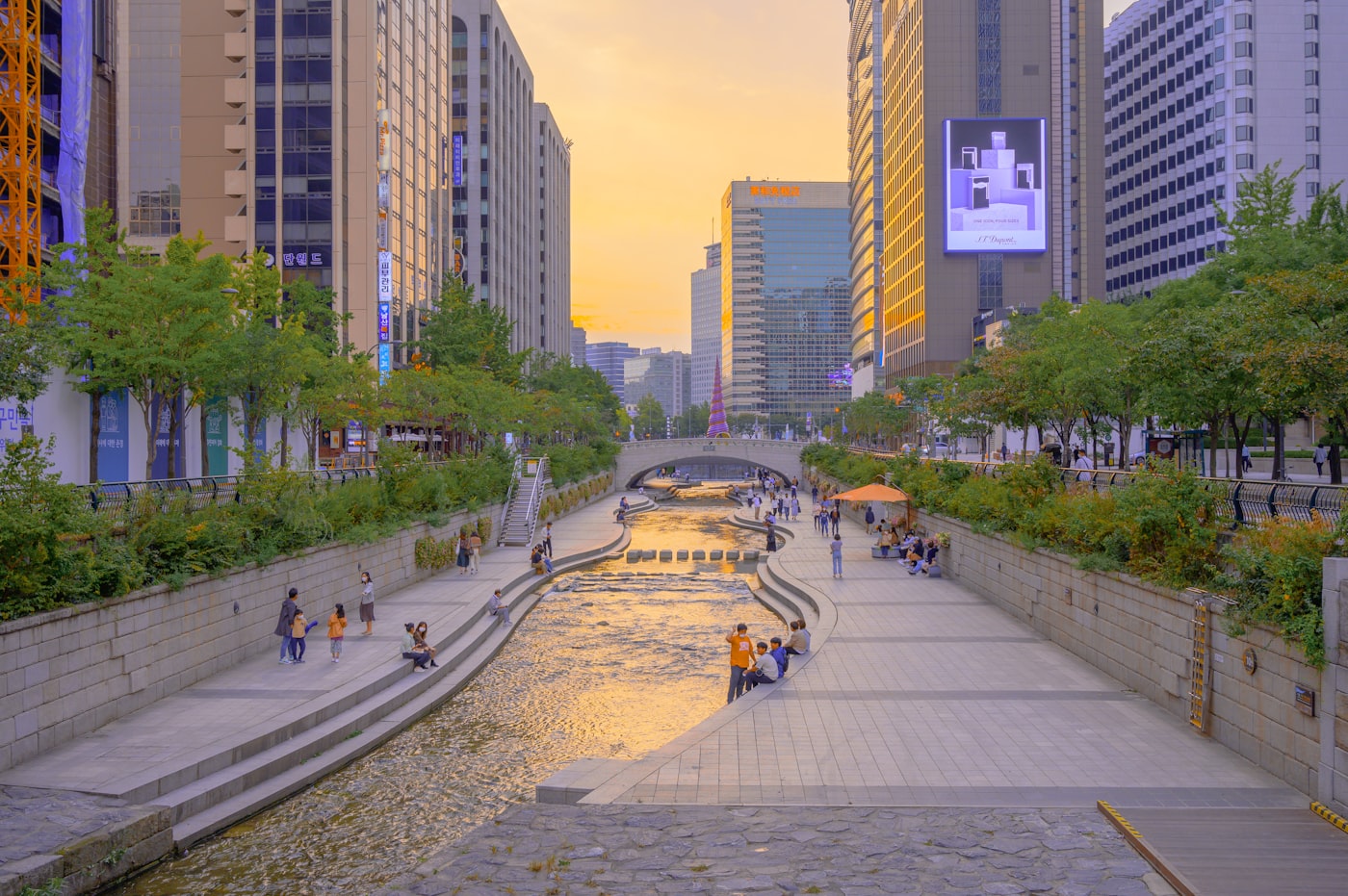
Category: Travel Guide

KOREA travel-guide

  • Gyeongju Travel Guide — Korea’s Ancient Capital and UNESCO Heritage Sites

    Gyeongju Bulguksa Temple with stone pagodas and traditional architecture surrounded by autumn trees

    This Gyeongju Travel Guide — Korea’s Ancient Capital and UNESCO Heritage Sites — is the one resource I wish I’d had when I first stepped off the train here over a decade ago, completely unprepared for a city that would quietly rearrange everything I thought I knew about Korea. Walking through Gyeongju for the first time feels genuinely disorienting in the best possible way — you turn a corner expecting a convenience store and instead find a royal burial mound the size of a small apartment building, grass-covered and golden in the afternoon light, sitting casually between a café and a family restaurant. This is everyday life in a city that ruled the Korean peninsula for nearly a thousand years as the heart of the Silla Kingdom, and the weight of that history isn’t locked behind museum glass here — it’s in the soil beneath your feet, the curve of every roofline, and the amber glow that floods the Gyeongju basin at dusk.

    What makes Gyeongju genuinely different from every other city I’ve explored across Korea is that the ancient and the ordinary share the same street without any theatrical fanfare. Locals bike past UNESCO-listed royal tombs on their morning commute. Grandmothers sell freshly made hwangnam-ppang — the city’s legendary red bean pastry — from storefronts that have barely changed in sixty years, just a short walk from stone observatory towers built in 634 AD. I’ve brought friends here who expected a museum town and left completely stunned by how alive it all feels. If you have even two days to spend somewhere outside of Seoul, make them here.

    935
    Years as Silla Capital
    5
    UNESCO World Heritage Zones
    634
    AD — Cheomseongdae Built
    2hrs
    KTX from Seoul Station

    Getting to Gyeongju and Finding Your Feet

    The fastest way to reach Gyeongju from Seoul is the KTX bullet train to Singyeongju Station, which takes just under two hours and costs around ₩58,000–₩63,000 (~$43–$47) one way. Here’s the insider detail that trips up first-timers every single time: Singyeongju Station is not actually in Gyeongju city center — it’s roughly 8 km west of the main attractions in a semi-rural area. From the station, you’ll need to hop on Bus 60 or 61 (about ₩1,500, ~$1.10) for a 20–25 minute ride into town. Taxis from Singyeongju cost around ₩12,000–₩15,000 (~$9–$11) and are worth it if you’re tired or arriving with luggage. Alternatively, the slower Mugunghwa or ITX trains stop directly at Gyeongju Station in the city center — the ride from Seoul takes closer to three hours but costs only ₩28,700 (~$21) and drops you five minutes’ walk from the Tumuli Park royal tombs. For most visitors, I recommend arriving at Singyeongju on KTX and departing from Gyeongju Station — you get the speed without doubling back. Once you’re in the city, rent a bicycle from one of the many shops near Gyeongju Station for ₩10,000–₩15,000 (~$7.50–$11) per day. This is genuinely the best way to move between the major sites, because the flat terrain and dedicated bike paths connecting Tumuli Park, Cheomseongdae, Anapji Pond, and Bulguksa’s bus stop make cycling here feel like it was designed specifically for visitors.

    The UNESCO Heritage Sites You Actually Need to See

    Gyeongju’s UNESCO recognition covers a remarkable spread of monuments across the entire city basin, but let me cut through the noise and tell you which ones earn genuine goosebumps versus which ones are fine to skim. Bulguksa Temple is non-negotiable — it’s a 30-minute bus ride from central Gyeongju (Bus 10 or 11 from Gyeongju Bus Terminal, ₩1,500 each way), and the entry fee is ₩6,000 (~$4.50). Arrive before 9 AM on weekdays and you’ll have the stone pagodas — Dabotap and Seokgatap — almost entirely to yourself, which is extraordinary given that these structures have stood since 751 AD. The detail that most visitors photograph and then walk past is the lotus flower carved into the Cheongun Bridge balustrade; look carefully and you’ll see the craftsmen’s fingerprints fossilized in stone. Seokguram Grotto sits another 2.5 km up the mountain from Bulguksa (shuttle bus available for ₩2,400 round trip, or a genuinely beautiful 40-minute hike through pine forest), and houses a seated granite Buddha that is, in my twelve years of visiting temples across this country, the single most serene piece of sacred art I’ve encountered anywhere in Asia. Entry is ₩6,000 (~$4.50), and the combined Bulguksa–Seokguram ticket costs ₩10,000 (~$7.50). Back in the city center, Tumuli Park — the massive royal tomb complex where 23 grass-covered burial mounds fill an entire neighborhood — is open daily and costs ₩3,000 (~$2.
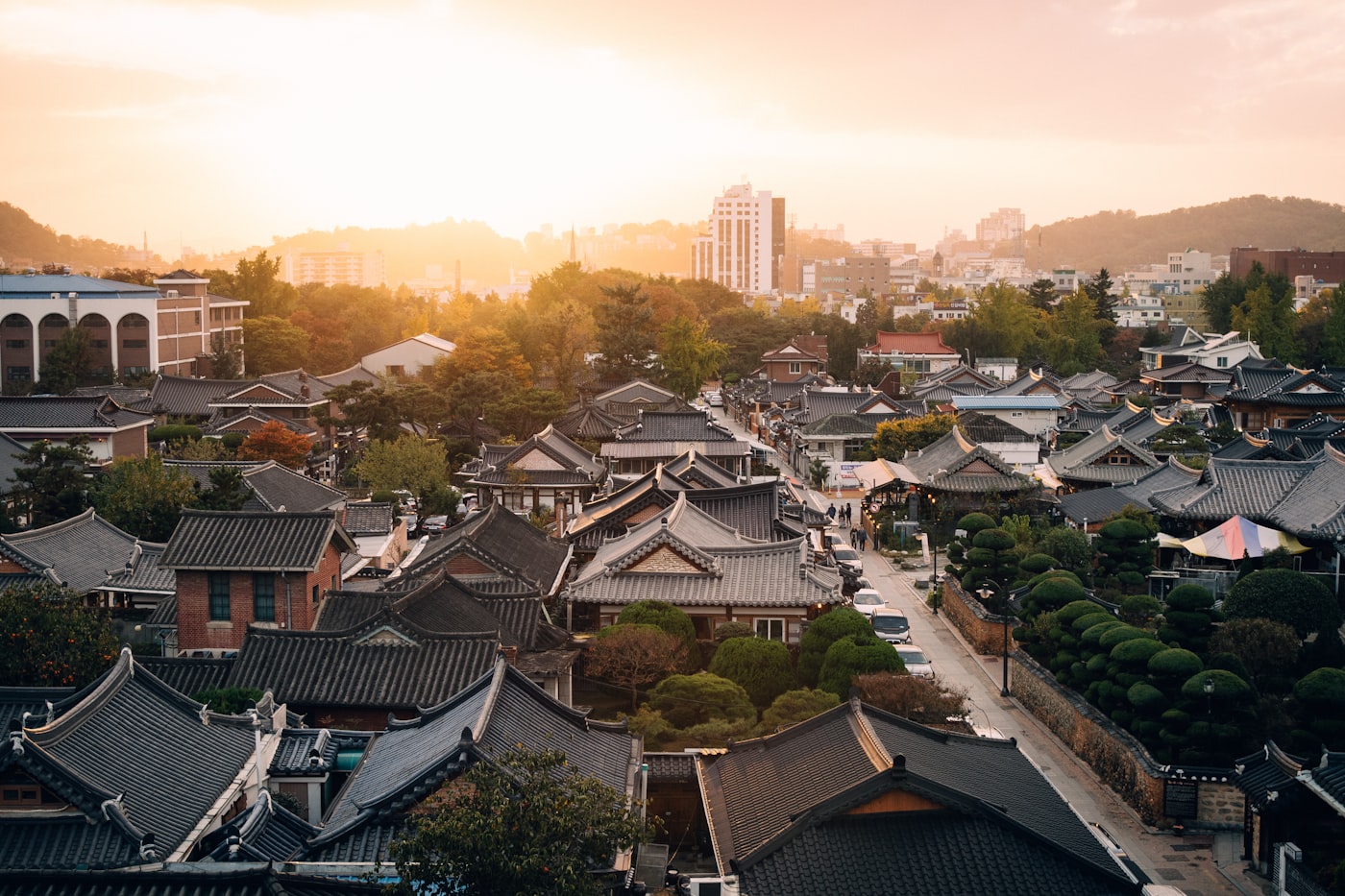

  • Gyeongju Travel Guide — Korea’s Ancient Capital and UNESCO Heritage Sites

    Gyeongju Bulguksa Temple at golden hour — Korea's ancient capital UNESCO heritage site

    If you only read one Gyeongju Travel Guide — Korea’s Ancient Capital and UNESCO Heritage Sites before you visit, make it this one, because Gyeongju is not a city you stumble through unprepared — it rewards the curious and quietly humbles the rushed. I still remember the first time I stepped off the KTX at Singyeongju Station and drove into the city proper: within ten minutes I was passing grass-covered burial mounds the size of apartment buildings, rising out of the middle of a residential neighborhood like something from a dream. Gyeongju is the only city in Korea where the ancient world hasn’t been bulldozed — it has been lived in, continuously, for over a thousand years, and that weight is something you feel in your chest before your brain even catches up.

    This was the royal capital of the Silla Kingdom for nearly a millennium — from 57 BC all the way to 935 AD — and the UNESCO designation here isn’t a single monument but an entire cityscape. Walk ten minutes in any direction from the old town center and you’ll trip over a royal tomb, a Joseon-era stone lantern, or a temple foundation that predates the Norman Conquest of England. What makes Gyeongju genuinely special among Korea’s UNESCO heritage sites is that it functions as a living city — people raise families here, run noodle shops, park bicycles beside thousand-year-old stone pagodas. That combination of the mundane and the magnificent is what keeps me coming back, again and again, even after twelve years in this country.

    57 BC
    Silla Kingdom Founded
    5
    UNESCO World Heritage Zones
    2hrs
    KTX from Seoul
    1,000+
    Cultural Heritage Sites

    The UNESCO Heritage Sites You Absolutely Cannot Miss

    Let’s start with Bulguksa Temple, because it’s the anchor of any serious Gyeongju itinerary. Built in 528 AD and reconstructed in its current form during the Unified Silla period, this is not a reconstruction of something lost — most of what you see is genuinely ancient, and UNESCO recognized it in 1995 for exactly that reason. The entry fee is ₩6,000 (~$4.50), and I strongly recommend arriving before 9 AM. After 10 AM on weekends, the main courtyard fills up fast and you lose the meditative quiet that makes Bulguksa so powerful. The two staircases leading to the main hall — Cheongungyo and Baegungyo — are off-limits to foot traffic to preserve them, but stand at their base and look up: those stone steps have been here for over 1,300 years. The detail that most visitors miss is the small lotus pond to the left of the main entrance, where the reflection of Dabotap Pagoda shimmers on calm mornings. That’s your photograph.

    A 15-minute taxi ride up the mountain from Bulguksa (about ₩8,000 / ~$6) brings you to Seokguram Grotto, and this is the one that genuinely stops people in their tracks. Carved into a granite cave in 751 AD, the central Buddha figure sits in near-perfect proportion, framed by bas-relief bodhisattvas around the circular chamber walls. Photography inside is prohibited — and honestly, I’m grateful for it. The grotto is enclosed in a modern glass chamber to regulate humidity, which sounds antiseptic but doesn’t diminish the experience one bit. Come at sunrise if you can manage it: the mountain trail from the bus stop at dawn, with mist threading through pine forests and the distant East Sea glinting on clear days, is one of the most quietly extraordinary walks I’ve taken in Korea. The first bus from Bulguksa heads up at around 7:20 AM.

    Back in the city, the Daereungwon Tumuli Park in the Hwangnam neighborhood is where Gyeongju’s ancient capital energy hits you most viscerally. Twenty-three royal burial mounds are scattered across a 125-acre park, and you can walk freely among them. Entry is ₩3,000 (~$2.25). Only one tomb — Cheonmachong — is open for interior viewing, and inside you’ll see the burial chamber layout along with reproductions of the artifacts found here, including the famous “heavenly horse” painting on birch bark that gave the tomb its name. The original artifacts are at the National Museum of Gyeongju, which is free to enter and should be your next stop. The museum’s gold crown collection alone — five Silla royal gold crowns displayed in a single gallery — is worth the entire trip from Seoul.

    💡 Insider Pro Tip

    Rent a bicycle from the shops clustered around Gyeongju Intercity Bus Terminal (about ₩10,000 / ~$7.50 for a full day) rather than relying on taxis or buses between the main UNESCO sites in the city center. The flat terrain around Daereungwon, Cheomseongdae Observatory, and Anapji Pond makes cycling genuinely pleasant — and you’ll stumble across roadside stone pagodas and temple foundation stones that no tour bus ever stops for. Ask the rental shop specifically for a bike with a basket: you’ll want both hands free for your camera.

  • Best Things to Do in Busan — Korea’s Second City

    Haeundae Beach Busan Korea with city skyline at sunset

    The best things to do in Busan — Korea’s second city — will genuinely surprise you, and I say that after more than a decade of watching first-time visitors arrive expecting a smaller Seoul and leave completely obsessed with a city that is, in almost every way, its own magnificent thing. Busan hits differently the moment the KTX train punches through the last tunnel and the East Sea explodes into view — that vivid, almost Caribbean blue that Seoul people drive four hours to see on long weekends. This is a port city, a beach city, a mountain city, and a food city all jammed together into a dramatic landscape of steep hillside neighborhoods tumbling down toward the waterfront, and every single district has its own personality.

    I’ve lost count of how many times I’ve made the two-and-a-half-hour KTX journey from Seoul just to spend a weekend eating raw fish at Jagalchi Market at midnight, watching the sunrise from Haedong Yonggungsa Temple, and wandering the pastel alleyways of Gamcheon Culture Village with an iced Americano in hand. Busan rewards the curious traveler at every turn — the kind of city where your best meal happens at a folding table under a blue tarp, and your most jaw-dropping view comes completely free. Let me walk you through everything worth your time here.

    3.4M
    City Population
    1876
    Year Port Opened
    8
    Major Beaches
    2.5hrs
    KTX from Seoul

    Beaches, Temples & Hilltop Villages — Busan’s Iconic Landmarks

    Haeundae Beach is the postcard image of Busan and deservedly so — roughly 1.5 km of clean sand backed by a glittering skyline, accessible via Busan Metro Line 2, Exit 5, and completely free to enjoy any time of year. But here’s what most guides won’t tell you: locals almost never swim at Haeundae in summer because the designated swim zone shrinks to a tiny corridor and the crowds are genuinely overwhelming in July and August. Instead, head twenty minutes south on foot to Dongbaek Island (동백섬), a small forested peninsula attached to Haeundae’s western edge, where you can walk a quiet coastal trail, look back at the city skyline, and watch elderly Busan men fish in complete serenity — a world apart from the beach chaos behind you.

    Haedong Yonggungsa Temple (해동 용궁사) is one of the few Buddhist temples in Korea built directly on a rocky coastal cliff, and the effect is genuinely dramatic — waves crash below the prayer halls, seagulls wheel overhead, and the smell of sea spray mixes with incense smoke in a way that feels almost surreal. Take Bus 181 from Haeundae Station and ride it to the end; the journey itself is scenic. Arrive before 8 a.m. if you want even a moment of quiet. Entry is free, though a small donation is appreciated. Then there’s Gamcheon Culture Village (감천문화마을) in Saha-gu — the “Machu Picchu of Busan,” as locals half-jokingly call it — a former refugee settlement from the Korean War era that has been transformed into a mosaic of brightly painted homes, tiny galleries, and rooftop cafés stacked up a steep hillside. Take Line 1 to Toseong Station, Exit 2, then a short taxi ride (about ₩4,000 / ~$3). Buy the ₩2,000 (~$1.50) village map at the community center — it leads you to hidden murals and a famous Little Prince statue that most people spend twenty minutes looking for on their own.

    💡 Insider Pro Tip

    At Gamcheon Culture Village, skip the main entrance path and enter from the upper road via the Busan Art Museum shuttle stop — you’ll descend through the village instead of climbing it, which is far easier on your legs, and you get the best overhead photo angles in the first ten minutes rather than the last.

    Jagalchi Market to BIFF Square — Eating and Exploring Downtown Busan

    No visit to Busan is complete without spending serious time in Nampo-dong, the historic downtown core where Jagalchi Fish Market, BIFF Square, and Gukje Market all blur together into one gloriously chaotic, deeply delicious neighborhood. Jagalchi (자갈치시장) is Korea’s largest seafood market and the spiritual heart of Busan’s food culture — take Line 1 to Jagalchi Station, Exit 10, and you’re there in seconds. The market runs across an outdoor section where ajumma vendors in yellow aprons will wave at you enthusiastically, and an indoor building where you buy your live fish or seafood on the ground floor and then carry it upstairs to a restaurant section that will cook it right there for a small fee (usually ₩5,000–₩8,000 / ~$4–$6 per cooking service). Order the 회 (raw fish slices) with a bottle of soju and a side of doenjang jjigae — that combination is as Busan as it gets.

  • Best Day Trips from Seoul — Hidden Gems Within 2 Hours

    Scenic Korean countryside landscape perfect for day trips from Seoul

    The best day trips from Seoul — hidden gems within 2 hours — are honestly some of my favorite things to share with travelers, because most people have no idea just how dramatically the city dissolves into ancient fortresses, misty mountain temples, and slow-living coastal villages the moment you step onto a train or bus heading out of the capital. I’ve been doing these escapes for over a decade now, and every single time I come back to Seoul feeling like I’ve just lived an entirely different life for a day — which is exactly what a great day trip should do to you.

    What makes Seoul so extraordinary as a base city is that its transit network genuinely reaches places that feel worlds apart — not just geographically, but culturally and emotionally. You can eat bibimbap in Insadong at 8am and be standing on a 1,000-year-old fortress wall watching fog roll over pine-covered ridges by 10am. The destinations I’m going to walk you through are not the ones crowded with tour buses. These are the places locals actually go when they want to remember why they love Korea in the first place.

    4
    Hidden Gems Covered
    2hrs
    Max Travel Time
    935
    Namhansanseong Built (AD)
    ₩2,900
    Avg Subway Fare (~$2.20)

    Namhansanseong — The Mountain Fortress Seoul Forgot to Tell You About

    I genuinely cannot understand why Namhansanseong doesn’t appear on every Seoul travel itinerary, because it’s a UNESCO World Heritage Site sitting less than 30 kilometers from city hall. From Gangnam Station, you hop Line 8 to Namhansanseong Station (Exit 2), then catch the local bus 9 for about 15 minutes up the mountain — the whole journey takes under an hour, costs roughly ₩2,500 (~$1.90), and deposits you inside a 17th-century mountain fortress that once sheltered the Joseon royal family during the Manchu invasion of 1636. The 11.7km perimeter wall is hikeable in full if you’ve got 4–5 hours, but even walking just the southern ridge for 90 minutes rewards you with views that make Seoul look like a shimmering circuit board below.

    Here’s the insider detail that makes all the difference: the small village inside the fortress walls — called Sanseong Village — has about a dozen traditional restaurants serving sanchae bibimbap (mountain herb bibimbap) made with greens foraged from the fortress grounds themselves. Lunch costs around ₩12,000–15,000 (~$9–11). The restaurant owners are typically in their 60s and 70s, deeply proud, and will bring out an extra dish of wild sesame leaves if you eat with obvious enjoyment. Don’t rush this meal. It’s one of those rare moments where the food and the setting are actually inseparable from each other.

    Gapyeong & Nami Island’s Quieter Neighbor — Jaraseom and the Villages Beyond

    Everyone knows Nami Island (Namiseom), and yes, it’s beautiful — but it’s also perpetually crowded, especially on weekends when ITX-Cheongchun train tickets sell out before 7am. My advice: take that same ITX train from Cheongnyangni Station (~75 minutes, ₩4,800 / ~$3.60) to Gapyeong, but walk straight past the Nami Island ferry dock and head instead to Jaraseom — a small jazz-island park right in the river that most tourists completely ignore. Entry is free if you time your visit outside of the annual Gapyeong Jazz Festival (held every October), and the riverside cycling path that winds through willow trees toward Dumulmeori — where the North Han and South Han rivers dramatically converge — is one of the most quietly spectacular walks in Gyeonggi Province. Bike rental near Gapyeong Station runs ₩8,000–10,000 (~$6–7.50) for a half day, and you’ll earn every won of it.

    The local detail that changes your whole day: about 2km east of Dumulmeori, there’s a small cluster of pension cafés along the riverbank where the owners roast their own beans. None of them have English signage. Just look for the hand-painted wooden boards and follow the smell. On a clear autumn morning with the Bukhangang glittering and the Chuncheon mountains stacked blue in the distance, a ₩5,500 (~$4.15) Americano here is the best coffee you will drink in Korea — and I’m including every Seoul specialty café in that statement.

    💡 Insider Pro Tip

    For the ITX-Cheongchun train to Gapyeong, book your seat on the Korail app (코레일) at exactly midnight — tickets for weekend departures open 30 days in advance and the popular 8–9am slots vanish within minutes. If you miss them, the regular commuter bus from Dong Seoul Terminal (동서울터미널) still gets you there in about 90 minutes for

  • Korea in Spring — Ultimate Cherry Blossom Guide

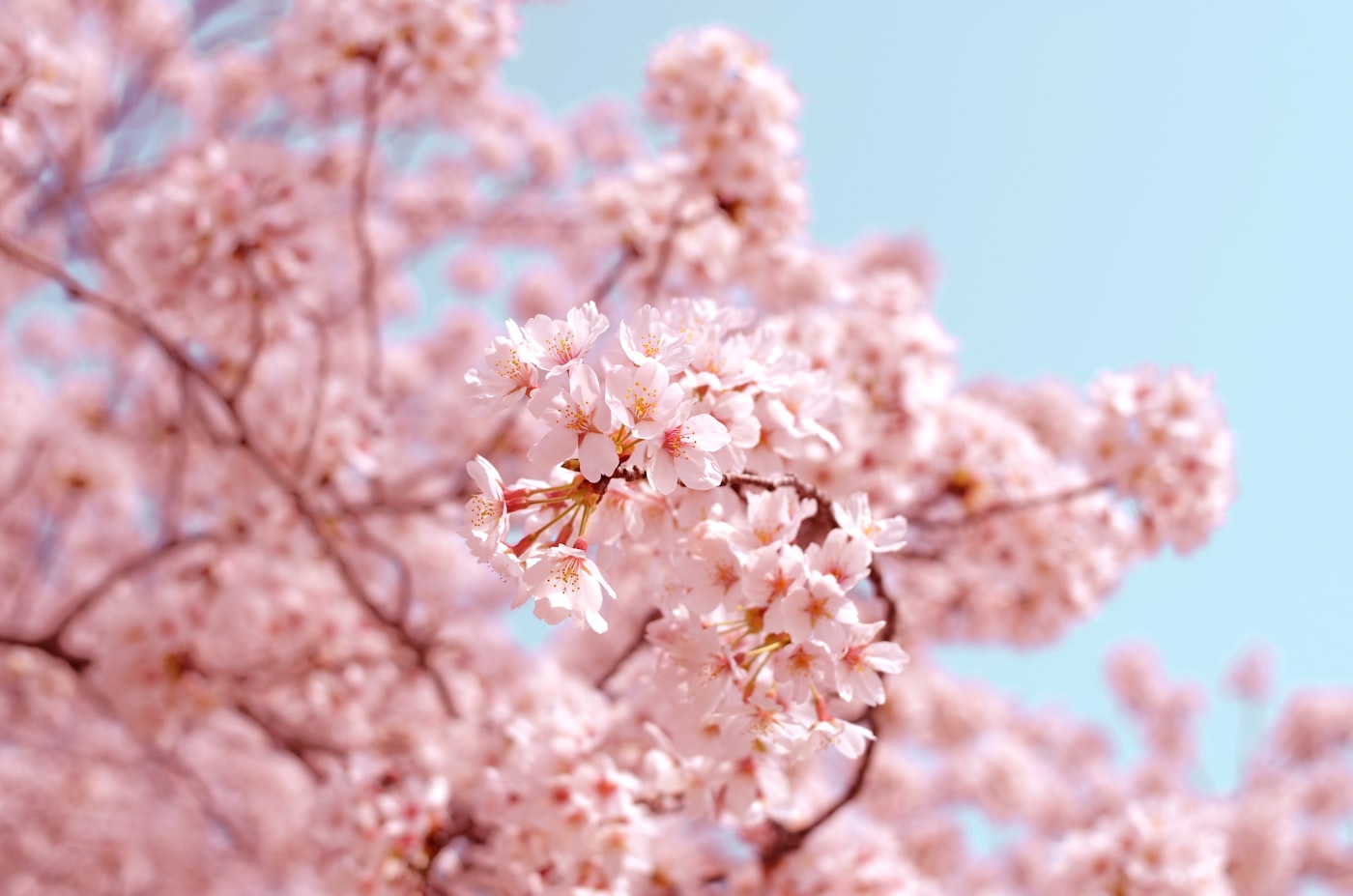
    Cherry blossoms in full bloom lining a river path in Seoul, Korea in spring

    If you’ve ever needed a reason to visit Korea, this is your Korea in Spring — Ultimate Cherry Blossom Guide, and I promise you, two weeks under a canopy of pink petals will ruin every other spring for the rest of your life. I still remember the first time I walked the Yeouido Hangang riverside in late March — the whole sky had turned a soft, hazy pink, petals were swirling down onto the water like slow-motion confetti, and strangers were sharing makgeolli and laughing on picnic blankets as if the whole city had agreed to pause and just breathe. That feeling is exactly what I want to help you find, and with the right timing and the right spots, you absolutely will.

    Korean cherry blossom season is one of those rare travel experiences that actually lives up to the hype — but only if you go in with a plan. The blooms last an average of just seven to ten days at peak, and the crowds at famous spots like Gyeongbokgung Palace and Jinhae can be genuinely overwhelming if you show up unprepared. I’ve spent over a dozen spring seasons navigating Korea’s best blossom spots, from the grand festivals in the south to the quiet neighborhood streets in Seoul that nobody writes about, and I’m going to share every last detail I know — the subway exits, the real prices, the hidden paths, and the tricks that separate a frustrating crowded mess from an utterly magical spring memory.

    7–10
    Days at Peak Bloom
    1,000,000+
    Visitors at Jinhae Festival
    Late Mar
    Average Seoul Bloom Start
    340km
    Seoul to Jinhae by KTX+Bus

    When and Where the Cherry Blossoms Actually Peak in Korea

    Korea’s cherry blossom season doesn’t move in a straight line — it ripples northward from Jeju Island in the south all the way up to Seoul and beyond over the course of about three to four weeks. Jeju typically blooms first, usually between March 20–25, which means if you time a Jeju trip in the third week of March, you get a full blossom experience before the mainland crowds even know what hit them. Seoul follows around late March to early April, with peak bloom landing most years between March 28 and April 5 — though climate shifts have been pushing that window slightly earlier each year, so I always check the Korea Meteorological Administration’s official cherry blossom forecast (available in Korean and English) in late February before finalizing any bookings.

    The single most spectacular cherry blossom destination in all of Korea is Jinhae, a coastal city in South Gyeongsang Province that transforms into what I can only describe as a pink fever dream every spring. The Jinhae Gunhangje Festival — held annually for ten days in late March to early April — draws over a million visitors to see 360,000 cherry trees lining every road, canal, and hillside in town. The iconic Gyeonghwa Station, a tiny old railway station ringed by blossoms, is the photo you’ve seen a thousand times, and yes, it is every bit as beautiful in person. To get there from Seoul, take the KTX to Changwon Central (about 2.5 hours, ₩48,000–₩58,000 / ~$36–$44) then a local bus to Jinhae. Go on a weekday and arrive before 8am — the shot of the station with nobody blocking it is 100% worth the early alarm.

    The Best Cherry Blossom Spots in Seoul — Beyond the Obvious

    Everyone tells you to go to Yeouido — and they’re not wrong, the Yeouido Spring Flower Festival along the Hangang riverside is genuinely stunning, with a 1.7km stretch of cherry trees turning the whole embankment pink. Take Line 5 to Yeouinaru Station, Exit 2, arrive before 9am to walk the path before the afternoon crowds pack it shoulder-to-shoulder. But here’s what I tell every friend visiting Seoul in spring: walk ten minutes further west along the river past the main festival zone, and you’ll find a quieter continuation of the cherry tree path where locals jog and eat convenience store kimbap under the blossoms with zero tourist crowds. That stretch, right before the 63 Building comes into view, is my personal favourite spot in all of Seoul during spring.

    For a completely different blossom mood, head to Changgyeonggung Palace in Jongno-gu — it’s far less visited than Gyeongbokgung, costs only ₩1,000 (~$0.75) to enter, and hosts magical night blossom events (야간개장) where the trees are lit with soft lighting against the ancient palace walls from 7pm–9pm. Tickets for the night events go on NAVER at 2pm exactly two weeks before each session and sell out in about four minutes — set an alarm, have your payment info ready, and don’t blink. Line 4 to Hyehwa Station, Exit 4. For a neighbourhood blossom walk that feels like you’ve stepped into a Korean drama, the streets around Seokchon Lake in Songpa-gu (Line 8 to Jamsillaru Station, Exit 1) are absolutely covered in cherry trees that reflect onto the lake — and the nearby Lotte World Tower makes for an almost surreal backdrop at golden hour

  • Korean Street Food Guide — 20 Must-Try Foods and Where to Find Them

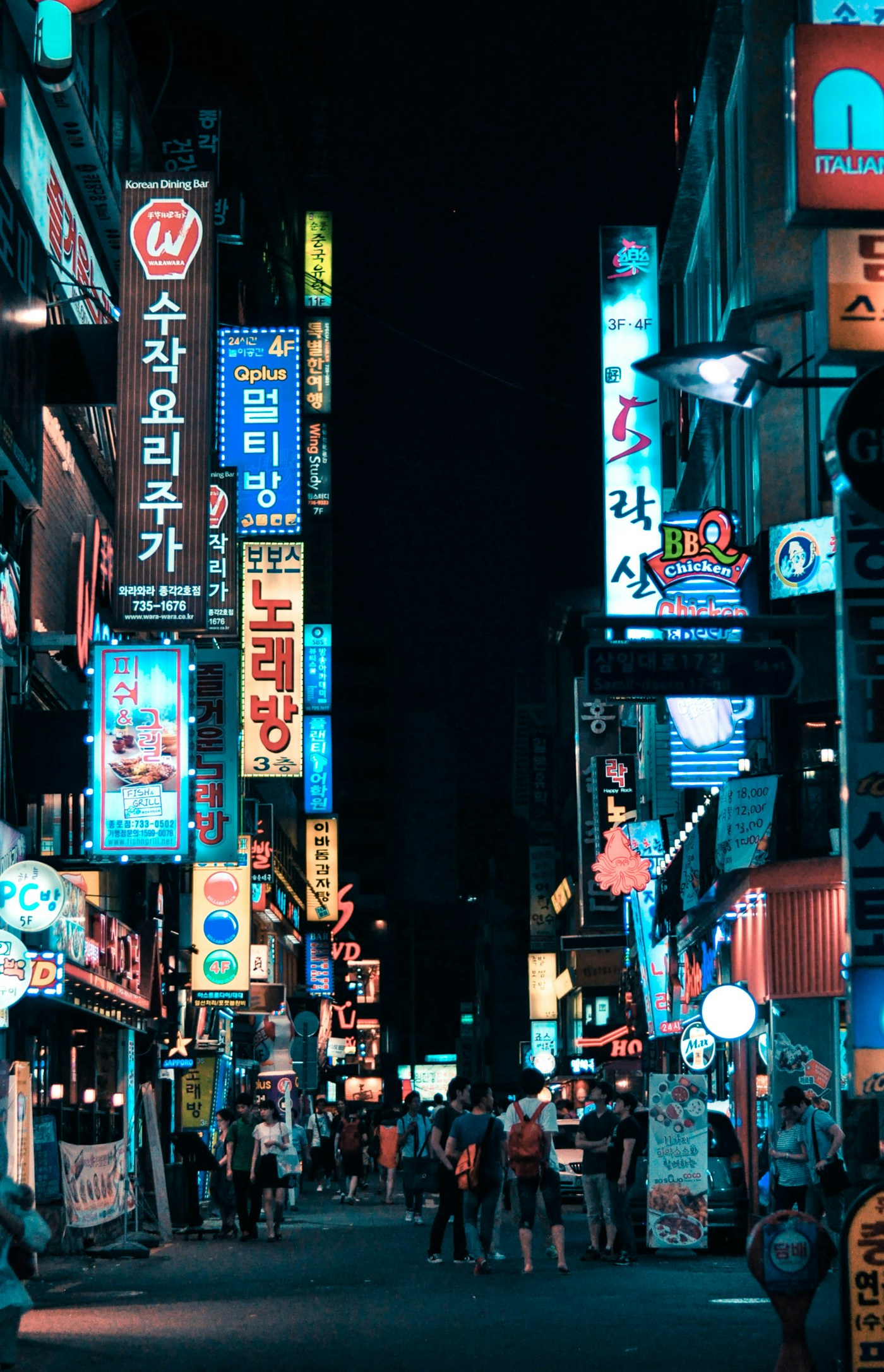
    Korean street food stalls glowing at night in Myeongdong, Seoul — tteokbokki, hotteok, and skewers sizzling on open grills

    This Korean Street Food Guide — 20 Must-Try Foods and Where to Find Them — is the one resource I wish someone had handed me when I first landed at Incheon Airport twelve years ago, wide-eyed, jet-lagged, and completely unprepared for the wall of incredible smells hitting me the moment I stepped outside. Korean street food isn’t a tourist gimmick bolted onto the side of the culture — it is the culture, alive and steaming in every pojangmacha tent, every night market alley, every subway station underpass where a grandmother has been quietly frying fishcakes since before you were born. Whether you have three days in Seoul or three weeks zigzagging the peninsula, eating from street stalls will be the memories you talk about longest after you get home.

    What makes Korean street food so extraordinary is how unapologetically bold it is. Nothing here is shy. The tteokbokki is aggressively red and spicy. The hotteok oozes brown sugar syrup that burns the roof of your mouth in the most satisfying way. The odeng broth steams in big communal vats and costs almost nothing, yet warms you to your bones on a freezing February afternoon. I have eaten my way through Gwangjang Market at midnight, through the back alleys of Busan’s Jagalchi district at dawn, and through Myeongdong’s electric pedestrian strip more times than I can count — and I still find something new every single time. Let me take you through the 20 essential foods you need to eat, exactly where to find the best versions, and the real prices so you know you’re not getting overcharged.

    20+
    Essential Street Foods Covered
    ₩500
    Cheapest Snack (Odeng Skewer)
    600+
    Stalls in Gwangjang Market Alone
    1392
    Year Street Stall Culture Was Documented in Joseon Records

    The Classic Five — Korea’s Most Iconic Street Foods

    Start here. These are the five foods that every Korean grew up eating and every visitor absolutely must try — and I mean actually try, not just photograph. Tteokbokki (떡볶이) tops the list without question. These chewy rice cakes simmered in a fire-red gochujang sauce are Korea’s ultimate comfort food, and the best version I’ve ever had costs ₩3,000 (~$2.25) at a street cart in Sindang-dong (Line 2 or 5, Exit 4), which is actually the neighborhood that invented the dish back in the 1950s. Don’t get tteokbokki from a convenience store on your first try — get it bubbling fresh from a street cart and eat it standing right there on the pavement. Odeng (오뎅), or fishcake skewers simmered in a light anchovy broth, come next. They’re ₩500–₩1,000 (~$0.40–$0.75) per skewer and the broth is free — locals slurp it straight from the ladle like a warm shot of soup, and so should you. Hotteok (호떡) is a pan-fried sweet pancake stuffed with brown sugar, cinnamon, and crushed peanuts, best eaten in winter when the filling is liquid-lava hot — Namdaemun Market near City Hall (Line 4, Exit 5) has the most legendary hotteok vendors, and the line moves fast. Twigim (튀김) — Korean-style tempura — is the perfect fried food: crispy battered vegetables, squid, and sweet potato, dunked in a soy-based sauce for ₩500–₩1,000 (~$0.40–$0.75) per piece. Finally, Gimbap (김밥) might look like sushi but it’s an entirely different experience — rice and vegetables and sometimes beef or tuna rolled in seaweed, sliced into neat rounds, and sold for ₩2,000–₩3,500 (~$1.50–$2.60) a roll. Gwangjang Market (Line 1, Exit 8) is where you eat it, specifically from the ajummas who have been rolling gimbap at the same spot for decades.

    The Next Eight — Foods That Will Make You Cancel Your Flight Home

    Once you’ve nailed the classics, this next tier is where Korean street food starts getting genuinely addictive. Dakgalbi (닭갈비) skewers — spicy marinated chicken grilled on a stick — show up everywhere in Myeongdong for ₩3,000–₩5,000 (~$2.25–$3.75), and the vendors let you choose your spice level if you mime it clearly enough. Corn dogs (핫도그) here are nothing like their American cousins: they’re coated in a thick, slightly sweet batter, rolled in crushed ramen or sugar or potato chunks, deep-fried golden, and then painted with ketchup, mustard, and mayo in elaborate stripes. Myeongdong street vendors sell them for ₩3,500–₩5,000 (~$2.60–$3.75) and they are absurdly good at midnight. Gyeranppang (계란

  • Best Things to Do in Busan — Korea’s Second City

    Haeundae Beach Busan Korea with city skyline at sunset

    The best things to do in Busan — Korea’s second city — hit differently from anything Seoul can offer, and the moment you step off the KTX and smell salt air cutting through the heat, you’ll feel exactly what I mean. Busan isn’t Seoul’s little sibling. It’s a coastal megalopolis of 3.4 million people stacked between dramatic mountains and the Korea Strait, where raw fish markets sit two blocks from rooftop cocktail bars, and temple bells echo over the sound of crashing waves. I’ve been living in and visiting this city for over a decade, and honestly? It still surprises me.

    What makes Busan truly special is the way it layers its identities without apology. The Jagalchi fish market grandmothers in rubber aprons, the surfers at Songjeong Beach, the hipsters in Bosu-dong’s secondhand bookshops, the grandeur of the Gamcheon Culture Village painted in blues and yellows on a steep hillside — this city wears all of it at once. Whether you have two days or two weeks, Busan rewards every hour you put into it.

    3.4M
    City Population
    1876
    Port Founded
    7
    Major Beaches
    2h10m
    KTX from Seoul

    Busan’s Beaches, Mountains & Iconic Neighborhoods

    Let’s start where most people do — Haeundae Beach — but let me give you the version tourists don’t get. Yes, it’s gorgeous: 1.5km of golden sand, the APEC Naru Park on one end, and that glittering Marine City skyline reflected in the water at night. But come in July or August and you’ll be elbow-to-elbow with two million beachgoers. The local move is to arrive before 8am, grab a spot, then walk ten minutes east to Dalmaji-gil, a pine-lined road above the coast where cafés open early and the views are frankly better than anything on the beach itself. If you want a Busan beach without the chaos, take subway Line 2 to Songjeong Station (Exit 1) and walk 10 minutes to Songjeong Beach — surfers, local families, no high-rises, no fuss.

    Gamcheon Culture Village is one of those rare places that lives up to its Instagram reputation and then exceeds it. Built into a steep hillside in Saha-gu, this former settlement for refugees and members of the Taegeukdo religion was transformed from 2009 onward into a living art gallery. The alleys twist and climb unpredictably — get a stamping map from the entrance for ₩2,000 (~$1.50) and follow the Little Prince statue trail. The real secret: come after 4pm on a weekday when the tour buses have gone and the light turns the painted walls gold. Take bus 2, 2-2, or 13 from Toseong-dong, or grab a taxi from Jagalchi Station (Line 1, Exit 10) for about ₩5,000 (~$3.75).

    Haedong Yonggungsa Temple deserves every superlative thrown at it. Built directly on coastal rocks in 1376, this is the only major seaside Buddhist temple in Korea, and watching waves explode against the stone walls while incense smoke drifts past gilded statues is a genuinely otherworldly experience. Entrance is free. Get there by bus 181 from Haeundae Station (Line 2, Exit 7) — takes about 25 minutes. Arrive before 9am to have the lower stone platforms nearly to yourself.

    💡 Insider Pro Tip

    The Busan City Tour Bus (₩15,000/~$11 for a full day) is genuinely one of Korea’s best transit values — it loops Haeundae, Dongbaek Island, Oryukdo Skywalk, and Jagalchi Market with hop-on/hop-off freedom. Buy it at Busan Station or Haeundae Station ticket booths, not from touts on the street who charge ₩2,000 more and give you a restricted schedule.

    Eating & Drinking in Busan — What, Where, and How Much

    Busan’s food culture is its own universe within Korean cuisine, and if you leave without eating dwaeji gukbap (pork rice soup) for breakfast, I will personally feel like I failed you. This is Busan’s soul food — a rich, milky pork bone broth served with rice, sliced pork, and a tangle of green onions, eaten at 7am by taxi drivers and fishermen and businesspeople all sitting at the same long communal table. The undisputed address is Ssiat Dwaeji Gukbap in Bujeon-dong, near Seomyeon Station (Line 1/2, Exit 1): a bowl runs ₩10,000 (~$7.50) and it’s open 24 hours. Eat it with the house kimchi and a raw garlic

  • Namsan Seoul Tower — Complete Visitor Guide

    Namsan Seoul Tower glowing at night above the Seoul city skyline

    This is your Namsan Seoul Tower — Complete Visitor Guide, written from twelve years of living in this city and countless trips up that iconic red-tipped beacon that watches over Seoul like a proud guardian. Whether you are standing in Myeongdong looking up at it for the first time wondering how to actually get there, or you are planning a sunset date night and want to time it perfectly, I have got everything you need right here — real prices, real routes, real talk. Namsan Tower is not just a photo opportunity; it is genuinely one of the most emotional, atmospheric places in all of Seoul, and when you are up there on a clear winter night with the entire city glittering below you and a cup of hot sweet potato latte warming your hands, you will understand exactly what I mean.

    Locals call it simply “N Seoul Tower” or just “남산타워” (Namsan Tower), and there is a whole culture built around visiting it — couples who come to attach love locks to the fence, families who hike up through Namsan Park on weekends, and solo travelers who quietly sit on the outdoor observatory deck and let the 360-degree panorama of this enormous, endlessly fascinating city sink into their bones. I have done all of those things, and I want to walk you through every detail so your visit feels effortless, not overwhelming.

    480m
    Total altitude above sea level
    1969
    Year the tower opened
    236m
    Tower height from base
    3M+
    Annual visitors

    Getting to Namsan Tower: The Routes Only Locals Use

    Here is the honest truth about getting to N Seoul Tower — most tourists immediately assume they need to take the cable car, and while that is a perfectly lovely option, it is not always the smartest one. Let me break down your real choices. The cable car departs from just outside Myeongdong Station (Line 4, Exit 3) and costs ₩10,500 one way or ₩15,000 round trip (roughly $8 and $11 USD). The queue can stretch 40–60 minutes on weekends and public holidays, and I have genuinely stood in that line watching the sun go down before I even reached the top — not ideal. My preferred approach on a good weather day is the free Namsan Sunken Garden shuttle bus, which leaves from the Chungmuro Station side (Line 3 or Line 4, Exit 2) roughly every 5–7 minutes and drops you close to the tower base. The ride is free with a T-money card tap, takes about 7 minutes, and almost nobody outside of locals knows it runs this frequently. Alternatively, if you want to earn that view, the hike from Itaewon (Line 6, Exit 2) takes about 25 minutes up a wooded trail and is genuinely beautiful — I do it regularly on Sunday mornings when the city is still quiet and the trail smells like pine.

    Once you arrive at the tower base, you are already at 243 meters above the city floor — the views from the outdoor terrace around the tower base are honestly excellent even before you buy an observatory ticket. Spend 10 minutes just walking this terrace. The love lock fence is here, cascading with hundreds of thousands of colorful padlocks — it is cheesy in the best possible Korean way and genuinely moving when you read some of the messages.

    💡 Insider Pro Tip

    Buy your observatory tickets online at the official N Seoul Tower website before you visit — you will skip the physical ticket line entirely and often pay the same price (₩21,000 / ~$15 USD for adults). On Friday and Saturday nights the ground-floor queue can be 30+ minutes even after the cable car ride. I always book same-day tickets online around lunchtime for an evening visit — slots rarely sell out before 3pm if you plan ahead.

    The Observatory Experience: What Is Actually Worth Your Money

    The N Seoul Tower observatory adult ticket costs ₩21,000 (~$15 USD), with discounts for children at ₩15,000 (~$11 USD). You ride a very fast elevator to the observation deck, and the moment those doors open, Seoul explodes in every direction around you. On the clearest days — and this is something I tell every visitor — you can actually see all the way to Incheon and the West Sea. Those days happen most reliably in November, December, and early March, when cold fronts push the fine dust (미세먼지, misemeonji) out to sea. Spring is beautiful but often hazy; summer is frequently smoggy. The observatory is split across two levels: the indoor digital observation floor with its interactive screens and floor-to-ceiling windows, and above that, the outdoor deck where the wind hits you hard and the feeling of openness is genuinely exhilarating. I always spend most of my time outside, even in winter — bring a jacket, but do not skip it. The compass rose embedded in the outdoor floor tells you exactly which direction each landmark lies: Gyeongbokgung Palace, Lotte World Tower, Bukhansan Mountain.

    Inside the tower complex you will find the N Grill restaurant at the top, which rotates 360

  • Best Day Trips from Seoul — Hidden Gems Within 2 Hours

    Best day trips from Seoul — scenic Korean countryside with temples and mountains within 2 hours

    The best day trips from Seoul — hidden gems within 2 hours — are honestly some of the most rewarding experiences this country has to offer, and after more than a decade of living here, I still find myself genuinely excited every single time I step off a train into one of these places. Seoul is magnificent, don’t get me wrong, but Korea’s real soul lives just beyond the city limits — in fortress walls draped in morning mist, coastal towns where raw seafood arrives at your table still moving, and pottery villages so quiet you can hear the wind cut through the pine trees. The best part? You don’t need a tour group, a rental car, or a complicated itinerary. Korea’s rail and bus network is so well-connected that most of these hidden gems are a single, affordable ticket away.

    What I love most about these Seoul day trips is how dramatically different each destination feels from the capital. You can leave Gangnam at 8am, arrive at a UNESCO-listed fortress by 10am, eat a legendary local lunch for under ₩15,000 (~$11), and be back on your rooftop bar stool in Hongdae by 7pm. That kind of range — from ancient history to coastal seafood to misty mountain trails — within two hours of one of Asia’s largest cities is genuinely rare anywhere in the world. Let me walk you through the three destinations that I personally keep recommending to every traveler who asks me where to go when they’ve already ticked off Gyeongbokgung and Bukchon.

    25+
    Day Trip Destinations Within 2 Hours
    1794
    Year Suwon Hwaseong Was Built
    5.7km
    Length of Hwaseong Fortress Wall
    90min
    Seoul to Gapyeong by ITX Train

    Suwon Hwaseong — A UNESCO Fortress Most Tourists Completely Miss

    Suwon is probably the most underrated day trip from Seoul in all of Korea, and I say that as someone who has taken at least thirty friends and family members there over the years. The city sits just 30 kilometers south of Seoul — Line 1 direct from Seoul Station, about 50 minutes, ₩2,800 (~$2.10) — and at its heart is Hwaseong Fortress, a perfectly preserved 18th-century fortification that wraps 5.7 kilometers around a hillside in a way that simply takes your breath away. Built in 1794 by King Jeongjo of the Joseon Dynasty, the fortress earned its UNESCO World Heritage status not just for its age but for its remarkably innovative engineering — watchtowers, command posts, and floodgates that were revolutionary for the era. Enter from Paldalmun Gate (the south gate, right next to Suwon Station Exit 2), pay the ₩1,000 (~$0.75) entry fee — yes, that’s correct, less than a dollar — and start walking the walls counterclockwise. The locals almost always go clockwise, so you’ll have the northern stretch largely to yourself, especially before 10am. At the top of Paldalsan hill, stop at Seojangdae command post and look north — on a clear day, you can see Seoul’s skyline shimmering in the distance, which is one of those Korea moments that genuinely stops time.

    After the walls, walk five minutes downhill into Haenggung Palace — King Jeongjo’s temporary palace, entry ₩1,500 (~$1.10) — and then reward yourself in the alley just outside the east gate with Suwon galbi. This city is the spiritual home of galbi (grilled beef short ribs) in Korea, and the restaurants clustered around Yeongdong Market have been perfecting the same marinade recipe for generations. A full galbi meal for two lands around ₩40,000–₩60,000 (~$30–$45), which is mid-range by Seoul standards but absolutely exceptional in quality. The secret the locals know: order the “왕갈비” (king galbi) — the larger-cut ribs — and ask for extra ssamjang on the side.

    💡 Insider Pro Tip

    Take the free Hwaseong Trolley (화성어차) that loops the fortress perimeter — it runs every 20–30 minutes from 9am and costs ₩4,000 (~$3) for the full circuit. Locals use it as a lazy Sunday ride, not a tourist attraction, so it’s rarely crowded on weekday mornings. It drops you right at Hwahongmun floodgate, which is the single most photogenic spot in all of Suwon — red lacquered archways reflected in the water below. Go before 9:30am when the light is still soft and the tour groups haven’t arrived.

    Gapyeong & Nami Island — Where Korea Goes to Exhale

    Most people have heard of Nami Island through the Korean drama “Winter Sonata,” but what most travelers don’t realize is that the real magic of this day trip from Seoul lies not on the island itself but in the entire Gapyeong valley that surrounds it. Take the ITX-Cheongchun train from Yongsan

  • Best Day Trips from Seoul — Hidden Gems Within 2 Hours

    Scenic Korean countryside train journey — best day trips from Seoul hidden gems within 2 hours

    If you are searching for the best day trips from Seoul — hidden gems within 2 hours, you have landed in exactly the right place, because after twelve years of living here and riding what feels like every train line out of the city, I can tell you with complete confidence that the landscapes and towns sitting just beyond Seoul’s traffic are some of the most underrated travel experiences in all of East Asia. Most visitors spend their entire trip inside the Han River corridor, cycling Yeouido or lining up for bibimbap in Insadong, and I completely understand the pull — Seoul is electric. But the moment you let a KTX or an ITX-Cheongchun train pull you north, east, or south, Korea starts revealing a quieter, stranger, more beautiful version of itself that the Instagram algorithm has barely touched yet.

    What makes these hidden gem day trips so satisfying is the sheer variety packed into such a compact radius. You can go from Seoul Station’s gleaming concourse to a 1,000-year-old fortress wall, a fog-draped lakeside railway village, or a tidal-flat seafood town — and still be back in Hongdae for a late craft beer. Korea’s train infrastructure genuinely spoils you rotten, and once you learn how to use it like a local, the city starts feeling less like a destination and more like the comfortable home base it already is for the 10 million people who live here. These are the escapes I recommend to every friend who visits me, and I’m giving you the exact routes, prices, and street-level details I wish I had on my very first trip.

    4
    Hidden Gem Destinations
    120km
    Max Distance from Seoul
    936
    AD — Oldest Site Featured
    ₩15K
    Avg One-Way Train Fare (~$11)

    Gapyeong & Nami Island — The Romantic Railway Village Everyone Gets Wrong

    Nami Island (남이섬) is famous — I know, I know — but the way most tourists approach it is almost comically inefficient, and there is a hidden layer to this whole area that day-trippers almost never find. From Cheongnyangni Station in eastern Seoul, the ITX-Cheongchun train reaches Gapyeong Station in about 80 minutes for roughly ₩4,800 (~$3.60), and this ride alone — threading between granite ridges and the North Han River — is worth the fare. The classic mistake is rushing straight to Nami’s ferry (₩16,000 round-trip, ~$12, including island admission) and leaving. Instead, get off at Gapyeong, grab a steaming bowl of 닭갈비 (spicy stir-fried chicken) at one of the pojangmacha stalls right outside Exit 1 for about ₩9,000 (~$6.80), and then arrange a visit to Jaraseom Jazz Island and Petite France — all accessible by a single local shuttle bus that departs the station forecourt every 30 minutes. The detail almost nobody tells you: if you take the very first ITX out of Cheongnyangni at 06:19, you arrive at Nami Island before the cruise-ship tour groups dock, and the famous metasequoia tree avenue is completely, hauntingly empty. That one hour of solitude among those towering trees is genuinely one of my favorite experiences in all of Korea.

    Gongju & Buyeo — Baekje Kingdom Ruins That Feel Like a Secret

    If you want to talk about truly hidden gems near Seoul, Gongju and Buyeo in South Chungcheong Province are the ones that make me emotional, because these two small cities hold the magnificent, UNESCO-listed ruins of the Baekje Kingdom (18 BC–660 AD) and almost no international visitors ever make the trip. From Seoul’s Yongsan Station or Seoul Station, the KTX reaches Gongju in about 50 minutes for ₩22,800 (~$17), and from there it’s a ₩10,000 (~$7.50) taxi ride to Gongsanseong Fortress, a sinuous stone wall that coils over green hills above the Geum River. Admission is ₩3,000 (~$2.30) and the walk along the battlements at golden hour, with a river bending silver below you, is the kind of thing that makes you cancel your flight home. After Gongsanseong, take a local bus (Bus 106, about ₩1,500/~$1.10) 30 minutes south to Buyeo, where the Baekje Cultural Land complex and the hauntingly beautiful Jeongnimsaji Five-Story Stone Pagoda — standing alone in a field since 634 AD — will rewire your sense of Korean history entirely. The insider secret here is the Gung-nam Pond and pavilion at dusk, which local couples and grandmothers with folding chairs use as a private sunset spot. Admission to the full complex is ₩9,000 (~$6.80) and covers more ground than most people budget time for, so I strongly suggest leaving Seoul on the 08:00 KTX and committing the full day.

    💡 Insider Pro Tip

    For Gongju and Buyeo, buy a Kor

사업자등록번호: 409-21-63662  |  상호: 정도상회