💡 Teacher’s Tip
The trickiest vowel for English speakers is 으 (eu) [EU]. Here is my favourite trick after teaching this to hundreds of students: make the “uh” sound like you are slightly confused (“uh… I’m not sure”), but tighten your lips slightly as if you are about to whistle. That tension in the middle of your mouth? That is 으. Practice it ten times right now — your Korean pronunciation will immediately sound more authentic than most

Understanding how Hangul works — the science behind Korean alphabet pronunciation — is the single best first step you can take on your Korean learning journey, and the great news is that it is far simpler than you ever imagined. Unlike Chinese or Japanese writing systems, which require you to memorize thousands of characters over years, Hangul was scientifically designed in 1443 by King Sejong the Great with one explicit goal: to be learned in a single morning. That is not marketing hype — it is a historical fact, and today you are going to prove it for yourself.
Most beginners look at Korean text and feel an instant wave of panic — those blocks of curves and lines look completely alien. But here is the secret your panic is hiding from you: every single Korean character is built from a small set of logical shapes, and those shapes directly mirror the physical movements your mouth, tongue, and throat make when you produce that sound. Hangul is not just an alphabet — it is a visual map of human pronunciation. Once you understand the system, you will start reading Korean words in a matter of hours, not months.
In this lesson you will learn how the Korean alphabet is structured, how consonants and vowels are combined into syllable blocks, how each letter sounds compared to English, and how to start reading and pronouncing real Korean words today. Grab a piece of paper and a pen — active practice is the fastest route from confusion to confidence. Let’s begin.
What Exactly Is Hangul? A 5-Minute History That Changes Everything
The Korean writing system is called 한글 (hangeul) [HAN-geul] — “the Korean alphabet / writing system.” Before 1443, Korea used Classical Chinese characters, which only the educated elite could read. King Sejong assembled a team of scholars and created Hangul specifically so that every ordinary Korean person could become literate. The result was a phonetic alphabet of just 40 letters — 14 basic consonants and 10 basic vowels — that covers every sound the Korean language uses. The official Korean name for the study of this writing system, 한글, literally means “great script” or “one script,” and it earned that name. UNESCO has recognised Hangul as one of the most logical and scientific writing systems ever created by human beings.
The Building Blocks — Korean Consonants (자음)
In Hangul, consonants are called 자음 (jaeum) [JAH-eum] — “consonants.” There are 14 basic consonants, and here is the part that will genuinely blow your mind: the shape of each consonant letter was deliberately designed to show you exactly how your mouth forms that sound. For example, the letter ㄴ (n) [n] represents the shape your tongue makes when it presses against the ridge behind your upper front teeth — which is precisely the position you hold to say the “n” sound. The letter ㅁ (m) [m] is a small square representing closed lips — exactly what you do to produce an “m.” The letter ㅅ (s) [s] looks like two lines meeting at a point, representing teeth — where the “s” sound is made. This is not coincidence; it is intentional, brilliant design. Your mouth is the instruction manual for reading Hangul.
| Consonant (한글) | Romanization | English Sound [phonetic] | Shape Meaning / Memory Tip |
|---|---|---|---|
| ㄱ | g / k | [g] as in “go” (softer) | Side view of tongue touching back of throat |
| ㄴ | n | [n] as in “no” | Tongue pressed behind upper teeth |
| ㄷ | d / t | [d] as in “dog” (softer) | ㄴ with a roof — tongue fully enclosed at top |
| ㅁ | m | [m] as in “map” | Square = closed lips pressed together |
| ㅅ | s | [s] as in “sun” | Two lines meeting = teeth shape |
| ㅎ | h | [h] as in “hat” | Circle with a hat = throat opening for breath |
The Vowels — Korean Vowels (모음) and Their Elegant Logic
Korean vowels are called 모음 (moeum) [MOH-eum] — “vowels.” There are 10 basic vowels, and they are built from just three symbolic shapes drawn from ancient Korean philosophy: a horizontal line ㅡ representing the earth (flat, horizontal), a vertical line ㅣ representing a standing human being, and a dot · representing the sun or heaven. Every Korean vowel is a combination of these three ideas. For example, 아 (a) [AH] — “the ‘ah’ sound” — is the vertical human line with a short stroke to the right, indicating the mouth opening wide. The vowel 오 (o) [OH] — “the ‘oh’ sound” — has a short stroke pointing upward from a horizontal base, suggesting the lips rounding upward. You do not need to memorize abstract symbols — you are reading philosophy encoded into geometry.
| Vowel (한글) | Romanization | English Sound [phonetic] | English Comparison |
|---|---|---|---|
| 아 | a | [AH] | “ah” — like the doctor says “open wide” |
| 이 | i | [EE] | “ee” — like “feet” without the f |
| 오 | o | [OH] | “oh” — like “go” without the g |
| 우 | u | [OO] | “oo” — like “moon” without the m |
| 에 | e | [EH] | “eh” — like “bed” without the b-d |
| 으 | eu | [EU] | No English equivalent — like “uh” with rounded lips |
💡 Teacher’s Tip
The trickiest vowel for English speakers is 으 (eu) [EU]. Here is my favourite trick after teaching this to hundreds of students: make the “uh” sound like you are slightly confused (“uh… I’m not sure”), but tighten your lips slightly as if you are about to whistle. That tension in the middle of your mouth? That is 으. Practice it ten times right now — your Korean pronunciation will immediately sound more authentic than most
How Long Does It Take to Learn Korean — Honest Answer

If you have ever typed “how long does it take to learn Korean — honest answer” into a search engine at midnight, you are in the right place, and I am going to give you the real, no-fluff answer that most websites avoid. The short version: with consistent, smart daily study, most English speakers reach basic conversational ability in Korean in about 6 to 12 months — and full professional fluency in 2 to 4 years. But here is what makes Korean genuinely exciting for a complete beginner: the writing system, called 한글 (hangeul) [HAN-geul] — “the Korean alphabet,” was scientifically designed to be easy to learn. Most students read it within a single week of focused practice. That alone should make you feel capable right now.
Korean is officially classified as a Category IV language by the U.S. Foreign Service Institute — meaning it is genuinely challenging for native English speakers. Their estimate is approximately 2,200 hours of study for full professional fluency. That number sounds intimidating until you break it down: 1 focused hour per day gets you there in about 6 years at a relaxed pace, but most learners hit real conversational fluency much sooner — because everyday conversation requires far fewer hours than professional diplomacy. The key variable is not time. It is consistency and method.
Think of learning Korean as building a house. The first 3 months lay the foundation — 한글 (hangeul) [HAN-geul] — “the Korean alphabet,” essential survival phrases, and basic grammar patterns. Months 3 through 12 build the walls — vocabulary, sentence structure, listening comprehension. Year 2 and beyond adds the rooms — nuance, speech levels, cultural context. Every single day you study, even for 20 minutes, you are placing one more brick. That house gets built. I have seen it hundreds of times with my own students.
Step One: Learn Hangeul First — It Takes Less Than a Week
Before we talk about learning timelines, you need to know one life-changing fact: Korean does not use the Roman alphabet, but its own alphabet — 한글 (hangeul) [HAN-geul] — “the Korean alphabet” — is arguably the most logical writing system on Earth. It was invented in 1443 by King Sejong specifically so that ordinary people could learn to read quickly. Each symbol is actually a diagram of where your mouth and tongue go when you make that sound. There are 14 basic consonants and 10 basic vowels. That is 24 symbols total. Compare that to the 26 letters of English, which follow almost no logical pattern at all. Most of my students can sound out basic Korean words within 3 to 5 days of daily 20-minute practice sessions. You do not need months for this step — you need one focused week.
The Realistic Korean Learning Timeline — Broken Down by Level
Here is what an honest Korean learning timeline looks like when you study consistently for about 45 minutes to 1 hour per day. These milestones are based on real student progress, not optimistic marketing claims. Notice that even at the very first stage you will be saying real, usable Korean sentences — words like 안녕하세요 (annyeonghaseyo) [ahn-NYUNG-ha-seh-yo] — “Hello / How are you?” and 감사합니다 (gamsahamnida) [gam-SA-ham-ni-da] — “Thank you” feel incredible to say out loud for the very first time.
| Timeline | Korean (한글) | Romanization | English Sound [phonetic] | English Meaning |
|---|---|---|---|---|
| Week 1 — Alphabet | 한글 | hangeul | [HAN-geul] | “The Korean alphabet” |
| Month 1 — Greetings | 안녕하세요 | annyeonghaseyo | [ahn-NYUNG-ha-seh-yo] | “Hello / How are you?” |
| Month 2 — Thanks | 감사합니다 | gamsahamnida | [gam-SA-ham-ni-da] | “Thank you (formal)” |
| Month 3 — Basics | 저는 학생이에요 | jeoneun haksaengieyo | [JUH-neun hak-SAENG-ee-eh-yo] | “I am a student” |
| Month 6 — Survival | 이거 얼마예요? | igeo eolmayeyo? | [EE-guh UL-ma-yeh-yo] | “How much is this?” |
| Year 1 — Conversational | 한국어 공부해요 | hangugeo gongbuhaeyo | [han-GUG-uh GONG-boo-heh-yo] | “I study Korean” |
Why Korean Grammar Feels Hard — And the One Rule That Changes Everything
The single biggest reason English speakers feel confused when they start learning Korean is word order. In English, sentences follow Subject → Verb → Object order (I eat rice). In Korean, the verb always moves to the very end of the sentence: Subject → Object → Verb (I rice eat). This is called SOV order, and once you truly internalize it, Korean grammar starts to feel surprisingly systematic. Every Korean sentence ends with the verb — always. Think of it as the engine going at the back of the train instead of the front. The train still arrives at the same destination; the parts are just arranged differently. Here is a side-by-side comparison that makes this crystal clear.
🔀 English vs Korean — How Sentences Work Differently
| English (SVO) | Korean (SOV) | Literal Word Order | |||||||||||||||||||||||||||||||||||||||||||||||||||||||||||||||||||||||||||||||||||||||||||||||||||||||||||||||||||||||||||||||||||||||||||||||||||||||||||||||||||||||||||||||||||||||||||||||||||||||||||||||||||||||||||||||||||||||||||||||||||||||||||||||
|---|---|---|---|---|---|---|---|---|---|---|---|---|---|---|---|---|---|---|---|---|---|---|---|---|---|---|---|---|---|---|---|---|---|---|---|---|---|---|---|---|---|---|---|---|---|---|---|---|---|---|---|---|---|---|---|---|---|---|---|---|---|---|---|---|---|---|---|---|---|---|---|---|---|---|---|---|---|---|---|---|---|---|---|---|---|---|---|---|---|---|---|---|---|---|---|---|---|---|---|---|---|---|---|---|---|---|---|---|---|---|---|---|---|---|---|---|---|---|---|---|---|---|---|---|---|---|---|---|---|---|---|---|---|---|---|---|---|---|---|---|---|---|---|---|---|---|---|---|---|---|---|---|---|---|---|---|---|---|---|---|---|---|---|---|---|---|---|---|---|---|---|---|---|---|---|---|---|---|---|---|---|---|---|---|---|---|---|---|---|---|---|---|---|---|---|---|---|---|---|---|---|---|---|---|---|---|---|---|---|---|---|---|---|---|---|---|---|---|---|---|---|---|---|---|---|---|---|---|---|---|---|---|---|---|---|---|---|---|---|---|---|---|---|---|---|---|---|---|---|---|---|---|---|---|---|---|---|
| I eat rice. | 저는 밥을 먹어요. | I [topic] rice [object] eat. | |||||||||||||||||||||||||||||||||||||||||||||||||||||||||||||||||||||||||||||||||||||||||||||||||||||||||||||||||||||||||||||||||||||||||||||||||||||||||||||||||||||||||||||||||||||||||||||||||||||||||||||||||||||||||||||||||||||||||||||||||||||||||||||||
| She drinks coffee. | 그녀는 커피를 마셔요. |
Why Korean Has No Spaces Between Syllables — Explained💡 Teacher’s Tip Think of Korean syllable blocks like LEGO bricks. Each brick (block) snaps together with the next to build a word. You don’t put spaces between the bricks that make up one object — but you do put space between two completely different objects on the table. The spaces in Korean tell you exactly where one word ends and the next begins. Train your eye to look for those spaces first, and the text will immediately feel less overwhelming.  If you’ve ever looked at a line of Korean text and wondered why Korean has no spaces between syllables — explained clearly and simply — you’ve come to exactly the right place. Korean can look like one long, unbroken wall of characters to a first-time reader. But here’s the surprising truth: Korean does use spaces — just not where you’d expect them. And once you understand the logic of how Korean syllables are built, the whole writing system suddenly starts to make beautiful, elegant sense. You see, Korean isn’t written letter-by-letter the way English is. Instead, individual sounds are grouped together into compact little blocks — called syllable blocks — and those blocks are what you’re actually reading. Think of each block as a tiny, self-contained sound package. Spaces in Korean appear between words, just like in English. The confusion comes because each Korean “word” can look very different from what an English speaker expects. In this lesson, you’ll learn exactly how Korean syllable blocks are formed, why the spacing rules work the way they do, and how understanding this one concept will dramatically speed up your Korean reading ability — even as a complete beginner with zero prior knowledge of the language. Let’s dive in. What Is a Korean Syllable Block?Korean is written in an alphabet called 한글 (hangeul) [HAN-geul] — “the Korean alphabet.” Unlike English, where you write letters in a straight horizontal line (c-a-t), Korean stacks its letters — called 자모 (jamo) [JAH-moh] — “letters / basic units” — into square blocks, one block per syllable. Every single syllable block contains at least one consonant and one vowel, arranged in a precise formation. For example, the syllable 한 (han) [hahn] — “one / Korean” contains three individual letters stacked together: ㅎ (h) + ㅏ (a) + ㄴ (n). In English you’d write those sounds as three separate letters in a row. In Korean, they’re packed into one neat square. This is the key insight: Korean does not have spaces between syllables because syllables are already visually separated — each one lives inside its own block. The spaces you see in Korean text fall between full words or grammatical units, exactly as in English. The syllable blocks are the separation system. How Korean Syllable Blocks Are StructuredEvery Korean syllable block follows one of a small number of arrangements. The most important rule is this: a block always starts with a consonant (even if that consonant is silent — more on that in a moment). Here are the two most common shapes:
Notice the silent consonant ㅇ (ieung) [ee-ung] — “silent placeholder / ng sound.” This little circle is one of Korean’s cleverest inventions. Since every syllable block must begin with a consonant, Korean uses ㅇ as a silent starter whenever a syllable begins with a pure vowel sound. So the vowel 아 (a) [ah] — “ah” isn’t written as a bare vowel floating alone — it’s always given ㅇ as its silent consonant partner. The ㅇ at the start of a block makes no sound at all. It’s just there to hold the shape together. Think of it like the silent “k” in the English word “knee” — it’s written but not spoken. Where Korean Spaces Actually GoNow that you understand syllable blocks, let’s clear up the spacing question once and for all. Korean spaces work at the word level, not the syllable level. A Korean word is typically made up of two or more syllable blocks written together with no space between them — and then a space appears before the next word begins. Look at this simple phrase: 나는 학생이에요 (naneun haksaeng-i-eyo) [NAH-neun HAHK-saeng-ee-eh-yo] — “I am a student.” You can see one space — between 나는 (naneun) meaning “I [topic]” and 학생이에요 (haksaengieyo) meaning “am a student.” The syllable blocks within each word are packed tightly together — but the words themselves are cleanly separated by that single space. The reason this trips up beginners is that Korean words often look longer and denser than English words — especially when grammatical particles get attached directly to nouns with no space. In Korean, particles like 는 (neun) [neun] — “topic marker” and 을 (eul) [eul] — “object marker” are glued to the word they belong to. So the English phrase “I eat” becomes three parts in Korean but only two written units: 나는 (na-neun) [NAH-neun] — “I [topic]” + 먹어요 (meogeoyo) [MUH-guh-yo] — “eat.” One space. Two units. That’s it. 💡 Teacher’s Tip Think of Korean syllable blocks like LEGO bricks. Each brick (block) snaps together with the next to build a word. You don’t put spaces between the bricks that make up one object — but you do put space between two completely different objects on the table. The spaces in Korean tell you exactly where one word ends and the next begins. Train your eye to look for those spaces first, and the text will immediately feel less overwhelming. Gyeongju Travel Guide — Korea’s Ancient Capital and UNESCO Heritage Sites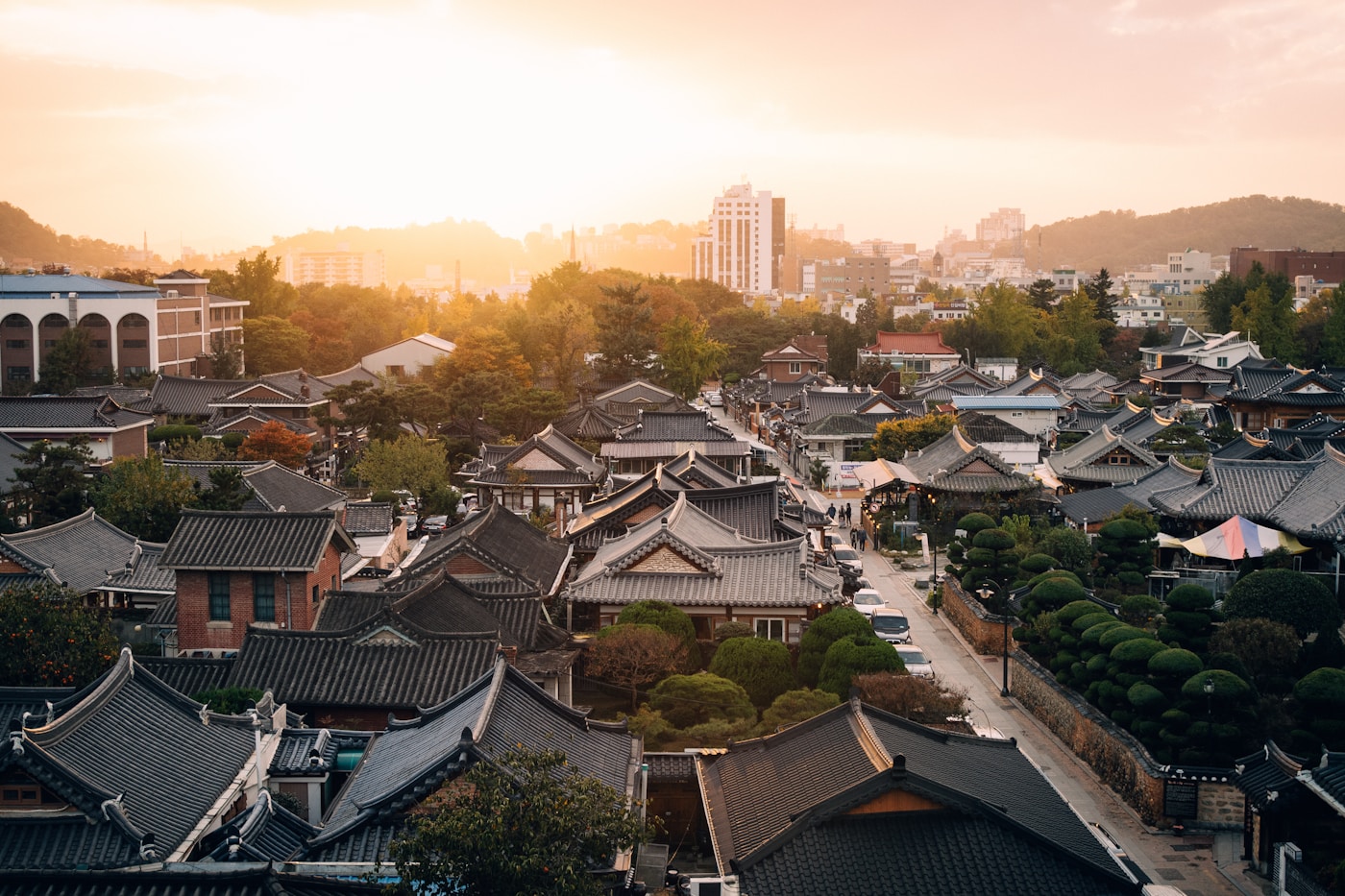 If you’ve been searching for a destination that genuinely stops you in your tracks, this Gyeongju Travel Guide — Korea’s Ancient Capital and UNESCO Heritage Sites is the one you need to bookmark right now, because no other city in Korea makes you feel the weight of a thousand years of history the way Gyeongju does. I still remember the first time I stepped off the KTX at Singyeongju Station and drove into the city as golden-hour light fell across the Daereungwon royal burial mounds — those enormous grass-covered tombs rising silently from the middle of a modern neighborhood — and I genuinely had to pull over just to take it in. This city was the capital of the Silla Kingdom for nearly a millennium, from 57 BC to 935 AD, and every single corner of it holds something that was buried, carved, or built during that era. Seoul is electrifying, Busan is exhilarating, but Gyeongju? Gyeongju is quietly, stubbornly magnificent. What makes Gyeongju unlike any other stop on the Korean travel circuit is that the UNESCO heritage sites here aren’t roped off inside a single museum compound — they’re woven into the fabric of the city itself. You can be eating a bowl of 쌀밥 (rice) at a tiny restaurant and look out the window at a Silla-era stone pagoda standing thirty meters away. You’ll cycle past ancient tumuli on a rented bike, wander into temple courtyards that have been continuously used for over 1,300 years, and watch the moon rise over a stone observatory that predates most of European medieval architecture. Two days here is the absolute minimum; three days is where the magic really begins to settle in. 57 BC Silla Kingdom Founded 5 UNESCO World Heritage Zones 1,000+ Years as Korea’s Capital ~2HR From Seoul by KTX Getting to Gyeongju and Settling InThe fastest way from Seoul is the KTX to Singyeongju Station (신경주역), which takes about 2 hours and costs around ₩43,000–₩59,000 (~$32–$44) depending on the seat class and booking timing. Here’s the local knowledge most travel blogs miss: Singyeongju Station is actually located in Eonyang, about 12 km outside the city center, so you’ll need to hop on Bus 700 or 60 right outside the station exit (look for the stop immediately to your left as you leave) to reach downtown Gyeongju in another 25–30 minutes for just ₩1,500 (~$1.10). Alternatively, if you’re coming from Busan, the regular Mugunghwa line train from Bujeon Station drops you directly at Gyeongju Station right in the heart of the city — that’s actually my preferred approach when I’m traveling light, because the old station building itself has this wonderful faded-glory charm. For accommodation, I’d strongly recommend staying in or near the Hwangnam-dong neighborhood, which puts the Daereungwon tumuli park literally a five-minute walk from your front door. Budget guesthouses like Gyeongju Hanok Village stay start from around ₩40,000 (~$30) a night, and a comfortable mid-range hotel near Bomun Lake runs ₩100,000–₩160,000 (~$75–$120). The UNESCO Sites You Absolutely Cannot MissGyeongju’s UNESCO World Heritage status covers the entire “Gyeongju Historic Areas” designation — five distinct zones packed with royal tombs, Buddhist temples, stone carvings, and palace ruins. Start your first morning at Bulguksa Temple (불국사), one of the crown jewels of Korean Buddhist architecture and easily the most visited heritage site in Gyeongju. The entry fee is ₩6,000 (~$4.50) for adults, and it takes about 25–30 minutes by bus from downtown (Bus 10 or 11 from Gyeongju Bus Terminal). Get there before 9 AM — I can’t stress this enough — because by 10 AM tour groups arrive in waves, and what should feel like a profound spiritual space starts feeling like rush hour. The two stone pagodas in the main courtyard, Dabotap and Seokgatap, have stood here since 751 AD and they are genuinely breathtaking; notice how Dabotap’s intricate multi-tiered design appears on the back of the Korean 10-won coin. From Bulguksa, it’s just a 15-minute ride up the mountain to Seokguram Grotto (석굴암), where a stunning granite Buddha statue sits in an artificial stone cave gazing out over the East Sea — on a clear day you can actually see the ocean from the hillside path. Entry is ₩6,000 (~$4.50) separately, and the grotto path is most magical in early morning mist. Back in the city center, don’t skip Cheomseongdae (첨성대), a 9th-century stone astronomical observatory that looks deceptively simple but is astronomically precise — it’s free to visit from the outside and sits in an open park near Wolseong. Right next to it, the Daereungwon Tumuli Park (대릉원) houses 23 royal Silla burial mounds spread across Konglish Guide — English Words That Confuse Koreans If you’ve ever wondered why your Korean friend orders a “아이스크림” at a café, your complete Konglish Guide — English Words That Confuse Koreans is here to unravel one of the most fascinating secrets of the Korean language. Konglish (콩글리시 — kongeullisi [KONG-gul-lee-shi] — “Korean-English blend”) refers to English words that have been borrowed into Korean, but with sounds, meanings, or usage that often diverge wildly from the original English. As a complete beginner, this is genuinely exciting news — because if you already speak English, you already know hundreds of Korean words without realising it. Korean uses a writing system called 한글 (hangeul) [HAN-gul] — “the Korean alphabet.” Don’t let that intimidate you. Hangeul has only 24 basic letters and was scientifically designed in the 15th century to be easy to learn. When Korean absorbs an English word, it rewrites that word using hangeul sounds — and since Korean phonetics don’t include every English sound, the result is a creatively transformed version that can surprise even fluent English speakers. Understanding this transformation is the key to unlocking Konglish. In this guide, you’ll learn exactly how English loanwords change when they enter Korean, which Konglish words are used every single day in Korea, and — most importantly — where the meanings shift so dramatically that using the original English word would leave a Korean person genuinely confused. By the end, you’ll have real, usable Korean vocabulary and a much deeper appreciation for how beautifully the two languages interact. Why English Sounds Change in Korean — The Phonics SecretHere is the single most important thing to understand about Konglish: Korean syllables always follow a consonant-vowel pattern, and Korean does not allow most consonant clusters at the end of words. This means that a word like “strike” can’t just be borrowed as-is — Korean must insert vowel sounds between consonants to make it pronounceable. “Strike” becomes 스트라이크 (seuteuraikeu) [seu-teu-RAI-keu] — “strike (baseball term).” Every syllable gets its own vowel. Once you see this pattern, the transformations start to feel completely logical rather than random. There are also specific sound substitutions you’ll notice again and again. The English letter “F” does not exist in Korean, so it becomes ㅍ (p), which sounds like a soft “p.” The English “V” becomes ㅂ (b). The English “Z” becomes ㅈ (j). And the English “R” and “L” — famously — both map onto the single Korean letter ㄹ (r/l), which is pronounced somewhere between the two. So “radio” becomes 라디오 (radio) [RAH-dee-oh] and “label” becomes 레이블 (leibeul) [LEH-ee-beul]. The spelling changes, but once you know the rules, you can decode almost any Konglish word instantly. Everyday Konglish Words Koreans Use ConstantlyKorean daily life is saturated with Konglish loanwords, especially in food, technology, fashion, and sports. When you walk into a Korean coffee shop, you won’t hear “iced coffee” — you’ll hear 아이스 아메리카노 (aiseu amerikano) [EYE-seu ah-MEH-ree-kah-no] — “iced Americano.” When someone talks about their phone, they say 핸드폰 (haendeupon) [HEN-deu-pon] — “mobile phone” (literally “hand phone,” a term that doesn’t exist in American English but is perfectly standard in Korea). These words feel like home the moment you recognise the English root hiding inside the Korean pronunciation.
💡 Teacher’s Tip When you see a Korean word that looks completely unfamiliar, try saying it out loud fast — very often, your ear will catch the English word hiding inside the Korean sounds. For example, 컵 (keop) [kup] sounds exactly like “cup,” and 버스 (beoseu) [BUH-seu] is just “bus.” This “English ear” trick alone will help you recognise dozens of Korean words on your very first day in Korea. Konglish Words That Mean Something COMPLETELY DifferentThis is where Konglish gets genuinely tricky — and where English speakers get confused in Korea. Some English words were borrowed into Korean but drifted far from their original meanings. The most famous example: 핫도그 (hatdogeu) [HOT-do-geu] in Korea doesn’t mean a hot dog in a bun — it refers to a corn dog (a sausage dipped in cornbread batter on a stick). If you order a 핫도그 expecting a classic American hot dog, you will be pleasantly or confusingly surprised. Similarly, 맨션 (maensyeon) [MEN-shyon] — borrowed from “mansion” — actually means a regular apartment building, not a grand estate. And 바이킹 (baiking) [BAI-king] — from “Viking” — means an all-you-can-eat buffet, because a Korean Loanwords from English — Over 100 Easy WordsTechnology & Daily Life — Words You Already KnowTechnology vocabulary is where English loanwords absolutely dominate Korean. Koreans adopted these words so completely that there are often no traditional Korean alternatives. This makes technology one of the richest categories of easy Korean loanwords from English for beginners to learn:
 Sports, Fashion & Entertainment — K-Culture VocabularyIf you love K-dramas, K-pop, or Korean sports culture, this category of English loanwords will feel like coming home. Korean entertainment has embraced English terms enthusiastically, and these words appear constantly in lyrics, scripts, and social media. Here is a selection spanning sports, fashion, and entertainment that every Korean learner should know:
|