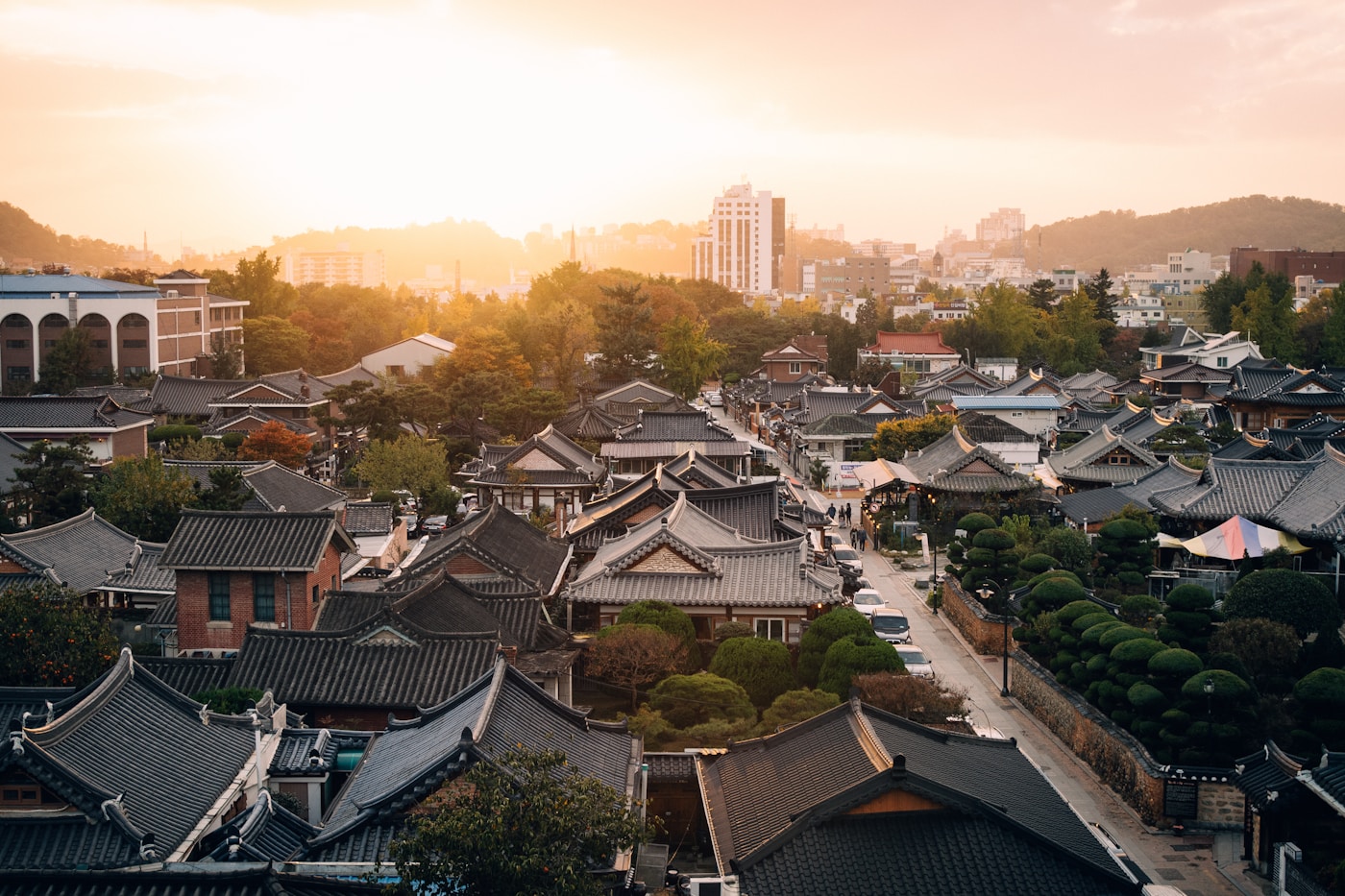
If you’ve been searching for a destination that genuinely stops you in your tracks, this Gyeongju Travel Guide — Korea’s Ancient Capital and UNESCO Heritage Sites is the one you need to bookmark right now, because no other city in Korea makes you feel the weight of a thousand years of history the way Gyeongju does. I still remember the first time I stepped off the KTX at Singyeongju Station and drove into the city as golden-hour light fell across the Daereungwon royal burial mounds — those enormous grass-covered tombs rising silently from the middle of a modern neighborhood — and I genuinely had to pull over just to take it in. This city was the capital of the Silla Kingdom for nearly a millennium, from 57 BC to 935 AD, and every single corner of it holds something that was buried, carved, or built during that era. Seoul is electrifying, Busan is exhilarating, but Gyeongju? Gyeongju is quietly, stubbornly magnificent.
What makes Gyeongju unlike any other stop on the Korean travel circuit is that the UNESCO heritage sites here aren’t roped off inside a single museum compound — they’re woven into the fabric of the city itself. You can be eating a bowl of 쌀밥 (rice) at a tiny restaurant and look out the window at a Silla-era stone pagoda standing thirty meters away. You’ll cycle past ancient tumuli on a rented bike, wander into temple courtyards that have been continuously used for over 1,300 years, and watch the moon rise over a stone observatory that predates most of European medieval architecture. Two days here is the absolute minimum; three days is where the magic really begins to settle in.
Getting to Gyeongju and Settling In
The fastest way from Seoul is the KTX to Singyeongju Station (신경주역), which takes about 2 hours and costs around ₩43,000–₩59,000 (~$32–$44) depending on the seat class and booking timing. Here’s the local knowledge most travel blogs miss: Singyeongju Station is actually located in Eonyang, about 12 km outside the city center, so you’ll need to hop on Bus 700 or 60 right outside the station exit (look for the stop immediately to your left as you leave) to reach downtown Gyeongju in another 25–30 minutes for just ₩1,500 (~$1.10). Alternatively, if you’re coming from Busan, the regular Mugunghwa line train from Bujeon Station drops you directly at Gyeongju Station right in the heart of the city — that’s actually my preferred approach when I’m traveling light, because the old station building itself has this wonderful faded-glory charm. For accommodation, I’d strongly recommend staying in or near the Hwangnam-dong neighborhood, which puts the Daereungwon tumuli park literally a five-minute walk from your front door. Budget guesthouses like Gyeongju Hanok Village stay start from around ₩40,000 (~$30) a night, and a comfortable mid-range hotel near Bomun Lake runs ₩100,000–₩160,000 (~$75–$120).
The UNESCO Sites You Absolutely Cannot Miss
Gyeongju’s UNESCO World Heritage status covers the entire “Gyeongju Historic Areas” designation — five distinct zones packed with royal tombs, Buddhist temples, stone carvings, and palace ruins. Start your first morning at Bulguksa Temple (불국사), one of the crown jewels of Korean Buddhist architecture and easily the most visited heritage site in Gyeongju. The entry fee is ₩6,000 (~$4.50) for adults, and it takes about 25–30 minutes by bus from downtown (Bus 10 or 11 from Gyeongju Bus Terminal). Get there before 9 AM — I can’t stress this enough — because by 10 AM tour groups arrive in waves, and what should feel like a profound spiritual space starts feeling like rush hour. The two stone pagodas in the main courtyard, Dabotap and Seokgatap, have stood here since 751 AD and they are genuinely breathtaking; notice how Dabotap’s intricate multi-tiered design appears on the back of the Korean 10-won coin. From Bulguksa, it’s just a 15-minute ride up the mountain to Seokguram Grotto (석굴암), where a stunning granite Buddha statue sits in an artificial stone cave gazing out over the East Sea — on a clear day you can actually see the ocean from the hillside path. Entry is ₩6,000 (~$4.50) separately, and the grotto path is most magical in early morning mist. Back in the city center, don’t skip Cheomseongdae (첨성대), a 9th-century stone astronomical observatory that looks deceptively simple but is astronomically precise — it’s free to visit from the outside and sits in an open park near Wolseong. Right next to it, the Daereungwon Tumuli Park (대릉원) houses 23 royal Silla burial mounds spread across