💡 Teacher’s Tip

The Korean Consonant ㅇ (Ieung) — The Silent Letter and NG Sound Explained is one of the most fascinating — and most misunderstood — letters in the entire Korean alphabet. If you are seeing Korean writing for the very first time, you are in exactly the right place. Korean uses its own alphabet called 한글 (hangeul) [HAN-geul] — “the Korean alphabet,” and every single letter has a specific job. The letter ㅇ (ieung) [EE-ung] is special because it actually has two completely different jobs depending on where it appears in a syllable — and once you understand that, a huge piece of the Korean puzzle falls into place.
Here is the beautiful thing about ㅇ: when it sits at the beginning of a syllable block, it makes absolutely no sound at all. It is a silent placeholder — like a stage that holds the vowel so it can stand alone. But when ㅇ moves to the end of a syllable block, it transforms into a rich, resonant NG sound — exactly like the “-ng” at the end of the English word “sing” or “ring.” One letter, two roles. That is the magic of Korean Consonant ㅇ (Ieung).
Do not worry if this sounds confusing right now — by the end of this lesson, you will not only understand ㅇ completely, but you will be able to read real Korean words that use it. Thousands of my students have had that satisfying “aha!” moment with this exact letter, and you are next. Let’s dive in.
What Is ㅇ (Ieung)? Understanding the Korean Alphabet First
Before we talk about ㅇ specifically, let’s understand how Korean writing works — because it is genuinely different from English. Korean does not write letters in a horizontal line the way English does. Instead, Korean letters are grouped into small square blocks called syllable blocks. Each block always contains at least one consonant and one vowel, stacked or arranged together. For example, the word for “hello” in Korean is 안녕하세요 (annyeonghaseyo) [ahn-NYUNG-ha-seh-yo] — “Hello / How are you?” — and it is made of five syllable blocks, each containing multiple letters working together. The consonant ㅇ (ieung) appears in this very word, and now you are about to understand exactly what it is doing there.
The Silent ㅇ — When Ieung Makes No Sound at All
In Korean, every syllable block must begin with a consonant. But what happens when a syllable begins with a pure vowel sound — like “ah,” “oh,” or “ee”? This is where the silent ㅇ saves the day. Korean uses ㅇ as a silent placeholder consonant at the start of a syllable. Think of it like a silent letter in English — the “k” in “knife” makes no sound, but it still has to be there. The same rule applies here: ㅇ at the beginning of a syllable block is completely silent. It simply says, “This syllable starts with a vowel sound.”
Look at these examples. The Korean word for “mother” is 어머니 (eomeoni) [UH-muh-nee] — “mother.” The very first syllable 어 begins with ㅇ — but you pronounce it as a pure “uh” vowel sound with no consonant in front. The ㅇ is there, but it is completely silent. This is not a mistake or an exception — it is a rule that applies across all of Korean.
The NG Sound ㅇ — When Ieung Speaks at the End of a Syllable
Now here is where ㅇ becomes truly interesting. When it appears at the bottom (called the batchim position — the final consonant position) of a syllable block, it makes a clear, strong NG sound. This is the same sound you make at the very end of English words like “song,” “long,” “ring,” or “king.” It is a nasal sound — meaning the air flows through your nose as you make it. You do not add any extra syllable; you simply let the sound hum through your nose and stop. The Korean word for “room” is 방 (bang) [BANG] — “room/direction,” and that final ㅇ is exactly the “-ng” you hear in the English word “bang.”
Real Korean Words Using ㅇ (Ieung) — Both Roles
The best way to truly master the Korean consonant ㅇ (Ieung) is to see it working in real, everyday Korean words. Study the table below carefully — notice how the position of ㅇ (beginning vs. end of the syllable block) completely changes whether it is silent or sounding as NG.
| Korean (한글) | Romanization | English Sound [phonetic] | ㅇ Position | English Meaning |
|---|---|---|---|---|
| 아이 | ai | [AH-ee] | Beginning — silent | “child” |
| 어머니 | eomeoni | [UH-muh-nee] | Beginning — silent | “mother” |
| 이름 | ireum | [EE-reum] | Beginning — silent | “name” |
| 방 | bang | [BANG] | End — NG sound | “room” |
| 강 | gang | [GANG] | End — NG sound | “river” |
| 안녕 | annyeong | [ahn-NYUNG] | End — NG sound | “hello / goodbye (informal)” |
💡 Teacher’s Tip
Korea in Spring — Ultimate Cherry Blossom Guide
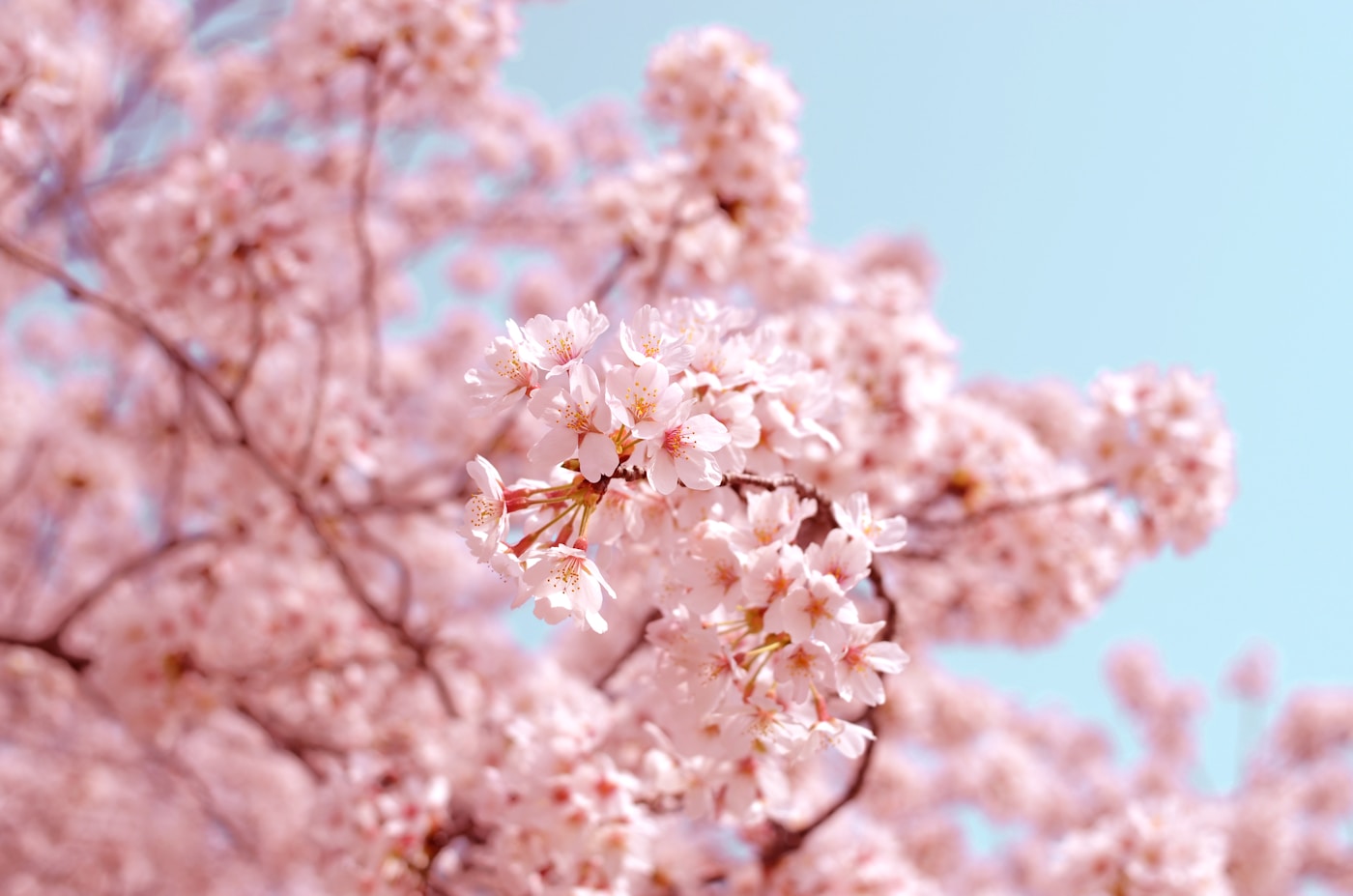
If you have ever needed a single, definitive resource for experiencing Korea in Spring — Ultimate Cherry Blossom Guide is exactly what you are holding right now, and I wrote it because every March I watch first-time visitors make the same heartbreaking mistake: they book Seoul for peak bloom week, show up at Yeouido at high noon on a Saturday, and spend three hours shoulder-to-shoulder in a crowd so thick they never actually see the sky. I have been living here for over twelve years, and the cherry blossom season still makes me stop mid-commute and stare — but knowing where to stand, when to arrive, and which lesser-known tunnels of pink petals are completely empty is what turns a stressful tourist moment into a memory that rewires your brain.
Korea’s spring cherry blossoms — called beot-kkot (벚꽃) in Korean — are not just pretty trees. They are a cultural event the entire country prepares for with the same seriousness as a national holiday. Weather apps tracking bloom forecasts get downloaded by millions. Office workers book picnic spots at 6 a.m. Families drive four hours for a single weekend in Gyeongju. And underneath all of that communal joy is something genuinely moving: the blossoms last only seven to ten days, and every Korean person seems to understand instinctively that beauty is worth chasing precisely because it disappears. Spending spring in Korea around cherry blossom season will change how you see time itself — and this guide will make sure you do it right.
Where to See Cherry Blossoms in Korea — The Spots That Actually Deliver
Let me walk you through the hierarchy of cherry blossom spots the way I would explain it to a close friend over coffee. At the top sits Jinhae in South Gyeongsang Province — this is the undisputed heavyweight. The Gunhangje Festival turns the entire city into a pink corridor, and the famous Gyeonghwa Station tunnel of cherry trees is as surreal as the photos suggest. But here is what the blogs do not tell you: take the train to Jinhae Station (not Changwon Central), and get there before 8 a.m. on a weekday. I have walked that station platform in near-silence at 7:30 a.m. while the afternoon crowds were still an hour away by train — it felt like a dream someone forgot to end. The festival typically runs late March to early April, and entry to most outdoor areas is completely free.
In Seoul, Yeouido Hangang Park (Line 5, Exit 2 or 3) is the big-ticket show — 1,400 trees lining the boulevard make it legitimately spectacular. But my personal favourite in the city is Changgyeonggung Palace (Line 4, Exit 6), where the cherry blossoms frame the palace’s curved rooftlines in a way that makes you forget you are standing in a capital city of ten million people. Entrance is only ₩1,000 (~$0.75) for adults. Even fewer people know about Anyang Art Park in Gyeonggi-do — a 40-minute subway ride from Express Bus Terminal Station — where a riverside path carpeted in petals stays genuinely quiet even on spring weekends. And if you can get yourself to Gyeongju, the UNESCO-heritage city about 2.5 hours from Seoul by KTX (₩44,800 / ~$33 one-way), cherry blossoms falling over ancient royal burial mounds create a scene that is completely unique on earth.
The Korea Meteorological Administration publishes an official cherry blossom forecast (개화예보) every spring — search “벚꽃 개화예보” on Naver, not Google, because Korean weather portals update it daily with regional bloom maps. Bookmark it two weeks before your trip and check it every morning. The difference between “budding” and “70% bloom” is the difference between a pretty walk and a life-changing one. Locals follow this religiously — now you can too.
When to Go — Timing Your Korea Spring Cherry Blossom Visit Like a Local
The bloom moves northward like a slow pink wave. Jeju Island leads the charge every year, typically hitting peak bloom in the final week of March — if you are flexible and can grab a cheap flight (Jeju Air and T’way often have Seoul–Jeju tickets from ₩39,000 / ~$29 one-way if you book six weeks out), Jeju’s Nohyeong-dong intersection and the road up to Hallasan are otherworldly before the mainland crowds even start thinking about blossoms. Busan and Jinhae follow in the first week of April, and Seoul usually peaks
Korean Consonant ㅅ (Siot) — How to Pronounce 시옷 Perfectly

The Korean Consonant ㅅ (Siot) — How to Pronounce 시옷 Perfectly is one of the most exciting early milestones in your Korean learning journey, and the great news is this: you already know how to make this sound. If you have ever said the word “sun,” “sea,” or “sorry” in English, your mouth has already produced the exact sound you need. Korean is full of pleasant surprises like this, and ㅅ (siot) is one of the most beginner-friendly consonants in the entire Korean alphabet — called 한글 (hangeul) [HAN-geul] — “the Korean writing system.”
Before we dive in, let’s set your expectations clearly. Korean has 14 basic consonants, and ㅅ is officially the seventh. Its name is 시옷 (siot) [SHEE-ot] — “the name of the Korean letter ㅅ.” You will hear and read this consonant constantly — in greetings, in food words, in everyday conversation. Mastering its pronunciation now gives you an enormous head start on reading real Korean words from day one. This lesson assumes you have never studied Korean before, so we will build everything from absolute zero, one clear step at a time.
In this lesson, you will learn exactly how ㅅ sounds in every position — at the beginning of a syllable, and at the end — plus the one surprising shift that trips up almost every beginner. By the time you finish reading, you will be able to pronounce real Korean words that contain 시옷 with genuine confidence. Let’s begin.
What Exactly Is ㅅ (Siot)? — Meet Your New Consonant
Korean writing, 한글 (hangeul) [HAN-geul] — “the Korean alphabet,” was invented in 1443 by King Sejong the Great. Every letter was designed to visually represent the shape your mouth and tongue make when producing the sound. Look closely at ㅅ — it looks like a little mountain or a person standing with feet apart. Some learners remember it as a tiny “person” making an “S” shape. The letter belongs to the consonant family and is classified as a plain (unaspirated, unfortis) sibilant — but don’t worry about those linguistics terms. In plain English: it makes an “s” or “sh” sound, and which one it makes depends entirely on where it sits in a syllable. That is the one rule you need to lock in, and we will cover it in full detail very shortly.
How to Pronounce ㅅ (Siot) — The Two Sounds You Must Know
Here is the core pronunciation rule for Korean consonant ㅅ, and it is beautifully simple once you see it laid out. ㅅ behaves differently depending on which vowel follows it.
Rule 1 — The “S” Sound: When ㅅ appears before most vowels — like ㅏ (a), ㅓ (eo), ㅗ (o), ㅜ (u), ㅐ (ae) — it sounds like the English “s” in “sun.” Your tongue tip lightly touches behind your upper front teeth. The air flows out in a smooth, hissing stream. Think of the word 사랑 (sarang) [SAH-rang] — “love.” That opening “sa” is crisp and clean — exactly like “sa” in “safari.”
Rule 2 — The “SH” Sound: When ㅅ appears before the vowel ㅣ (i) [ee], it softens into an “sh” sound — like the “sh” in “she” or “shoe.” This is why the letter’s own name, 시옷 (siot) [SHEE-ot], starts with a “sh” sound, not a plain “s.” Your lips round ever so slightly and the airstream broadens. A beautiful example is the word 시장 (sijang) [SHEE-jang] — “market / I’m hungry” (context-dependent). The moment you hear that soft “sh” glide, you’ll know ㅅ met the vowel ㅣ.
Rule 3 — The Silent / “T” Sound at the End: When ㅅ appears as the final consonant of a syllable block (called a 받침 (batchim) [BAT-chim] — “final consonant”), it is pronounced as an unreleased “t” sound — similar to the “t” at the end of the English word “hat” when you stop just before releasing the air. You close your mouth in a “t” position but don’t let the sound pop out. For example, 옷 (ot) [OT] — “clothes” ends with this stopped “t” quality.
ㅅ (Siot) in Real Korean Words — Pronunciation Table
Let’s lock this in with real vocabulary. Every word below uses ㅅ in authentic, everyday Korean. Study the English phonetic column carefully — these sounds are designed so that any English speaker can reproduce them immediately, no musical training required.
| Korean (한글) | Romanization | English Sound [phonetic] | English Meaning |
|---|---|---|---|
| 사랑 | sarang | [SAH-rang] | “love” |
| 시간 | sigan | [SHEE-gahn] | “time” |
| 소금 | sogeum | [SO-geum] | “salt” |
| 수박 | subak | [SOO-bahk] | “watermelon” |
| 선생님 | seonsaengnim | [SUHN-seng-nim] | “teacher” |
| 옷 | ot | [OT — stopped T] | “clothes” |
Notice the pattern immediately: 사, 소, 수, 선 all use the clean “s” sound, while 시 (si) shifts to “sh.” This is not an exception — it is the rule, and once your ear hears it a few times, it becomes completely automatic.

The Korean Consonant ㄹ (Rieul) — How to Pronounce 리을 Perfectly is one of the most exciting — and most misunderstood — challenges every beginner faces when learning Korean. If you’ve ever heard a Korean word and thought, “Wait, was that an R sound or an L sound?”, you’re already asking exactly the right question. The answer is: it’s both, and neither — and by the end of this lesson, you’ll understand exactly how to produce this beautiful, unique sound like a natural.
Let’s start from absolute zero. Korean uses its own alphabet, called 한글 (Hangeul) [HAN-gool] — “the Korean alphabet.” It was invented in 1443 by King Sejong and is widely considered one of the most logical, learner-friendly writing systems ever created. The Korean alphabet is made up of consonants and vowels that combine into syllable blocks. ㄹ (rieul) [REE-eul] — “the Korean R/L consonant” is one of those consonants, and today it gets the spotlight it deserves.
Don’t be intimidated. Thousands of my students have cracked the ㄹ (rieul) sound in a single study session, and you can too. This lesson will walk you through exactly where your tongue goes, when the sound changes, and how to hear it clearly in real Korean words. Let’s dive in.
What Exactly Is ㄹ (Rieul)? — Meet the Shape and the Name
Before you can pronounce ㄹ, it helps to know its name and shape. The consonant is officially called 리을 (rieul) [REE-eul] — “the name of the Korean consonant ㄹ.” If you look at the shape of ㄹ, you can actually see a little tongue curling up inside a mouth — and that’s not a coincidence. Many Korean consonants were designed to visually represent the position of your speech organs when you make the sound. Pretty clever, right? This single consonant is responsible for both the R-like and L-like sounds in Korean, depending entirely on where it appears in a word. That’s what makes it so unique and worth understanding deeply.
How to Pronounce ㄹ — The Two Sounds You Need to Know
Here is the most important fact about ㄹ (rieul): it sounds different depending on where it appears in a syllable. There are two main positions, and each gives you a different sound. Let’s break them down clearly.
Position 1 — ㄹ at the Beginning or Middle of a Syllable (the “R-like” sound)
When ㄹ appears at the start of a syllable or between two vowels, it makes a soft, flapped sound — think of the very quick “d/r” sound in the American English word “butter” or “ladder” (that fast middle sound: “bu-DDER”). Your tongue tip lightly taps the ridge just behind your upper front teeth and bounces right off. It is not the strong rolled Spanish “r,” and it is not the hard English “r” where your tongue curls back. It’s a single, light, effortless tap. Try saying “butter” fast in an American accent — feel that middle sound? That is almost exactly the ㄹ sound at the start of a syllable. For example: 라면 (ramyeon) [RAH-myun] — “ramen/instant noodles.”
Position 2 — ㄹ at the End of a Syllable (the “L-like” sound)
When ㄹ appears at the very end of a syllable — in what Korean linguists call the “받침” (batchim) [BAT-chim] — “final consonant position” — it produces a clear, held “L” sound, similar to the “l” in “tall” or “bell.” Your tongue touches the ridge behind your upper teeth and stays there briefly before the next sound comes. This is much more like English “L” than the flapped R. For example: 말 (mal) [MAL] — “horse / language / word.”
ㄹ (Rieul) in Real Korean Words — Pronunciation Table
The best way to internalize the ㄹ (rieul) sound is to hear it — and see it — inside real, everyday Korean words. Study this table carefully. Notice which position ㄹ is in for each word, and which sound it produces. Say each word out loud at least three times.
| Korean (한글) | Romanization | English Sound [phonetic] | ㄹ Position | English Meaning |
|---|---|---|---|---|
| 라면 | ramyeon | [RAH-myun] | Start (R-like tap) | “ramen / instant noodles” |
| 사랑 | sarang | [SAH-rang] | Middle (R-like tap) | “love” |
| 말 | mal | [MAL] | End (L-like hold) | “horse / word / language” |
| 달 | dal | [DAL] | End (L-like hold) | “moon” |
| 여름 | yeoreum | [YUH-reum] | Middle (R-like tap) | “summer” |
| 물 | mul | [MOOL] | End (L-like hold) | “water” |
💡 Teacher’s Tip
Here’s the memory trick my students love: think of ㄹ as a chameleon consonant — it blends into its environment. At the beginning or middle of a syllable, it acts like a quick, light “R” (tap your tongue once behind your upper teeth and release immediately). At the end of a syllable, it parks like
Korean Night Markets — Where Locals Actually Eat

Korean Night Markets — Where Locals Actually Eat — are nothing like the sanitized food courts you’ll find inside shopping malls, and the moment you step into one after dark, the sizzle of tteokbokki hitting a hot iron pan and the smell of freshly fried twigim will make your stomach growl before you’ve even decided what to order first. I’ve spent over twelve years eating my way through these markets, and I’ll tell you honestly: this is where Korean food culture is most alive, most generous, and most deliciously chaotic. Vendors who’ve been standing at the same stall for twenty or thirty years will scoop an extra dumpling into your tray without a word, and the ajeossi nursing a paper cup of makgeolli at the table next to you is probably a retired teacher who comes here every Friday — not because it’s cheap, though it is, but because this is simply where people belong after dark in Korea.
What separates a real Korean night market from a tourist-facing street food strip is almost impossible to describe in a brochure — it’s the absence of English menus, the plastic stools that wobble on uneven pavement, the vendor who shouts “하나 더 드릴까요?” (Want one more?) before you’ve even finished chewing. Whether you’re navigating the legendary chaos of Gwangjang Market in Jongno or the breezy waterfront stalls of Tongyeong’s Seopirang Village night market down south, I want to help you eat where Koreans actually eat — not where they send tourists to eat.
Seoul’s Night Markets: Beyond the Instagram Spots
Gwangjang Market is the undisputed queen of Seoul night markets, and if you arrive via Line 1, Exit 8 around 7PM you’ll understand why it has operated continuously since 1905. The thing most guides won’t tell you is this: skip the front stalls closest to the entrance — those are the ones that raised their prices after appearing on Netflix. Walk instead to the back rows near the fabric section, where the bindaetteok (mung bean pancakes) are pressed and fried by women who learned the recipe from their mothers. A single generous portion runs about ₩4,000 (~$3), and the makgeolli that pairs with it is ₩3,000 (~$2.25) a bowl. You sit down, you pour for each other, and somehow an hour disappears. For a completely different vibe, head to Dongdaemun Night Market — accessible from Line 2 or 4, Dongdaemun History & Culture Park Station, Exit 1 — where the market runs until 5AM and the crowd is mostly fashion workers, designers, and club-goers fueling up on soondae (blood sausage) and hot soup at 3 in the morning. That hour, I promise you, is when Seoul feels most like itself.
At Gwangjang Market, look for stalls with a handwritten sign that says “원조” (won-jo) — it means “original” or “the real one.” These are almost always the oldest family-run stalls with the most consistent quality. Also, the mayak gimbap (so-called “narcotic rice rolls”) vendor near the center aisle sells six pieces for just ₩3,000 (~$2.25) — dip them in the mustard-soy sauce provided, and you’ll understand the nickname immediately.
Regional Night Markets Locals Are Fiercely Proud Of
Seoul gets all the attention, but honestly some of the best Korean night market eating happens in cities where tourists rarely think to go. Busan’s Bupyeong Kkangtong Market (깡통시장) near Nampo Station on Line 1, Exit 7, comes alive at dusk with a maze of pojangmacha tents — those beloved orange-tarp covered street stalls — dishing out raw oysters with gochujang for ₩5,000 (~$3.75), grilled eel skewers, and a particularly excellent version of tteokbokki made with a thicker, chewier rice cake than you’ll find in Seoul. Locals here are fiercely loyal to their neighborhood vendor and will openly debate whose dakgalbi is superior while eating standing up. Down in Jeonju, the night market that runs along the edge of Hanok Village near Gyeonggijeon Shrine pulls in a Jeolla-province crowd who know their food with a scholar’s seriousness — here you eat jeon (savory pancakes) so packed with green onion and kimchi that grease runs down your wrist, and nobody minds. Jeonju’s makgeolli is served in a brass bowl, always refilled once for free, and the whole spread often costs under ₩15,000 (~$11) per person including drinks. That ratio of quality to price is something I genuinely haven’t found anywhere else on earth.
Korean Consonant ㄷ (Digeut) — How to Pronounce 디귿 Perfectly

Mastering the Korean consonant ㄷ (Digeut) — how to pronounce 디귿 perfectly is one of the most rewarding early wins you can have as a Korean language beginner. If you have never seen a single Korean letter before today, do not worry — by the end of this lesson you will not only recognize ㄷ on sight, but you will be able to say it correctly, use it in real words, and understand exactly how it behaves in different positions inside a Korean syllable. That is a genuinely powerful place to be after just one lesson.
Korean is written in an alphabet called 한글 (hangeul) [HAN-gool] — “the Korean alphabet.” Unlike Chinese characters, every symbol in 한글 represents a sound — just like the letters A, B, and C do in English. Korean has 14 basic consonants, and ㄷ is the third one you will meet. Its official name is 디귿 (digeut) [DEE-goot] — “the name of the Korean letter ㄷ.” Think of learning it the same way you once learned the letter “D” in English — step by step, sound by sound.
Here is the encouraging truth: the ㄷ digeut sound already exists inside your mouth. You make something very close to it every time you say the word “door” or “dark” in English. The Korean version is just a little softer and unaspirated — meaning you say it without a puff of air. In this lesson, you will learn exactly what that means, hear it in real words, and practise it through a set of exercises designed for complete beginners. Let’s begin.
What Exactly Is ㄷ (Digeut)? — Shape, Name, and First Sound
The Korean consonant ㄷ is the third letter of the 한글 alphabet and represents a sound that linguists call an “unaspirated alveolar stop.” In plain English: you press the tip of your tongue against the ridge just behind your upper front teeth (the same spot you use for the English “D”), and you release a short, clean sound — but without pushing any air out. The letter’s name, 디귿 (digeut) [DEE-goot], gives you a built-in pronunciation clue: the name itself starts with the ㄷ sound, so saying its name is already practising it.
Visually, ㄷ looks like a squared-off bracket or a small table viewed from the side — two horizontal lines connected by a left vertical stroke. Many beginners find it helpful to imagine a tiny door frame. That shape doubles as a memory anchor: ㄷ looks like a door frame, and it sounds like the “D” in “door.” Once you have that image in your mind, you will never forget which letter this is.
How to Pronounce ㄷ (Digeut) — The Exact Mouth Position
Here is a step-by-step guide to producing the perfect ㄷ digeut sound. Follow each step slowly and deliberately, especially on your first few attempts.
Step 1 — Find the ridge. Place the tip of your tongue on the small bumpy ridge sitting just behind your upper front teeth. In Korean phonetics, this spot is called the alveolar ridge. You use this same spot for the English “D,” “T,” “N,” and “L” sounds.
Step 2 — Build gentle pressure. Press your tongue tip lightly against that ridge, sealing off the airflow. Do not press hard — a soft, relaxed contact is what you are aiming for.
Step 3 — Release without a puff. Release your tongue and let the sound escape. This is the key difference between Korean ㄷ and English “D”: the English “D” is often voiced and slightly breathy, while the Korean ㄷ at the start of a word sits acoustically halfway between an English “D” and an English “T” — crisp, short, and with no burst of air. Put your hand in front of your mouth: you should feel almost no breath on your palm.
Step 4 — Practise with a mirror. Watch your tongue placement. If your tongue is touching your teeth rather than the ridge behind them, you are producing a dental sound — scoot it back just a millimetre and try again.
💡 Teacher’s Tip
Try saying the English word “stop” out loud, nice and slowly. Notice the “t” inside “stop”? Because it follows the “s,” that “t” has no puff of air — it is clean and crisp. The Korean ㄷ digeut sounds almost identical to that “t” in “stop.” So whenever you need a quick mental shortcut, whisper “stop” and freeze on the “t” sound — that is your ㄷ. This trick alone has helped hundreds of my students crack this sound in under five minutes.
ㄷ (Digeut) in Real Korean Words — Pronunciation Table
The best way to lock in the ㄷ digeut pronunciation is to hear and say it inside real, everyday Korean words. Every word below is genuinely used in daily Korean life — these are not made-up examples. Notice how the ㄷ sound sits at the beginning of each syllable, giving you the clearest, cleanest version of the sound to practise with.
| Korean (한글) | Romanization | English Sound [phonetic] | English Meaning | ||||||||||||||||||||||||||||
|---|---|---|---|---|---|---|---|---|---|---|---|---|---|---|---|---|---|---|---|---|---|---|---|---|---|---|---|---|---|---|---|
| 다리 | dari | [TAH-ree] | “bridge / leg” | ||||||||||||||||||||||||||||
| 도시 | dosi | [TOH-shee] | “city” | ||||||||||||||||||||||||||||
| 달 | dal | [TAHL] | “moon / month” | ||||||||||||||||||||||||||||
| 덮다 | deопда | [TUHP-dah] | “to cover” | ||||||||||||||||||||||||||||
| 대학교 | daehakgyo | [TAY-hak-gyoh] | “university” |

| Korean (한글) | Romanization | English Sound [phonetic] | English Meaning |
|---|---|---|---|
| 나 | na | [NAH] | “I / me” |
| 나라 | nara | [NAH-rah] | “country / nation” |
| 노래 | norae | [NOH-reh] | “song” |
| 눈 | nun | [NOON] | “eye” or “snow” |
| 나무 | namu | [NAH-moo] | “tree” |
| 안녕 | annyeong | [AHN-nyung] | “hello / goodbye (informal)” |
Notice that 눈 (nun) [NOON] — “eye / snow” carries ㄴ in both positions — at the very beginning of the syllable and at the very end. This is a perfect word for practicing both uses of ㄴ in a single breath. And 안녕 (annyeong) [AHN-nyung] — “hello (casual)” is probably the most useful word on this list — you will use it with friends from day one.
💡 Teacher’s Tip
Sokcho and Seoraksan — Korea’s Most Spectacular Mountain Escape

If you ask me which single destination in Korea has stopped me dead in my tracks more times than I can count, it is always Sokcho and Seoraksan — Korea’s Most Spectacular Mountain Escape — a place where razor-sharp granite spires erupt out of forested ridgelines and the East Sea glitters just twenty minutes away by taxi. I still remember the first time I stepped off the express bus from Seoul and felt that salt-and-pine air hit my face simultaneously — coastal breeze on one cheek, cool mountain draft on the other — and thought: this place genuinely has no business being this beautiful. Most travellers treat it as a long weekend trip, but after twelve years of coming back here every single autumn, I can tell you that Sokcho and Seoraksan reward the traveller who slows down, wanders past the tourist trailheads, and eats where the fishermen eat.
Sokcho itself is a compact coastal city of roughly 80,000 people, draped along the waterfront like a fishing village that quietly became one of Korea’s most beloved gateways to Seoraksan National Park. The park rises immediately behind the city — you can literally see Ulsanbawi Rock’s six granite columns from the parking lot of a convenience store on the main road — which means you can hike all morning, eat grilled fish at Abai Village for lunch, and watch the sun dip into the mountains from a rooftop café by evening. That loop, right there, is one of the best single days you can spend anywhere in this country.
Getting to Sokcho — and the First Move Nobody Tells You
There is no direct train to Sokcho, which surprises a lot of first-timers. Your best option is the express bus from Seoul’s East Seoul Bus Terminal (동서울터미널) or Central City Terminal (고속버스터미널, Line 3/7/9, Exit 1). The ride takes about two hours and thirty minutes on a clear day — ₩18,100 to ₩22,000 (around $13–$16 USD) depending on whether you book standard or premium — and buses run roughly every 30 minutes during peak hours. I always book a window seat on the right side of the bus heading north, because somewhere past Yangyang you get your first glimpse of the Taebaek mountains tumbling toward the sea and it genuinely makes your heart rate pick up. Once you arrive at Sokcho Bus Terminal, city bus No. 7 or No. 7-1 takes you straight to the Seoraksan National Park entrance for ₩1,400 (about $1 USD) — skip the taxi unless you have heavy gear, because the bus drops you within a five-minute walk of the park gate and the driver will usually confirm your stop if you say “설악산” with even a hint of confidence.
The insider move on arrival day that almost nobody mentions: do not go straight to Seoraksan. Check into your accommodation, then walk to Cheongcho Lake (청초호) in the late afternoon light. This tidal lagoon sits right in the middle of the city, and the reflection of Seoraksan’s ridgeline on the still water at golden hour is one of the most quietly spectacular sights in all of Gangwon Province. It takes about twenty minutes on foot from the bus terminal, costs nothing, and sets the mood for everything that follows. Then, for dinner, head to Daepo Port (대포항) — not the Sokcho Jungang Market, which is fine but heavily touristed — and order a fresh plate of mulhoe (물회), a chilled raw fish soup with vinegar and spicy paste, for about ₩15,000–18,000 ($11–$13 USD). Fishermen from the boats docked ten meters away caught that fish this morning. That is Sokcho doing what Sokcho does best.
Hiking Seoraksan — Choosing Your Trail Like a Local
The national park entrance fee is ₩3,500 (about $2.50 USD) for adults — one of the best deals in Korean tourism — and the park divides loosely into three zones: Outer Seorak (외설악), Inner Seorak (내설악), and Southern Seorak (남설악). Most visitors only ever see Outer Seorak, which surrounds the main Sogongwon entrance area near the famous Sinheungsa Temple and the Ulsanbawi Rock trail. That trail is iconic for good reason — the 873-step iron staircase that hugs the cliff face up to Ulsanbawi is genuinely thrilling — but if you want space to breathe and scenery that is arguably even more dramatic, take the Biseondae (비선대) trail instead. It follows a crystal-clear mountain stream deep into a gorge, passing tiered waterfalls and cathedral-scale rock walls, and you can turn back whenever your legs tell you to. On a weekday in late October, I have had entire stretches of this trail almost entirely to myself while the Ulsanbawi path was shoulder-to-shoulder.