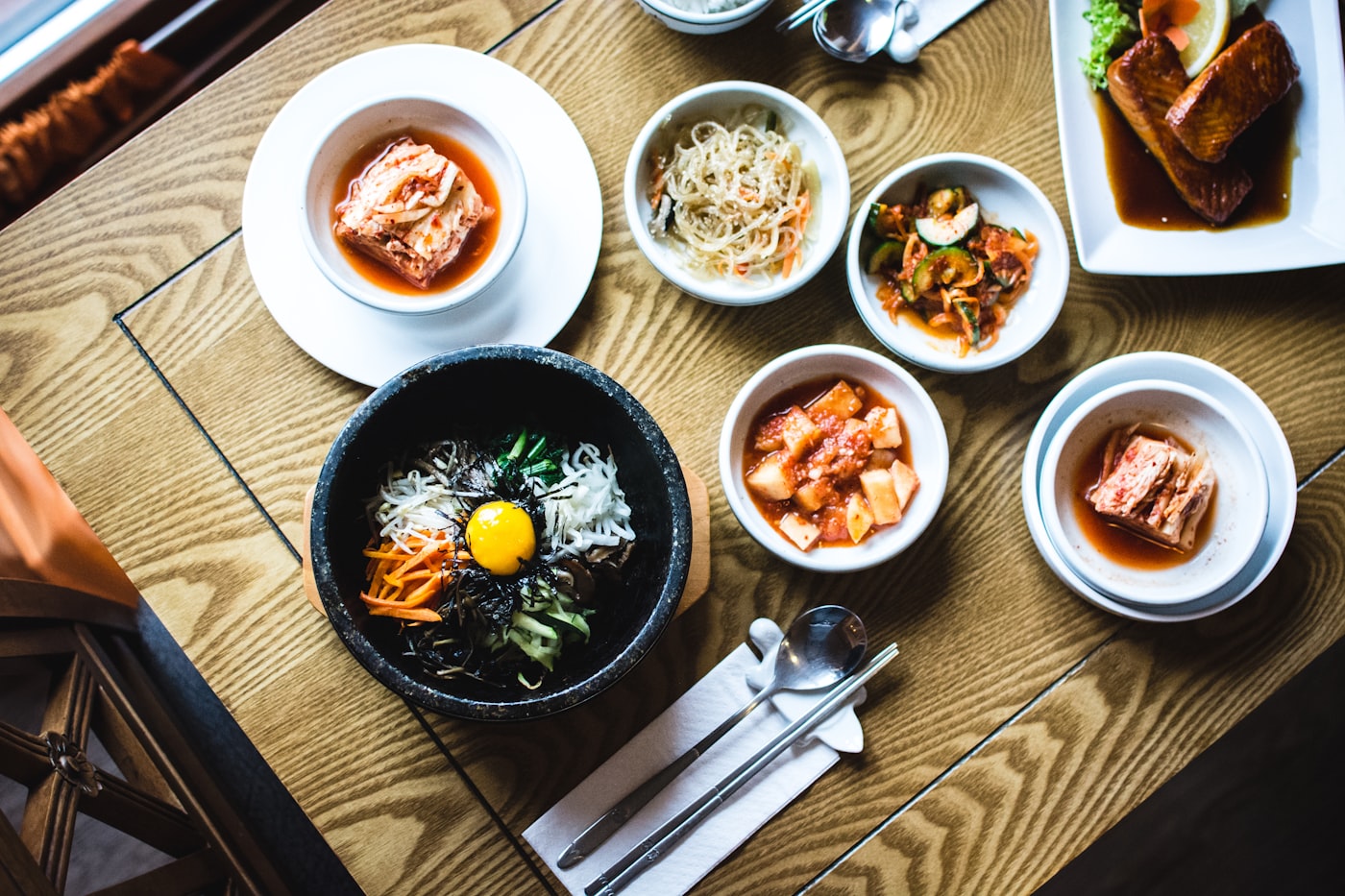
Learning how to order food in Korean — restaurant phrases that work in real life — is hands down the most practical skill you can master as a beginner, and the great news is that you need only a handful of phrases to do it confidently. Korea has one of the most exciting food cultures in the world: from sizzling 삼겹살 (samgyeopsal) [sam-GYUP-sal] — “grilled pork belly” to steaming 비빔밥 (bibimbap) [BEE-bim-bap] — “mixed rice bowl” — and the last thing you want is to sit at a restaurant table and feel lost. This guide gives you exactly what you need, starting from absolute zero.
If you have never seen a single Korean character before, do not worry at all. Korean uses its own alphabet called 한글 (hangeul) [HAN-gul] — “the Korean alphabet,” and while it looks unfamiliar at first glance, it is actually one of the most logical writing systems ever created. For now, you will learn to read the romanization (the Korean sounds written in English letters) alongside every phrase, so you can speak immediately even before you master reading 한글.
One important note before we dive in: Korean is a polite language, and how you speak in a restaurant matters. Almost every phrase in this lesson uses the formal polite ending -요 (-yo) [-YO] — “polite sentence ending.” Think of it as adding “please” to everything you say — it keeps you respectful and will earn you warm smiles from every server in Korea.
Getting Attention — How to Call Your Server
In Korean restaurants, you do not wait for your server to come to you — you call them. This is completely normal and expected. The magic word is 저기요 (jeogiyo) [JUH-gee-yo] — “Excuse me / Over here, please.” Say it clearly and with confidence toward the nearest staff member. It literally means “over there” but functions exactly like saying “Excuse me!” to get attention. You can also use 여기요 (yeogiyo) [YUH-gee-yo] — “Here, please!” which means “over here.” Both work perfectly. The difference is tiny — think of 저기요 as pointing away and 여기요 as pointing to yourself — but in practice, Koreans use them interchangeably to flag down a server.
Ordering Your Food — The Core Phrases
The single most useful ordering phrase you will ever learn is 이거 주세요 (igeo juseyo) [EE-guh JOO-seh-yo] — “Give me this one, please.” Point at the menu and say those three words — that is a complete order in Korean. The word 이거 (igeo) [EE-guh] — “this / this one” does the heavy lifting, and 주세요 (juseyo) [JOO-seh-yo] — “please give me” turns it into a polite request. To order a specific dish by name, simply put the dish name in front of 주세요. For example: 비빔밥 주세요 (bibimbap juseyo) [BEE-bim-bap JOO-seh-yo] — “Bibimbap, please.” Easy, right? If you want two of something, add 두 개 (du gae) [DOO-geh] — “two (items)” before 주세요. So “two bibimbaps, please” becomes 비빔밥 두 개 주세요 (bibimbap du gae juseyo) [BEE-bim-bap DOO-geh JOO-seh-yo].
| Korean (한글) | Romanization | English Sound [phonetic] | English Meaning |
|---|---|---|---|
| 저기요 | jeogiyo | [JUH-gee-yo] | “Excuse me!” (to call server) |
| 이거 주세요 | igeo juseyo | [EE-guh JOO-seh-yo] | “This one, please” |
| 메뉴 주세요 | menyu juseyo | [MEH-nyoo JOO-seh-yo] | “Menu, please” |
| 물 주세요 | mul juseyo | [MOOL JOO-seh-yo] | “Water, please” |
| 하나 더 주세요 | hana deo juseyo | [HA-na DUH JOO-seh-yo] | “One more, please” |
| 맛있어요 | masisseoyo | [ma-SHEE-ssuh-yo] | “It’s delicious!” |
💡 Teacher’s Tip
Think of 주세요 (juseyo) as your Korean restaurant superpower. Literally anything + 주세요 becomes a polite request. Want chopsticks? 젓가락 주세요 (jeotgarak juseyo) [JUHT-ga-rak JOO-seh-yo] — “Chopsticks, please.” Want the bill? 계산서 주세요 (gyesanseo juseyo) [GEH-san-suh JOO-seh-yo] — “Bill, please.” Master 주세요 and you can ask for almost anything in any Korean restaurant — even on your very first day.
How Korean Sentences Work — Word Order Explained
Before you move on, there is one grammar rule that will make every Korean sentence you ever learn click into place. Korean word order is completely different from English. In English, we say Subject → Verb → Object (SVO): “I eat rice.” In Korean, the verb always moves to the end of the sentence — Subject → Object → Verb (SOV): “I rice eat.” This feels odd at first, but once you accept it as a fixed rule, you will never be confused again. Every single Korean sentence you will ever say in a restaurant follows this same pattern.
🔀 English vs Korean — How Sentences Work Differently
| English (SVO) | Korean (SOV) | Privacy Policy |
Terms of Use |
Contact
사업자등록번호: 409-21-63662 | 상호: 정도상회
|
|---|