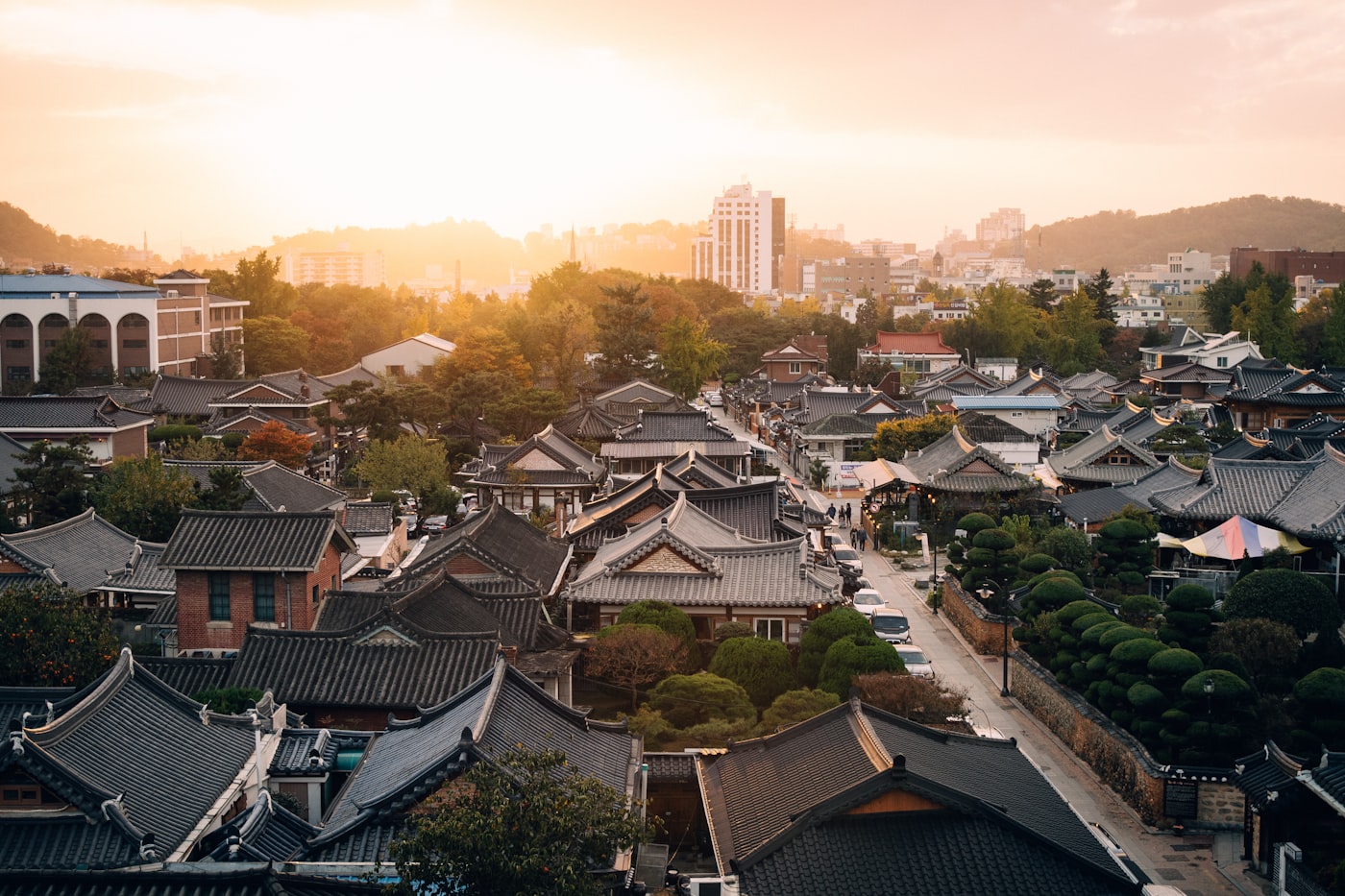
If you only read one Gyeongju Travel Guide — Korea’s Ancient Capital and UNESCO Heritage Sites before you visit, make it this one, because Gyeongju is not a city you stumble through unprepared — it rewards the curious and quietly humbles the rushed. I still remember the first time I stepped off the KTX at Singyeongju Station and drove into the city proper: within ten minutes I was passing grass-covered burial mounds the size of apartment buildings, rising out of the middle of a residential neighborhood like something from a dream. Gyeongju is the only city in Korea where the ancient world hasn’t been bulldozed — it has been lived in, continuously, for over a thousand years, and that weight is something you feel in your chest before your brain even catches up.
This was the royal capital of the Silla Kingdom for nearly a millennium — from 57 BC all the way to 935 AD — and the UNESCO designation here isn’t a single monument but an entire cityscape. Walk ten minutes in any direction from the old town center and you’ll trip over a royal tomb, a Joseon-era stone lantern, or a temple foundation that predates the Norman Conquest of England. What makes Gyeongju genuinely special among Korea’s UNESCO heritage sites is that it functions as a living city — people raise families here, run noodle shops, park bicycles beside thousand-year-old stone pagodas. That combination of the mundane and the magnificent is what keeps me coming back, again and again, even after twelve years in this country.
The UNESCO Heritage Sites You Absolutely Cannot Miss
Let’s start with Bulguksa Temple, because it’s the anchor of any serious Gyeongju itinerary. Built in 528 AD and reconstructed in its current form during the Unified Silla period, this is not a reconstruction of something lost — most of what you see is genuinely ancient, and UNESCO recognized it in 1995 for exactly that reason. The entry fee is ₩6,000 (~$4.50), and I strongly recommend arriving before 9 AM. After 10 AM on weekends, the main courtyard fills up fast and you lose the meditative quiet that makes Bulguksa so powerful. The two staircases leading to the main hall — Cheongungyo and Baegungyo — are off-limits to foot traffic to preserve them, but stand at their base and look up: those stone steps have been here for over 1,300 years. The detail that most visitors miss is the small lotus pond to the left of the main entrance, where the reflection of Dabotap Pagoda shimmers on calm mornings. That’s your photograph.
A 15-minute taxi ride up the mountain from Bulguksa (about ₩8,000 / ~$6) brings you to Seokguram Grotto, and this is the one that genuinely stops people in their tracks. Carved into a granite cave in 751 AD, the central Buddha figure sits in near-perfect proportion, framed by bas-relief bodhisattvas around the circular chamber walls. Photography inside is prohibited — and honestly, I’m grateful for it. The grotto is enclosed in a modern glass chamber to regulate humidity, which sounds antiseptic but doesn’t diminish the experience one bit. Come at sunrise if you can manage it: the mountain trail from the bus stop at dawn, with mist threading through pine forests and the distant East Sea glinting on clear days, is one of the most quietly extraordinary walks I’ve taken in Korea. The first bus from Bulguksa heads up at around 7:20 AM.
Back in the city, the Daereungwon Tumuli Park in the Hwangnam neighborhood is where Gyeongju’s ancient capital energy hits you most viscerally. Twenty-three royal burial mounds are scattered across a 125-acre park, and you can walk freely among them. Entry is ₩3,000 (~$2.25). Only one tomb — Cheonmachong — is open for interior viewing, and inside you’ll see the burial chamber layout along with reproductions of the artifacts found here, including the famous “heavenly horse” painting on birch bark that gave the tomb its name. The original artifacts are at the National Museum of Gyeongju, which is free to enter and should be your next stop. The museum’s gold crown collection alone — five Silla royal gold crowns displayed in a single gallery — is worth the entire trip from Seoul.
Rent a bicycle from the shops clustered around Gyeongju Intercity Bus Terminal (about ₩10,000 / ~$7.50 for a full day) rather than relying on taxis or buses between the main UNESCO sites in the city center. The flat terrain around Daereungwon, Cheomseongdae Observatory, and Anapji Pond makes cycling genuinely pleasant — and you’ll stumble across roadside stone pagodas and temple foundation stones that no tour bus ever stops for. Ask the rental shop specifically for a bike with a basket: you’ll want both hands free for your camera.